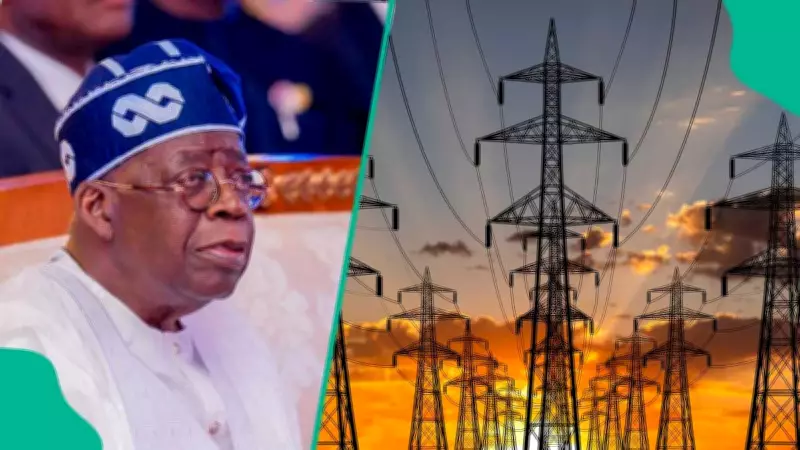
The Federal Government of Nigeria has unveiled a significant policy shift that will fundamentally alter how electricity subsidies are financed across the nation. From the year 2026, the financial burden of subsidizing power will no longer rest solely on the federal tier. Instead, a new framework mandates that federal, state, and local governments collectively share these costs, marking a pivotal move towards fiscal transparency and shared responsibility in the energy sector.
Directive for Transparency and Enforcement
This landmark policy follows a direct order from President Bola Tinubu, who has emphasized the need to make subsidy mechanisms explicit, properly tracked, and enforceable. The current system, where subsidies often operate as hidden liabilities, has been identified as a primary contributor to repeated liquidity crises and operational challenges within Nigeria's power sector. The President's directive aims to dismantle this opaque structure, ensuring that all subsidy-related expenditures are clearly accounted for and distributed fairly.
Budget Office Announces New Framework
The details were disclosed by Tanimu Yakubu, the Director-General of the Budget Office of the Federation, during a training workshop in Abuja focused on the 2026 post-budget preparation process. Yakubu explained that when electricity tariffs are set below the actual cost of supply, the resulting financial gap constitutes a subsidy that must be funded. Leaving these costs unaccounted for has historically exacerbated market instability.
He stated emphatically that from 2026, electricity subsidies will cease to be treated as an open-ended obligation of the Federal Government alone. This is particularly crucial in scenarios where policy decisions and the associated political benefits are shared across all three tiers of government. The President has instructed relevant authorities to utilize existing electricity sector laws to craft subsidy-sharing arrangements that are transparent, practical, and legally enforceable.
A New Subsidy Payment Formula
According to Yakubu, this new approach is not designed as a punitive measure. Instead, its core objectives are to align incentives across different levels of government, encourage operational efficiency, and support the move towards cost-reflective pricing—all while maintaining protections for vulnerable electricity consumers. The Budget Office chief has directed all Ministries, Departments, and Agencies (MDAs) to clearly reflect any subsidy-related costs in their budget proposals for the 2026 fiscal year. He cautioned strongly against the practice of shifting unfunded liabilities into the electricity market, which undermines sector health.
Broader Budgetary Reforms for 2026
The announcement on electricity subsidies is part of a wider suite of fiscal reforms planned for the 2026 budget. Yakubu indicated that this budget will represent a decisive break from the tradition of rollover budgeting and fragmented project listings, practices he said have weakened accountability and hampered execution over time.
The new framework will consolidate government commitments into a single implementation pipeline, described as a "single-train" approach. This is intended to improve project prioritization, reduce duplication of efforts, and strengthen overall budgetary control and oversight.
Reviewing Fiscal Responsibility
In a related development, Yakubu revealed that President Tinubu has also ordered a comprehensive review of the nation's Fiscal Responsibility framework. The goal is not to abandon fiscal rules but to make them more dynamic and enforceable. This review is expected to introduce clearer fiscal anchors, define escape clauses for genuine economic shocks, and mandate stronger reporting on contingent liabilities, alongside establishing a credible path back to compliance when rules are breached.
MDAs will now face assessment not just on their proposed spending, but on how their plans align with these fiscal rules, long-term sustainability goals, and measurable outcomes. The 2026 budget will further deepen the shift from merely listing projects to ensuring they are finance-ready, properly sequenced, and backed by clear financing plans.
The Scale of the Subsidy Challenge
The urgency of these reforms is underscored by the staggering cost of electricity subsidies. Recent data indicates that Nigeria incurred approximately N1.98 trillion in electricity subsidy obligations between October 2024 and September 2025. This immense financial burden highlights the unsustainable nature of the previous funding model and the critical need for a collaborative, multi-tier governmental approach to ensure the power sector's viability and improve service delivery for millions of Nigerians.