
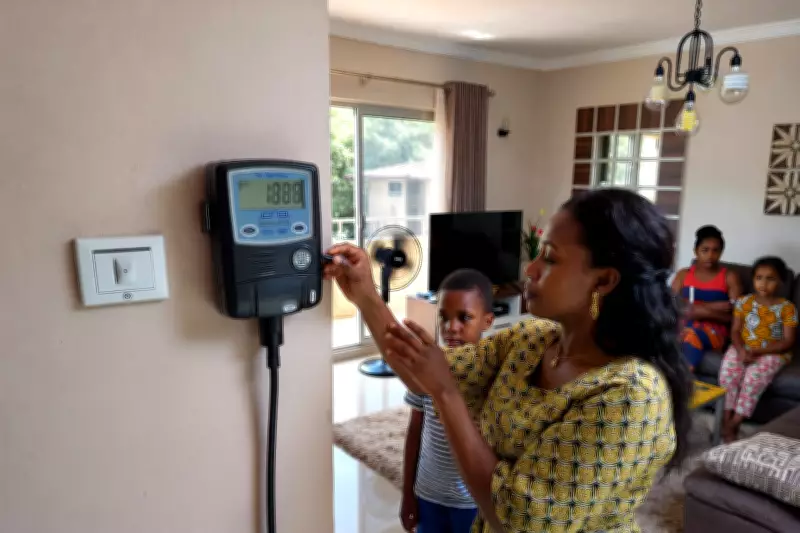
How Much Electricity Do Home Appliances Use in Nigeria?
In Nigeria, many families grapple with confusing and often exorbitant electricity bills, leading to widespread frustration and financial strain. This article delves into the complex reality of home appliance electricity consumption, offering insights based on extensive research and real-world examples to help Nigerians better understand and manage their energy usage.
Understanding Electricity Consumption Units in Nigeria
Electricity in Nigeria is measured in kilowatt-hours (kWh), commonly referred to as "units" on utility bills. One unit equals one kilowatt-hour, meaning an appliance using 1,000 watts (1 kilowatt) running for one hour consumes one unit. The tariff structure varies significantly across the country, with residential consumers in Band A areas, which receive over 20 hours of daily supply, paying around ₦225 per kWh. In contrast, lower bands pay between ₦66 and ₦117 per kWh, creating disparities where identical households face vastly different bills based on location and power reliability.
Electricity Consumption of Common Home Appliances
Nigerian households typically use a mix of essential and comfort appliances, each with distinct consumption patterns. Refrigerators, running continuously, consume between 100-150 kWh monthly, accounting for 25-30% of total household usage. Air conditioning units are major consumers; a 1.5 horsepower split unit running twelve hours daily uses approximately 540 kWh monthly, potentially generating bills over ₦60,000 in Band A areas. Ceiling fans are more economical, with a 75-watt fan running twelve hours daily consuming just 27 kWh monthly.
Lighting is another critical area. Traditional incandescent bulbs (100 watts each) running six hours daily use 18 kWh monthly, while 15-watt LED equivalents reduce this to 2.7 kWh monthly, an 85% reduction. Electric kettles and irons, though high-wattage, have minimal impact due to brief usage. Washing machines vary, with front-loading models using 50-200 kWh monthly and top-loaders up to 300 kWh. Electric water heaters and cookers are heavy consumers, with a 50-litre heater using about 180 kWh monthly, prompting many families to opt for gas alternatives.
How Many Units Does ₦3,000 Buy in Nigeria?
The value of ₦3,000 in electricity units depends heavily on tariff bands. In Band A areas at ₦225 per kWh, it buys approximately 13.3 units, enough to run a ceiling fan for seventeen days or power LED bulbs for thirty-seven days. Band B consumers at ₦117 per kWh get 25.6 units, while lower bands receive up to 45.5 units. This disparity highlights electricity inequality, where affordability is tied to infrastructure quality rather than consumption behavior.
Is 100 kWh Daily Consumption Normal?
Consuming 100 kWh daily is exceptionally high for Nigerian residential settings and indicates potential issues like industrial equipment use, meter malfunctions, or estimated billing errors. Typical middle-class households use 8-30 kWh daily, with even affluent homes rarely exceeding 50 kWh daily. Bills showing 100 kWh daily should prompt immediate investigation, including meter verification and complaints to the Nigerian Electricity Regulatory Commission (NERC).
Average Household Electricity Consumption in Nigeria
Monthly consumption varies by household type, location, and appliance usage. A studio or one-bedroom flat without air conditioning uses 80-120 kWh monthly, while a three-bedroom home with moderate AC use consumes 400-650 kWh monthly. Wealthier households often use 4-6 times more electricity due to air conditioning and multiple devices. Seasonal variations add 30-50% more consumption during hot months. The average Nigerian household (three-bedroom, family of four to six) uses 300-500 kWh monthly, resulting in bills of ₦35,000-₦58,500 in Band B areas.
Seven Steps to Reduce Electricity Consumption
- Audit Your Consumption: Track appliance usage and meter readings to identify waste, such as unnecessary AC operation or vampire power from standby devices.
- Switch to LED Bulbs: Replace incandescent bulbs with LEDs to cut lighting consumption by 80-85%, with payback within months.
- Use Air Conditioning Strategically: Run AC for limited periods, set thermostats to 25-26°C, and use fans overnight to reduce consumption by up to 60%.
- Maintain Appliances: Clean refrigerator coils and AC filters to improve efficiency and lower consumption by 15-30%.
- Eliminate Vampire Power: Unplug chargers and use power strips to cut standby device consumption, saving 50-80 kWh monthly.
- Time High-Consumption Tasks: Run washing machines and irons during off-peak hours to reduce strain and costs.
- Consider Solar Solutions: Invest in solar setups for specific appliances, with payback periods of 18-36 months, leveraging Nigeria's abundant sunshine.
Final Thoughts and Key Takeaways
Electricity consumption in Nigeria is influenced by appliance efficiency, usage patterns, and systemic issues like unreliable supply and opaque billing. Key takeaways include that most middle-class households use 300-500 kWh monthly, with air conditioning being the largest consumer. Consumption above 100 kWh daily is abnormal and requires investigation. Implementing strategies like LED replacement and strategic AC use can reduce bills by 25-45%. Addressing broader sector failures remains crucial for equitable and reliable power access across the nation.




