
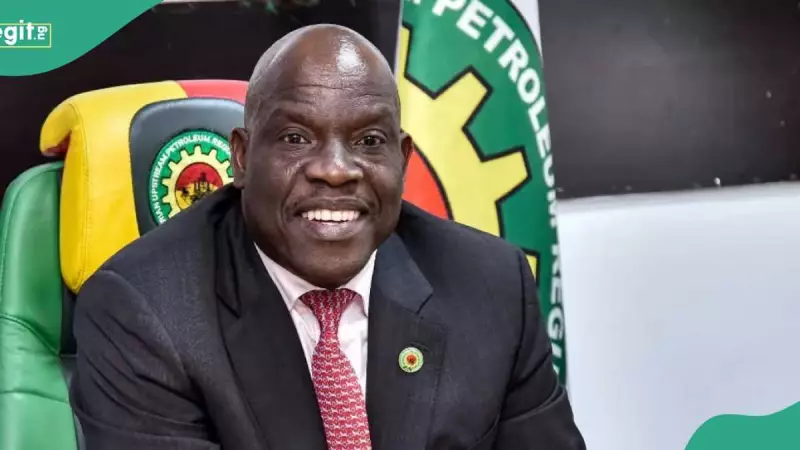
The Nigerian Upstream Petroleum Regulatory Commission (NUPRC) has earned significant recognition for implementing groundbreaking reforms that are transforming the country's energy landscape under the leadership of Chief Executive Engr. Gbenga Komolafe.
Energy Sector Transformation Under Komolafe
The Centre for Energy Market Stability and Reforms publicly commended Komolafe for his outstanding leadership in driving what it described as some of the most far-reaching regulatory and governance reforms witnessed in Nigeria's oil and gas sector in recent years. According to the Centre, these changes have successfully restored transparency, attracted vital investment, and strengthened confidence among both global and domestic operators.
In a statement issued in Abuja, the Centre's executive director, Dr. Musa Garuba, highlighted that the Commission has achieved significant gains in regulatory clarity and policy direction under Komolafe's guidance. Garuba emphasized that these improvements have fundamentally reshaped Nigeria's upstream environment and positioned the country as a more competitive destination for energy investment.
Tangible Results and Sector Recovery
Before the recent reforms, investors frequently expressed concerns about regulatory uncertainty and slow decision-making processes. However, the Commission has dramatically changed this narrative by accelerating approvals, removing long-standing bottlenecks, and ensuring stricter compliance with industry standards.
The Centre pointed to concrete evidence of progress, including a renewed rise in rig count, increased field development activities, and new commitments from global upstream operators. Garuba stated that these indicators reflect a sector that is regaining stability and predictability, with the investor community responding positively to these changes.
Technology and Transparency Advances
The reform strategy has particularly emphasized governance, monitoring, and operational accountability. The Commission's implementation of quicker decision-making processes, stronger asset supervision, and improved access to production data has helped rebuild trust in Nigeria's upstream reporting system.
By strengthening regulatory tools and creating systems that ensure equal access to opportunities, the Commission has established a level playing field for operators. These measures have contributed to better performance outcomes and clearer investment frameworks that benefit the entire sector.
The Centre also praised the Commission's adoption of technology in regulatory operations and data management. Digital tools for reporting and monitoring are reshaping the industry's operational efficiency and ensuring Nigeria keeps pace with global best practices in the energy sector.
Future Prospects and Institutional Support
The upcoming licensing round scheduled for December 2025 is expected to draw strong participation due to the improved operational and regulatory environment. Garuba expressed optimism that investors are showing greater interest because of the Commission's consistent approach to enforcement and its emphasis on transparency in licensing procedures.
The Centre urged industry stakeholders, government institutions, and private operators to remain committed to the reforms. Garuba emphasized that the Commission's leadership has demonstrated that strong institutions, backed by professionalism and long-term planning, are essential for sustainable growth in the energy sector.
This recognition follows earlier commendation from Public Space Tracker, a West African organization that recognized NUPRC as the most transparent and outstanding government agency in Nigeria. The organization praised NUPRC for its remarkable openness, policy innovation, and integrity in managing Nigeria's upstream petroleum resources since Komolafe assumed leadership.




