
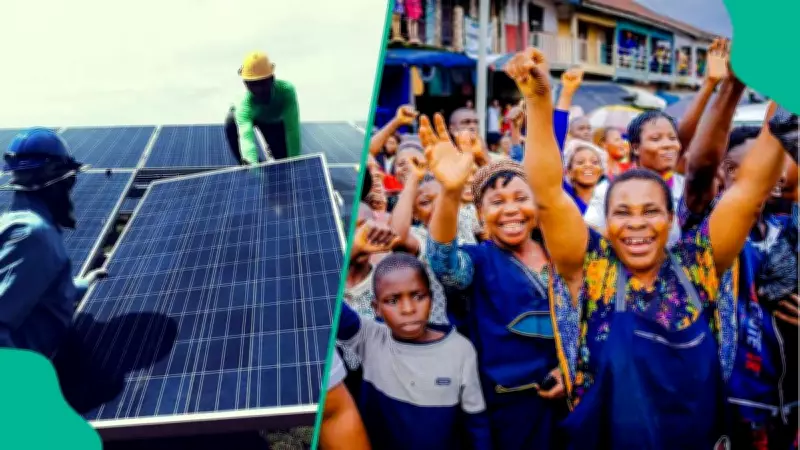
Lagos State Government Unveils Solar Home Systems Programme to Combat Grid Instability
In a significant move to address persistent electricity shortages, the Lagos State Government has announced plans to transition residents from reliance on the unreliable national grid to solar-powered home systems. This initiative aims to provide a cleaner and more reliable energy alternative for households and small businesses across the state.
Phased Rollout and Payment Structure for Solar Adoption
The Commissioner for Energy and Mineral Resources, Biodun Ogunleye, disclosed that the programme will allow residents to adopt solar solutions through a payment structure similar to their current electricity bills. Speaking during the inauguration of a solar project for Radio Lagos and Eko FM in Ikeja, he explained that users will gradually pay towards owning their solar systems while enjoying a steady power supply. The rollout will begin with about 100,000 solar units in its first phase, with implementation designed to be gradual rather than abrupt. Ogunleye encouraged residents to watch for official announcements and subscribe once the programme begins, noting that this approach could eventually reduce dependence on the grid, particularly in areas with poor electricity supply.
Drivers Behind the Shift to Renewable Energy
Officials and industry experts highlight that the move is driven by persistent grid failures, high generator dependence, and rising energy costs. Ogunleye acknowledged scepticism surrounding renewable energy due to past experiences but stressed that current challenges with the national grid make alternative solutions necessary. He cited his own experience of successfully powering his home with solar energy for over eight years as proof of its viability. In a previous report, Ogunleye revealed that Lagos residents spend about N14 trillion each year on fuel for their power generators.
The Chief Executive Officer of Alternatio Navitas Limited, Tayo Ogidan, underscored the urgency of adopting off-grid energy solutions. He pointed out that Nigeria’s heavy dependence on generators, estimated at one for every four people, reflects the country’s inadequate electricity supply. He further noted that frequent grid collapses, recorded over 200 times between 2010 and 2024, have worsened the situation.
Similarly, the Commissioner for Information and Strategy, Gbenga Omotoso, said the state’s shift towards solar energy is driven by rising diesel costs and the need to align with global energy trends. He added that Lagos is committed to embracing sustainable solutions to remain competitive and forward-looking.
Broader Context of National Energy Initiatives
Meanwhile, the Federal Executive Council (FEC) has approved N68.7 billion for key electricity projects in universities and teaching hospitals across Nigeria. Authorities stated that these projects reflect the government’s commitment to ensuring a steady electricity supply in vital sectors, such as education and healthcare. The university project involves engineering, procurement, and construction under the Energising Education Programme, led by the Rural Electrification Agency.
This Lagos initiative comes amid reports that about 2.9 million solar panels worth over N435 billion were imported into Nigeria in 2025, indicating a growing interest in renewable energy solutions nationwide.




