
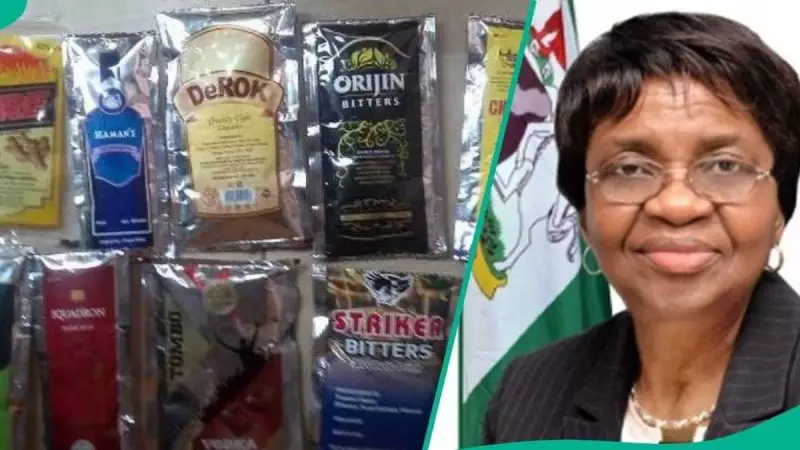
The National Agency for Food and Drug Administration and Control (NAFDAC) has officially commenced a comprehensive nationwide enforcement campaign targeting the production and sale of alcohol packaged in sachets and polyethylene terephthalate (PET) bottles with capacities below 200 millilitres. This decisive action follows a formal resolution passed by the Nigerian Senate, underscoring the government's commitment to addressing critical public health concerns.
NAFDAC Sends Unambiguous Signal to Manufacturers
During a media briefing held in Lagos on Wednesday, January 21, 2026, the Director-General of NAFDAC, Professor Mojisola Adeyeye, announced the full-scale enforcement initiative. This move delivers a clear and firm message to manufacturers who have previously resisted regulatory directives aimed at curbing the proliferation of high-alcohol-content beverages in small, affordable, and easily concealable packages.
Professor Adeyeye emphasized that the enforcement actions have already begun across the country, marking a significant escalation in the agency's regulatory efforts. The decision to proceed was solidified after NAFDAC received fresh formal authorization from the Senate, building upon an earlier announcement made in November 2025 regarding plans to implement a total ban by December of that year.
Legislative Backing and Public Health Rationale
The Senate's resolution, adopted in November 2025, originated from a motion sponsored by Senator Ned Nwoko, representing Delta North. The motion highlighted grave concerns over the widespread availability of potent alcoholic drinks in sachets and small bottles, which are notably low-cost and simple to hide. Lawmakers expressed bipartisan alarm at the escalating instances of alcohol abuse among school-age children and young adults, recognizing the severe public health and social risks posed by these products.
Senator Nwoko's motion, which garnered substantial support during plenary debates, ultimately led to the Senate directing NAFDAC to enforce existing regulations that prohibit the sale of alcoholic beverages in sachets and small-volume containers. This legislative backing provides a robust foundation for the agency's current enforcement drive.
Protecting Vulnerable Populations from Harm
At the Lagos briefing, Professor Adeyeye articulated the primary objective of the enforcement campaign: to safeguard public health and shield vulnerable groups, particularly children, adolescents, and young adults, from the detrimental effects of alcohol consumption. She explained that the proliferation of high-alcohol-content beverages in sachets and small containers has rendered these products excessively accessible, affordable, and concealable, thereby increasing the risk of misuse.
"NAFDAC is not against alcohol, but we are against its proliferation in high concentrations in sachets and small bottles, which makes it easy for children to access," Adeyeye stated. She further noted that prior to her tenure, some sachet alcohol products contained alarmingly high alcohol concentrations, ranging from 50 to 90 per cent, levels she described as dangerously detrimental to public health.
Historical Context and Manufacturer Resistance
The path to this enforcement has been marked by regulatory challenges and manufacturer pushback. NAFDAC had previously instructed manufacturers to reduce alcohol content in these products to 30 per cent, a directive that met with significant resistance. Manufacturers cited concerns over potential job losses and investment setbacks as reasons for their opposition.
This resistance prompted the matter to be escalated to the Federal Ministry of Health, which subsequently granted a five-year transition period, from December 2018 to January 31, 2024, allowing manufacturers time to restructure their operations and align with regulatory standards. Despite this grace period, compliance remained inconsistent, leading to the current stringent enforcement measures.
Economic Landscape and Consumer Spending
The enforcement initiative unfolds against a backdrop of substantial consumer expenditure on brewery products in Nigeria. Recent reports indicate that despite prevailing economic challenges, leading brewing companies generated combined revenues exceeding N1.54 trillion from beer and non-alcoholic beverages in the first nine months of 2025. This figure highlights the significant scale of the alcohol and beverage market in the country, underscoring the potential economic implications of the ban.
Financial statements from major players such as Nigerian Breweries Plc, International Breweries Plc, and Champion Breweries Plc reveal that robust demand for beer has been a key driver of revenue growth during this period. The enforcement of the sachet alcohol ban may influence market dynamics and consumer behavior moving forward.
Professor Adeyeye reaffirmed NAFDAC's unwavering commitment to protecting public health, stressing that the agency will continue to prioritize the safety of vulnerable populations through sustained and rigorous regulatory enforcement. This nationwide crackdown represents a pivotal step in mitigating the risks associated with alcohol abuse among Nigeria's youth and minors.




