
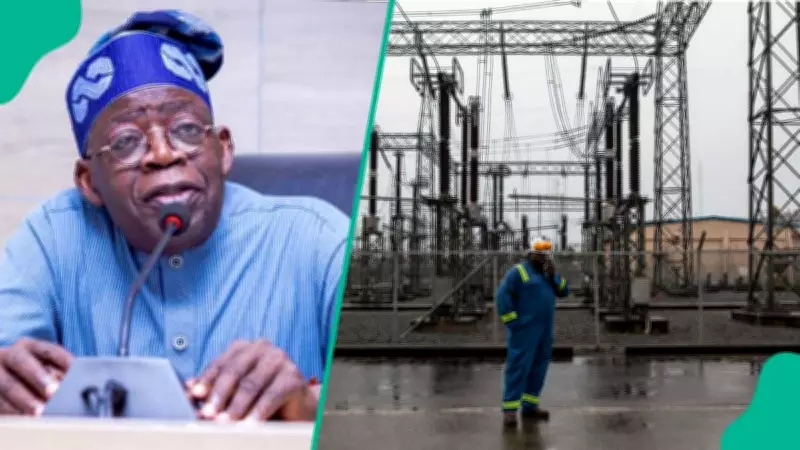
Nigeria's Power Crisis Deepens as FG Pays Only N71bn of N1.92trn Debt to GenCos
The Federal Government of Nigeria has made minimal progress in addressing the massive subsidy debt owed to electricity generation companies, paying just N71.49 billion out of a staggering N1.92 trillion obligation for 2025. This represents a mere 3.7 percent of the total amount due, according to official documents from the Nigerian Electricity Regulatory Commission.
Subsidy Shortfall Cripples Power Generation
The delayed payments have created severe ripple effects throughout Nigeria's power sector. The funding gap has directly impacted gas supply to generation companies, which rely heavily on gas to produce electricity. Industry sources confirm that GenCos have struggled to meet their financial obligations to gas suppliers, significantly limiting their capacity to generate sufficient power for the nation.
The subsidy system exists to bridge the gap between cost-reflective tariffs and what consumers actually pay for electricity. This financial mechanism operates through payments linked to distribution companies' remittance obligations to the Nigerian Bulk Electricity Trading Plc.
DisCos Show Strong Remittance Performance
Despite the broader sector challenges, electricity distribution companies demonstrated relatively strong performance in 2025. DisCos reportedly paid 93.8 percent of the N1.23 trillion billed to them during the year, remitting N1.16 trillion and leaving an outstanding balance of N71.49 billion.
However, the overall financial picture remains bleak. Generation companies issued invoices totaling N3.16 trillion throughout 2025, but received only N1.24 trillion in payments, creating the massive N1.92 trillion deficit that continues to plague the sector.
Quarterly Payment Breakdown Reveals Gaps
Detailed data from the regulatory commission shows concerning patterns in government payments:
- No subsidy payments were made in the first quarter of 2025 despite an obligation of N536.4 billion
- Only N76.95 billion was paid in the second quarter against a bill of N514.36 billion
- No payments were made in the third and fourth quarters of 2025
- For January 2026, a bill of N126.48 billion remains completely unpaid
The regulator emphasized that approximately N1.85 trillion of the outstanding amount stems from unfunded tariff shortfalls rather than market inefficiencies.
Transmission Constraints Cause N36bn Losses
Compounding the financial crisis, power generation companies reported losses of N36.03 billion in the first two months of 2026 due to stranded electricity. These losses resulted from transmission constraints that prevented generated power from being evacuated and distributed to consumers.
In January 2026, about 2,985 megawatts of electricity remained stranded, resulting in financial losses of N18.1 billion. The situation worsened in February, with stranded generation rising to 3,274 megawatts and losses estimated at N17.93 billion. These figures highlight persistent weaknesses in Nigeria's transmission infrastructure despite available generation capacity.
Government Initiatives to Address Liquidity
In response to the deepening crisis, the federal government has initiated a N501.02 billion bond issuance aimed at improving liquidity within the power sector. According to Bolaji Tunji, spokesperson for the Minister of Power, this bond forms part of a broader N4 trillion Presidential Power Sector Debt Reduction Programme approved by President Bola Tinubu.
The intervention is being executed through the Nigerian Bulk Electricity Trading Plc, with the bond proceeds expected to settle legacy debts, restore gas supply, and enable improved plant maintenance. Tunji stated that the initiative specifically addresses longstanding revenue shortfalls caused by non-cost-reflective tariffs and underfunded subsidies.
GenCos Still Awaiting Promised Funds
Despite the announced bond issuance, generation companies report they have not yet received any payments from the federal government. This delay continues despite the N501 billion bond specifically issued to clear approximately N4 trillion owed to GenCos. Industry stakeholders warn that further delays could exacerbate financial pressure on power operators and deepen Nigeria's electricity crisis.
The combination of massive subsidy debt, transmission infrastructure limitations, and delayed government interventions continues to challenge Nigeria's power sector, with consumers experiencing persistent electricity shortages nationwide.




