
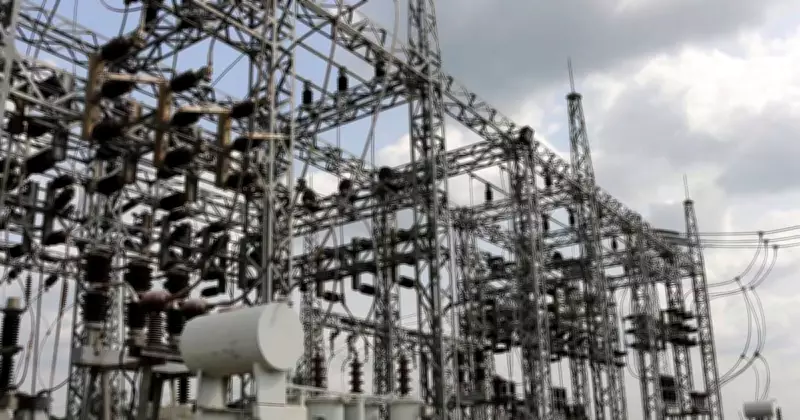
Nigeria's Power Crisis Deepens as 6,000MW Target Misses Three Deadlines
When Adebayo Adelabu assumed the role of Nigeria's Minister of Power in August 2023, he made an ambitious pledge: the nation would achieve 6,000 megawatts of electricity generation by the end of that same year. He assured Nigerians that the lights would finally come on. However, citizens, accustomed to decades of unfulfilled promises in the power sector under successive administrations, waited with a blend of hope and skepticism.
Today, they are still waiting. According to the latest data from the Nigerian Independent System Operator, the current electricity supply hovers around a mere 3,331 megawatts. This amount is barely sufficient to power a city the size of Lagos, let alone meet the needs of a nation with over 200 million people.
The Repeated Failure to Meet Targets
During a visit by the Senate Committee on Power, led by Senator Eyinnaya Abaribe, Minister Adelabu reiterated the federal government's solid plans to boost generation to 6,000 megawatts by the end of 2024. He emphasized his ministry's full commitment to hitting this target by December 2024. Yet, once again, the promise fell short.
By December 28, 2024, the highest generation recorded was 5,229 megawatts. The absolute peak ever achieved was 5,801.6 megawatts, still shy of the promised 6,000. Following this failure, Adelabu attributed the setback to vandalism that damaged critical power transmission equipment.
Bolaji Tunji, the special adviser on strategic communication and media relations to the minister, stated on December 29, 2024, "Indeed, a promise of 6,000 megawatts was made, and we believed it was achievable based on our efforts. Unfortunately, the actions of vandals set us back. We are working hard to ensure more supply to the grid."
A Brief Moment of Hope and Subsequent Decline
The target was then pushed to 2025. On March 2, 2025, Nigeria briefly hit a peak generation of 6,003 MW, the highest in the country's history. The minister's communications team announced this milestone with great excitement, noting that Nigeria also achieved a peak generation evacuation of 5,801.84 MW and a daily maximum energy output of 128,370.75 megawatt-hours.
However, this accomplishment was short-lived. Power generation capacity soon dropped to below 5,500 MW. Subsequent data from the Nigerian Independent System Operator and other agencies revealed that generation has since hovered around 5,000 MW.
By the time the third deadline arrived, a general 2025 target, electricity supply from the national grid to distribution companies was back at 3,331 MW. The Nigerian Integrated System Operator and electricity distribution companies cited gas shortages as the primary reason, with generation fluctuating between 2,000 and 3,900 MW.
Impact on Daily Life and the Economy
This persistent shortfall is taking a severe toll on Nigeria. Families are struggling to cope with extreme heat, while businesses are incurring significant losses. The World Bank estimates that power outages cost Nigeria approximately $29 billion annually, equivalent to about 10 percent of the country's GDP.
In March 2026, Minister Adelabu publicly apologized to Nigerians for the ongoing hardship, particularly during the dry season. "I want to apologise to Nigerians, officially now, as the minister of power, for this temporary issue that is causing hardship, especially during this dry season when there is so much heat everywhere," he said at a press conference in Abuja.
He assured citizens that relief was imminent, providing a two-week timeline for improvements in supply. "I can tell you, with the committee we have set up and commitments from gas suppliers, plus the timeline for the repair of the gas pipelines, we should start seeing improvements in supply in two weeks. Two weeks!" Adelabu emphasized.
Yet, as the two-week deadline passed, manufacturers, retailers, and small businesses reported that the burden of self-generation continues to erode profits and stifle growth. Gas-fired plants, which supply most of Nigeria's electricity, often operate below capacity due to supply issues and pricing disputes.
Systemic Challenges and Future Outlook
The transmission network lacks the robustness to handle higher demands, leading to frequent grid failures and forced reductions in power output. Simultaneously, distribution companies face financial troubles and infrastructure gaps, further weakening the entire system. This creates a vicious cycle where improvements in one area are negated by problems in another.
For everyday Nigerians, the consequences are tangible:
- In major urban centers, prolonged power outages have become the norm, forcing families to allocate more income to backup energy solutions.
- Rural areas continue to struggle with unreliable grid electricity, exacerbating economic disparities.
- Businesses, particularly manufacturers, view unreliable power as a major obstacle, often relying on generators for extended periods, which drives up costs and undermines competitiveness.
The government has proposed reforms aimed at tackling these challenges, including initiatives to attract private investment, adjust pricing models, and enhance regulatory oversight. However, progress has been inconsistent, and investor confidence remains low. As Nigeria grapples with this enduring power crisis, the promise of 6,000 megawatts remains elusive, leaving citizens and businesses in the dark.




