
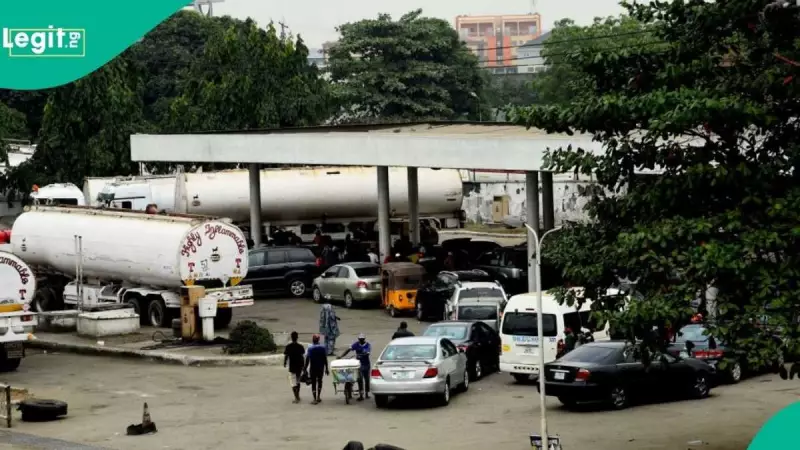
Nigeria's Energy Market Sees Renewed Price Pressure at Depots
Private depot owners across Nigeria have implemented fresh increases in the prices of Premium Motor Spirit (petrol) and Automotive Gas Oil (diesel), marking a significant shift after a brief period of relative stability in key regions. This development comes as delayed import inflows and licensing issues create tighter supply conditions nationwide, putting upward pressure on fuel costs at the wholesale level.
Petrol Prices Climb with N800 Emerging as New Benchmark
Data from industry monitoring reveals that petrol prices have resumed their upward trajectory, with several depots adjusting their rates in response to supply constraints. In Lagos, Warri, and Port Harcourt—three crucial energy hubs—the benchmark price for petrol has risen to approximately N800 per litre, up from previous levels around N730. This represents a notable increase that reflects renewed market pressures.
In Lagos specifically, while Shellplux maintained PMS prices steady at N725 per litre, major marketers including Rainoil, Eterna, and Pinnacle kept their prices at N800, suggesting resistance at higher price points and potentially establishing a new market standard. The clustering of prices around this level indicates a consolidation of pricing trends among private depot operators.
Warri Records Sharper Increases Amid Supply Constraints
The Warri depot region experienced more pronounced price hikes, reflecting particularly tight local supply conditions. Matrix and Optima raised their petrol prices from N752 to N770 per litre, while Zamson increased from N751 to N770. A&E showed a more modest adjustment, edging up slightly to N751. Industry traders attribute these increases to limited jetty activity and delayed product replenishment in the Niger Delta hub, highlighting regional supply chain challenges.
Diesel Prices Also Witness Significant Adjustments
Similar upward movements are evident in diesel pricing across multiple hubs. In Lagos, AGO prices rose by double digits, with Aipec increasing from N908 to N925 per litre, Duport from N911 to N922, Rainoil from N911 to N930, and Nipco from N920 to N940. These substantial increases reflect broader market dynamics affecting both petrol and diesel products.
In Port Harcourt, Bulk Strategic raised diesel prices from N951 to N972, while Aradel entered the market at N955, positioning above most January benchmarks. Market sources indicate these adjustments stem from limited arrivals into the eastern supply corridor, further emphasizing the nationwide nature of the supply constraints.
Import Licence Delays Tighten Supply Outlook
Industry analysts point to delays in issuing import licences as a primary factor reducing product inflows into Nigeria. This administrative bottleneck has left several jetties vacant and tightened available supply across the country. Experts warn that prolonged uncertainty regarding import licences could sustain upward pressure on depot prices in the near term, especially if replenishment delays persist.
With PMS prices now clustering around N800 per litre at private depots, analysts caution that retail pump prices may remain under pressure until supply conditions ease. This comes despite recent downward trends in petrol pricing following Dangote Refinery's decision to sell petrol at N699 per litre to marketers and retail outlets like MRS Oil selling at N739 per litre.
Market Context and Recent Developments
The current price increases contrast with recent market movements that saw the Nigerian National Petroleum Company Limited (NNPCL) reduce its petrol pump price to N785 per litre, narrowing the gap with Dangote-linked retail outlets. Market participants note that the direction of depot prices in the coming weeks could directly influence price changes at filling stations, potentially affecting consumers nationwide.
This development occurs against a backdrop of improved fuel supply statistics, with Nigeria's daily petrol supply increasing to 74.2 million litres in December 2025, up from 71.5 million litres in November, according to regulatory data. The improved position was largely attributed to stronger output from the Dangote Petroleum Refinery alongside coordinated import arrangements, highlighting the complex interplay between domestic production and import dependencies in Nigeria's energy market.




