
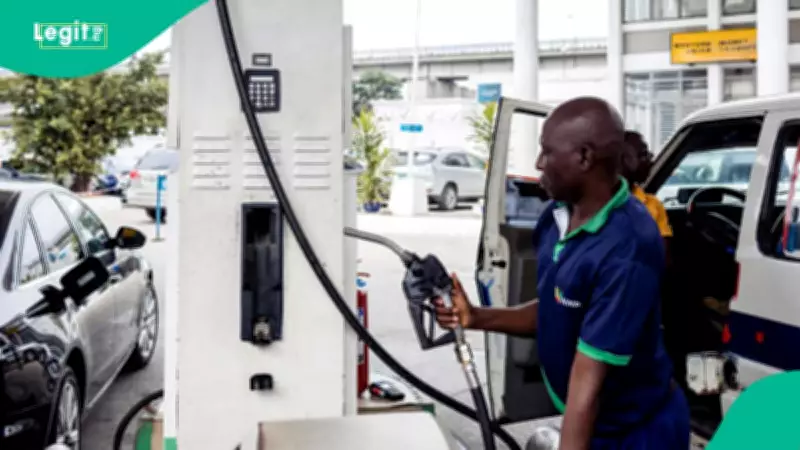
Dangote Refinery and Marketers Slash Petrol Prices as Global Oil Crashes 15%
Nigerian motorists, who have endured months of volatile fuel costs, received unexpected relief on Wednesday, April 8, 2026, as Brent crude oil prices plummeted more than 15% to below $95 per barrel. This dramatic drop was triggered by a surprise two-week ceasefire agreement between the United States and Iran, prompting immediate price reductions from Africa's largest refinery and downstream operators across Nigeria.
Immediate Price Reductions Across the Market
Dangote Refinery, which has become the dominant price setter in Nigeria's deregulated fuel market, reversed its recent price hike by lowering its ex-depot petrol price from N1,275 to N1,200 per litre. This adjustment came as global crude costs declined sharply following the geopolitical developments in the Middle East.
Major depot owners and fuel marketers quickly followed Dangote's lead, demonstrating the rapid transmission of international price signals in Nigeria's deregulated petroleum market. According to real-time data from PetroleumPriceNG, several key depots adjusted their prices downward on the same day:
- Soroman and Sobaz depots: N1,230 per litre
- Rainoil depots: N1,220 per litre
- Dangote depots: N1,214 per litre
At the retail level, NNPC outlets in Abuja reduced pump prices from N1,361 to N1,295 per litre, while attendants in Lagos confirmed similar reductions across various filling stations.
Geopolitical Trigger for Oil Market Turmoil
The dramatic sell-off in global oil markets followed President Donald Trump's announcement of a conditional two-week ceasefire with Iran, just hours before a self-imposed deadline that had threatened widespread strikes on Iranian infrastructure. Trump described the agreement as a "double-sided CEASEFIRE" on social media platforms.
The deal centers on the reopening of the Strait of Hormuz, a critical maritime passage through which approximately 20% of global daily oil supply passes. Iran's Foreign Minister Abbas Araqchi confirmed that attacks would halt if strikes against the country stopped, with limited and controlled passage possible within days ahead of planned US-Iranian talks in Pakistan.
Market analysts noted the immediate and substantial reaction. Brent crude futures fell $18.27, representing a 15.72% decline to $92.26 per barrel by mid-afternoon Nigerian time. West Texas Intermediate experienced an even steeper drop of $20.48, or 18.13%, settling at $92.47 per barrel. UBS analyst Giovanni Staunovo attributed the plunge to investors pricing in de-escalation and increased supply potential from the region.
Fragile Truce and Market Uncertainty
Despite the immediate relief for Nigerian consumers, experts caution that the price reductions may be short-lived. The ceasefire agreement is temporary by design, intended to allow negotiations toward a more permanent peace arrangement. Tamas Varga of PVM Oil noted that 10-13 million barrels per day of stranded crude could gradually return to the market, but this depends entirely on whether the fragile truce holds.
In Nigeria, this episode underscores the double-edged reality of fuel deregulation. Between January and March 2026 alone, Dangote Refinery adjusted petrol prices nine times, with six increases and three decreases. This volatility pushed the ex-depot rate from N699 to N1,200 per litre, representing a nearly 72% surge over just three months.
At its recent peak, consumers in Abuja were paying between N1,290 and N1,350 per litre at the pump, placing significant strain on household budgets and business operations across the country.
Dangote's Dominance and Supply Challenges
The 650,000-barrels-per-day Dangote Refinery has become Nigeria's dominant price setter since operations ramped up in late 2024. However, the facility continues to grapple with crude supply constraints, including a reported shortfall of about 79.53 million barrels between October 2025 and mid-March 2026.
While Nigeria's gross foreign reserves climbed to a 13-year high of $50.45 billion in February 2026, offering some macroeconomic buffer against global volatility, analysts warn that motorists remain exposed to international market fluctuations. The current respite is certainly welcome for Nigerian drivers and businesses, but the fragile Middle East truce combined with ongoing domestic supply challenges mean prices could swing upward again once the two-week ceasefire window closes.
For now, Nigerian drivers can breathe easier at the pumps, but industry observers suggest this relief may prove temporary as global geopolitical tensions and market forces continue to influence local fuel pricing in Nigeria's deregulated petroleum sector.




