
Petrol Stations Hold Firm on Prices Despite Dangote's Significant Reduction
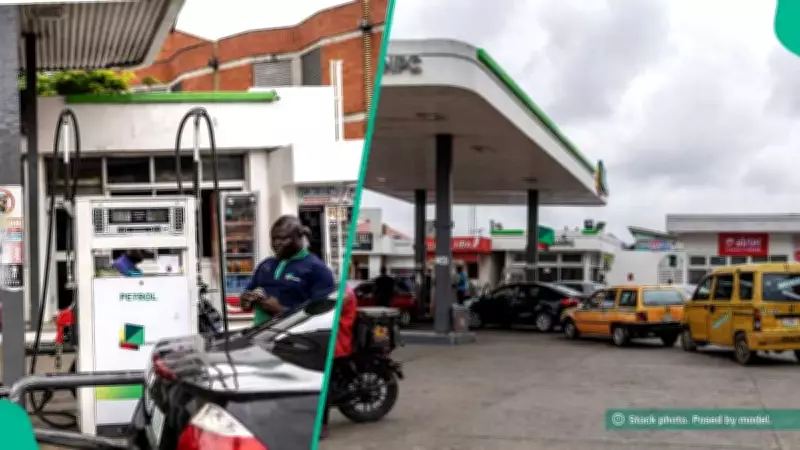
Petrol stations across Lagos, including those operated by the Nigerian National Petroleum Company Limited (NNPC), have maintained their pump prices despite a substantial N70 per litre reduction announced by the Dangote Petroleum Refinery and Petrochemicals Limited. This delay in passing on savings to consumers has left many Nigerians paying between N1,310 and N1,330 per litre for Premium Motor Spirit (petrol).
Lagos Stations Show No Immediate Price Changes
Recent checks in various Lagos neighborhoods reveal consistent pricing patterns that contradict expectations following Dangote's announcement. In the Shomolu and Ikotun areas, filling stations continue to dispense petrol at elevated rates. Heyden station on Apata Road and Mobil on Sanusi Road both maintained their price at N1,330 per litre, while an NNPC outlet at Ikotun Roundabout sold at N1,310 per litre.
MRS stations in the same region followed similar pricing strategies, with N1,310 recorded at Igandu Bus Stop and N1,320 along the Igandu-Ikotun Road. These prices remain significantly above the anticipated range that should have resulted from the refinery's recent adjustment to its pricing structure.
Dangote's Pricing Adjustment and Industry Impact
The Dangote Petroleum Refinery reduced its gantry price for petrol to N1,200 per litre from N1,275, with a coastal price set at N1,153 per litre. This strategic move reflects changes in the company's pricing approach amid ongoing geopolitical tensions affecting global oil markets. The revised pricing template is expected to influence supply costs across depots and retail outlets throughout Nigeria's downstream petroleum sector.
Industry analysts anticipate that market players will gradually recalibrate their landing costs in response to the new pricing, particularly those sourcing fuel locally. The coastal price reduction is also projected to support marine deliveries to depots in southern Nigeria, offering an alternative distribution route that could enhance supply efficiency.
Depot Prices Show Early Signs of Adjustment
While retail prices remain stubbornly high, depot prices across key Nigerian cities have begun responding to Dangote's pricing shift. In Lagos, major depot operators including Nipco, Aiteo, and Ardova have reduced their prices to approximately N1,215 per litre. Similar downward trends have emerged in Warri, Port Harcourt, and Calabar, where depot prices now range between N1,210 and N1,255 per litre.
These depot adjustments reflect tighter margins and increased competition among petroleum marketers, suggesting that retail price reductions may follow once existing high-cost inventory is depleted. Industry sources attribute the delay in pump price adjustments to the substantial stock purchased at previous higher rates, which retailers must sell before implementing new pricing.
Broader Context of Fuel Pricing in Nigeria
The current situation occurs against a backdrop of fluctuating petrol prices across Nigeria. According to recent data from the National Bureau of Statistics (NBS), Nigerians paid an average of N1,051.47 per litre for petrol in February 2026, representing a 15.60% decrease compared to February 2025's average of N1,245.80 per litre. However, on a month-on-month basis, prices actually increased by 1.62% from January 2026's average of N1,034.76 per litre.
Analysts expect gradual downward pressure on pump prices as the market absorbs Dangote's reduction, potentially bringing retail prices below the N1,300 mark in the coming weeks. The transition period highlights the complex dynamics between refinery pricing, depot operations, and retail distribution in Nigeria's petroleum sector.




