
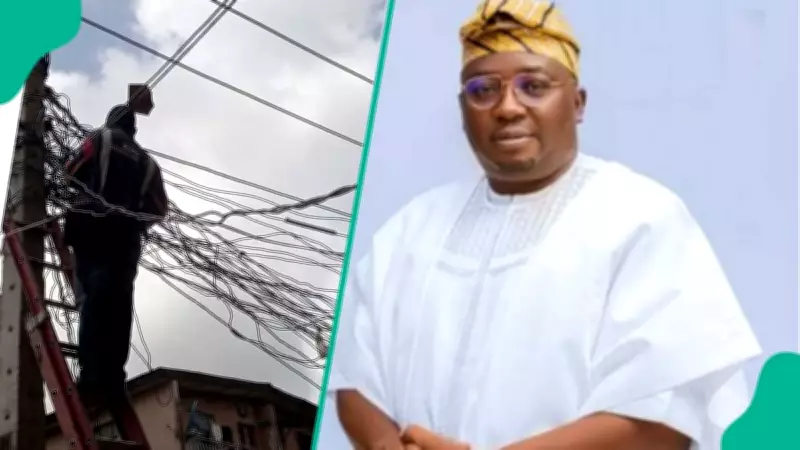
Energy Darkness Persists Two Weeks After Minister's Electricity Promise
Electricity generation in Nigeria continues to operate at critically low levels, more than two weeks after Power Minister Adebayo Adelabu assured citizens that power outages would significantly ease within a fortnight. Despite marginal improvements in some areas, the national power supply remains trapped between 3,000 and 4,000 megawatts, leaving millions of households and businesses without reliable electricity and raising serious questions about the government's ability to deliver on its energy promises.
Gas Shortages and Unmet Commitments
The persistent blackouts across Nigeria have been primarily attributed to severe gas shortages affecting thermal power plants. Power distribution companies have issued repeated apologies to consumers, but tangible improvements have failed to materialize nationwide. According to industry sources, gas suppliers have threatened to halt deliveries to generation companies unless outstanding payments are settled, creating a financial standoff that directly impacts electricity production.
Minister Adelabu acknowledged the crisis during a recent press briefing in Abuja, describing the situation as temporary and partly beyond government control. He noted that businesses, educational institutions, and industrial operations have all suffered significant disruptions, particularly during the ongoing dry season. While the minister cited commitments from gas suppliers and ongoing pipeline repairs as reasons for optimism, the promised two-week timeline has elapsed without substantial nationwide improvement.
Supply Remains Below Previous Year's Levels
Current electricity generation figures remain substantially below levels recorded in 2025, when power generation regularly exceeded 5,000 megawatts. As of recent measurements, distribution companies were allocating approximately 3,500 megawatts to consumers nationwide, representing a slight improvement from earlier lows around 2,900MW. However, numerous consumers across multiple regions report experiencing minimal relief from the persistent outages that have characterized recent weeks.
DisCos and GenCos Clash Over Responsibility
Tensions have escalated between electricity generation companies and distribution companies regarding responsibility for the ongoing power shortfall. Generation companies have accused distribution operators of rejecting available electricity, resulting in significant financial losses for power producers. Distribution companies counter that they only accept power that can be effectively distributed and paid for by end consumers, creating a fundamental disagreement about load management.
Joy Ogaji, Chief Executive Officer of the Association of Power Generation Companies, confirmed that system operators have occasionally directed generation companies to reduce output due to low demand nominations from distribution companies. She emphasized that while gas shortages have contributed substantially to reduced generation capacity, load rejection by distribution companies has played a significant role in prolonging the electricity crisis affecting Nigerian consumers.
Infrastructure Limitations Constrain Available Power
According to industry analysis, Nigeria operates approximately thirty grid-connected power plants with a combined installed capacity of 15,500 megawatts. However, due to substantial debts owed to generation companies, only about 7,000MW can realistically be made available for distribution. Further complicating matters, transmission and distribution infrastructure can only handle between 4,000MW and 4,500MW, resulting in stranded generation capacity and additional financial losses across the electricity value chain.
Ogaji has questioned capacity claims made by the Transmission Company of Nigeria and various distribution companies, urging these entities to substantiate their publicly released figures with verifiable data. Distribution operators, speaking anonymously, have countered that inefficiencies within the transmission network frequently result in power being delivered to locations where it cannot be effectively distributed, making load acceptance practically impossible in certain circumstances.
Transmission Company Defends Capacity Claims
The Transmission Company of Nigeria maintains that it has expanded its wheeling capacity to 8,700MW through substantial infrastructure upgrades and system improvements. The agency has disputed recent claims by the Port Harcourt Electricity Distribution Company regarding transmission capacity limitations, describing those figures as outdated and inaccurate. According to TCN officials, actual power delivery depends on three critical factors: what generation companies can produce, what distribution companies nominate for distribution, and what the national grid can physically transmit, with established penalties for non-compliance across the system.
Debt Settlement Program Offers Limited Hope
In related developments, eight major electricity generation companies have signed onto President Bola Tinubu's N3.3 trillion debt settlement program designed to address liquidity challenges within Nigeria's power sector. The agreement covers fifteen generation plants operated by six private firms and two public entities, aiming to clear longstanding financial obligations that have hindered investment and operational efficiency. Energy experts emphasize that transparency and consistent implementation will be crucial for this reform initiative to succeed in attracting necessary investment and stabilizing Nigeria's troubled electricity sector.




