
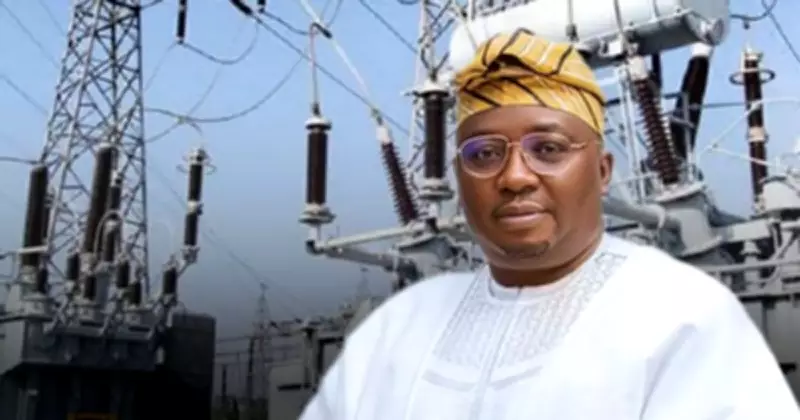
Power Minister Issues Formal Apology for National Electricity Crisis
In a significant development addressing Nigeria's ongoing energy challenges, the Minister of Power, Adebayo Adelabu, has issued a formal public apology to citizens across the nation for the severe and persistent power outages that have plagued the country since February 2026. The apology was delivered during a comprehensive press conference held on Tuesday, March 24th, 2026, where the minister acknowledged the immense hardship caused by the electricity shortages, particularly during the current period of intense dry season heat.
Government Pledges Immediate Action and Long-Term Solutions
Minister Adelabu emphasized that the federal government is working tirelessly to resolve the crisis, stating that officials are "leaving no stone unturned" in their efforts. He specifically promised that noticeable improvements in power supply would materialize within the coming weeks. "We want to apologise to the generality of Nigerians officially as the minister of power, for this temporary issue that is leading to hardship, especially in this dry season where there's so much heat everywhere," Adelabu expressed. He further clarified that the situation arose from factors largely beyond immediate control but assured that restoration efforts are continuous.
The minister highlighted the government's commitment to returning to the more stable power generation levels witnessed in 2025, a period for which the administration had received public commendation. "But we are not relenting. We are working on it 24/7 to make sure that we go back to the trajectory of 2025, whereby you commended us for a good job," he added, underscoring the round-the-clock dedication to resolving the infrastructure issues.
Root Causes: Gas Shortages and Massive Sector Debt
The current electricity crisis has been directly linked to the transition from hydroelectric power generation, which became insufficient after the rainy season ended in late January, to an increased reliance on thermal power stations. This shift has exposed critical vulnerabilities in the energy supply chain, primarily a severe shortage of gas supply to these thermal plants.
In a revealing interview, Dr. Joy Ogaji, Chief Executive Officer of the Association of Power Generation Companies, disclosed that power-generating companies owe gas suppliers an astonishing 6.3 trillion naira. This colossal debt has compelled gas suppliers to suspend their services, leading to the forced closure of multiple power-generating plants across Nigeria. The resulting generation deficit has caused widespread blackouts and triggered public protests in several states, including Osun, Edo, and Lagos, where residents have experienced a dramatic and rapid deterioration in electricity availability.
Political Context and Presidential Initiatives
With the 2027 general elections approaching in approximately nine months, the power crisis carries significant political weight. Minister Adelabu directly acknowledged this timing, connecting service improvement to electoral accountability. "We are close to the election year...I can assure you that in the next few weeks, all these will be over. Power generation will improve, transmissions will improve, distribution will improve, and that 6,000MW will be achieved before the end of this year," he vowed, setting a clear target for national power generation capacity.
This commitment echoes a prominent campaign promise made by President Bola Tinubu, who had previously told Nigerians not to re-elect him for a second term if he failed to deliver a reliable 24-hour power supply. In response to the escalating crisis, President Tinubu has recently inaugurated an 11-member committee tasked with establishing the Grid Asset Management Company Limited (GAMCO). This new initiative is designed as a strategic intervention to address Nigeria's persistent power sector challenges, including stranded generation capacity, transmission bottlenecks, and overall grid management inefficiencies.
The high-powered committee, chaired by the President's Chief of Staff, Femi Gbajabiamila, includes key figures such as the Attorney General Lateef Fagbemi, the Ministers of Power, Works, Finance, Communications, Science and Technology, Aviation, and the Minister of State for Petroleum. Its mandate involves reviewing existing laws and regulatory frameworks governing the entire electricity value chain to identify and resolve any conflicts or gaps that could impede GAMCO's successful implementation and, by extension, the stabilization of the national grid.
Minister Adelabu's latest apology and assurances follow his earlier appeals for public patience, which were made before the power situation worsened further. The federal government now faces the dual challenge of managing immediate gas supply and debt issues while simultaneously advancing structural reforms through the GAMCO framework to prevent future recurrences of such debilitating national blackouts.




