
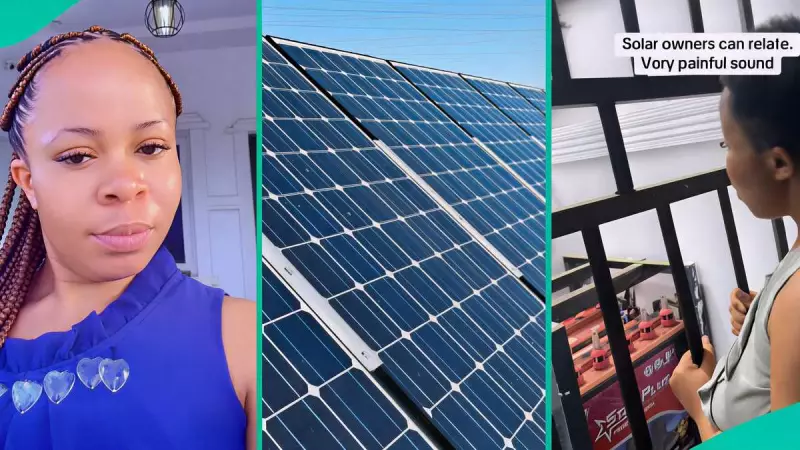
Solar User's Warning Beep Sparks Battery Debate Amid Grid Collapse
A Nigerian woman who installed a solar energy system in her home has shared her frustrating experience with a persistent warning beeping sound, sparking widespread discussion about battery technology and energy management. The woman, identified as @mrsbt24 on social media, recorded herself standing in front of her inverter while commenting on the audible alert coming from her setup.
The Painful Sound of Drained Batteries
In her viral video, the woman displayed her solar configuration featuring four tubular batteries stacked in pairs. She expressed that only fellow solar users could truly understand how distressing the constant beeping sound could be. Her facial expression showed clear resignation to what the alert indicated about her system's status.
According to solar energy experts, a beeping sound from most solar setups typically signals that the batteries are nearly depleted and may shut down at any moment. This warning becomes particularly crucial during Nigeria's frequent national grid collapses, when solar systems become the primary power source for many households.
Tubular vs. Lithium: The Battery Debate
The woman's setup with tubular batteries, which typically offer about 50% depth of discharge (DOD), has prompted comparisons with lithium alternatives that can reach up to 90% DOD. This significant difference in performance capability has fueled ongoing debates about which battery type provides better value and reliability for Nigerian solar users.
Her system appeared to include a hybrid inverter with an inbuilt MPPT charge controller, positioned some meters away from the battery bank. A protection box containing components like an SPD (Surge Protection Device) was visible beside the inverter, though she didn't reveal the number or capacity of solar panels in her installation.
Public Reactions and Practical Advice
The video attracted numerous comments from viewers offering interpretations of the beeping sound and suggestions for load management. Many responses highlighted the contrast between different battery technologies and their performance during Nigeria's ongoing power challenges.
Several commenters shared their experiences:
- "Once u hear the sound boom darkness," noted one user, capturing the immediate consequence of ignoring the warning
- "I never hear am once with my Lithium battery 40 kilowatts," reported another user advocating for lithium alternatives
- "Tubular batteries doesn't last. Replace them with lithium batteries," advised a solar enthusiast
- "Very painful till especially when you re getting ready to sleep after watching movies," expressed someone familiar with the timing frustration
Professional advice also emerged in the discussions, with one solar technician explaining: "Solar energy systems is beautiful, you simply need to know how to manage your consumption based on the deficiencies in your setup. Your solar panels should be way sufficient and if you have a small battery bank, you should start conserving your usage by 4pm when the sun goes down."
Broader Context of Nigeria's Power Challenges
This personal solar experience comes against the backdrop of Nigeria's recurring national grid collapses, which have made alternative energy solutions increasingly vital for households and businesses. The timing of the woman's low battery warning coincided with yet another period of grid instability, highlighting how solar systems have become essential backups rather than luxury additions.
The discussion also touched on economic considerations, with some commenters questioning battery brand choices and costs. When one user asked "U go buy starplus battery? why nau," the woman responded defensively with "What's wrøng with starplus battery?" indicating the financial constraints many Nigerians face when investing in solar technology.
This viral moment underscores the growing importance of solar energy literacy in Nigeria, where power reliability remains a persistent challenge. As more households turn to solar solutions, understanding battery maintenance, load management, and technology choices becomes increasingly crucial for maximizing these investments during frequent grid failures.




