
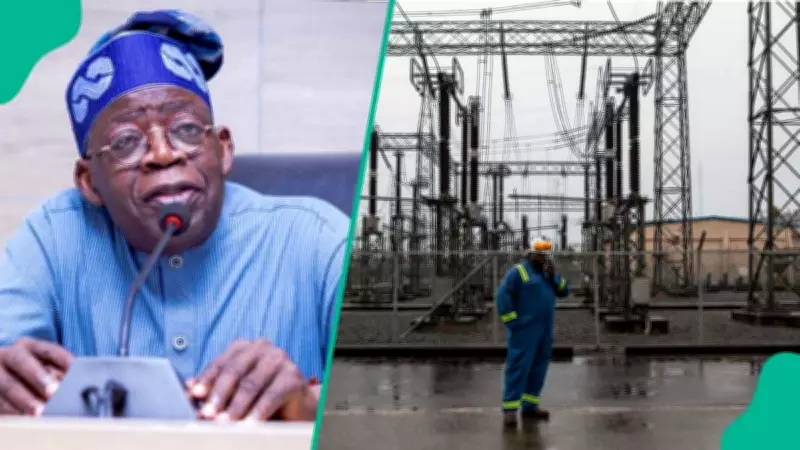
Tinubu Approves N3.3 Trillion Power Sector Debt Repayment to Boost Electricity Supply
President Bola Tinubu has approved a comprehensive repayment plan to settle long-standing debts in Nigeria's power sector, as part of broader efforts to address liquidity challenges that have persistently affected electricity supply across the nation. This significant development was officially disclosed in a statement released on Sunday by Bayo Onanuga, the Special Adviser to the President on Information and Strategy, following a final review of legacy debts accumulated between February 2015 and March 2025 under the Presidential Power Sector Financial Reforms Programme.
Government Moves to Clear Decade-Long Debts
The federal government has agreed on a total of N3.3 trillion as a full and final settlement after thorough verification processes, aimed at ensuring transparency and fairness in resolving these longstanding financial obligations. According to the statement, this repayment plan is designed to tackle the liquidity issues that have plagued the power sector for years, hindering reliable electricity generation and distribution. The initiative represents a critical step in the administration's strategy to strengthen Nigeria's energy infrastructure and improve service delivery to consumers nationwide.
Implementation Begins with Partial Disbursements
Implementation of the debt repayment programme has already commenced, with fifteen power generation companies signing settlement agreements worth approximately N2.3 trillion. The Federal Government has successfully raised N501 billion specifically to fund these repayments, out of which N223 billion has already been disbursed to various stakeholders. Further payments are currently ongoing as part of the phased implementation approach, with the presidency confirming that the next phase of the programme will commence within the current quarter.
Expected Impact on Electricity Supply
The presidency has emphasized that this substantial debt settlement is expected to significantly improve stability across the entire power value chain, particularly in electricity generation. By providing financial support to power plants, the government aims to enhance electricity reliability, attract much-needed investment into the sector, and create employment opportunities as the industry stabilizes. Special Adviser on Energy to the President, Olu Arowolo-Verheijen, noted that the programme extends beyond mere debt settlement, aiming to restore confidence in the sector, ensure timely payments to gas suppliers, and enable power plants to operate more reliably and efficiently.
Broader Reforms and Industry Concerns
Arowolo-Verheijen further explained that the comprehensive reforms include improved metering systems and service-based tariffs that better align electricity costs with service quality, alongside strategic efforts to prioritize power supply to businesses and industrial sectors. However, industry stakeholders have raised concerns about the actual debt burden, with the Chief Executive Officer of the Association of Power Generation Companies (APGC), Joy Ogaji, recently stating that the sector's total debt is significantly higher than the approved settlement figure. Ogaji explained that gas suppliers had halted supply to thermal plants due to unpaid obligations estimated at approximately N3.3 trillion, exacerbating electricity shortages nationwide.
Discrepancy in Debt Figures Raises Questions
According to Ogaji, the total debt owed to power generation companies has risen to about N6.8 trillion, with a substantial portion linked to thermal plants that depend on consistent gas supply. She noted that monthly payment shortfalls have continued to increase the overall debt profile, highlighting a concerning gap between the government's approved settlement figure and industry estimates. Furthermore, power generation companies have reportedly not received any payments from the federal government despite the N501 billion bond issued specifically to clear approximately N4 trillion owed to GenCos, raising questions about implementation transparency and timing.
Industry experts warn that delays in actual fund disbursement could worsen financial pressure on power operators, potentially undermining the programme's objectives. President Tinubu has commended all stakeholders involved in resolving the sector's challenges while emphasizing the administration's commitment to sustainable energy reforms that will ultimately benefit all Nigerians through improved electricity access and reliability.




