
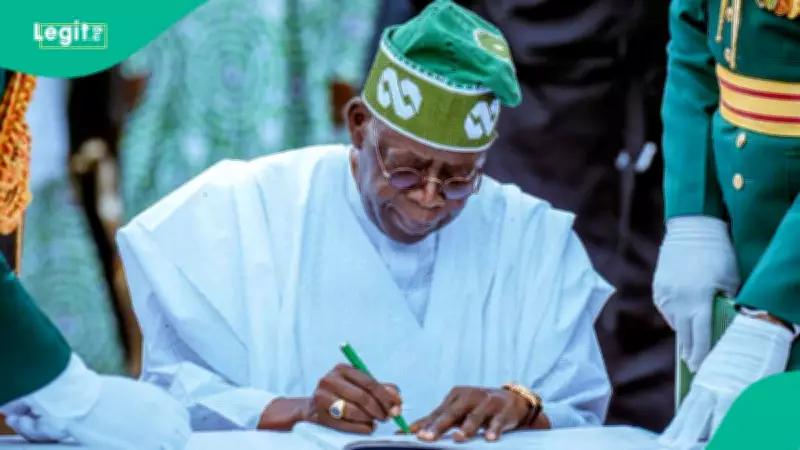
President Tinubu Approves Major N3.3 Trillion Electricity Debt Settlement Plan
President Bola Ahmed Tinubu has given his official approval for a comprehensive payment plan designed to address Nigeria's persistent electricity crisis. The plan involves the allocation of N3.3 trillion to finally settle outstanding legacy debts that have plagued the nation's power sector for over a decade. This initiative falls under the Presidential Power Sector Financial Reforms Programme, which seeks to restore stability and confidence across the entire electricity value chain.
Details of the Debt Repayment Strategy
Presidential spokesman Bayo Onanuga confirmed the approval following a final review of the long-standing debts. In a statement released via his social media handle, Onanuga emphasized that the programme is not merely about clearing financial obligations but is fundamentally aimed at revitalizing the power infrastructure. The repayment plan is expected to ensure that gas suppliers receive their due payments, enabling power plants to operate continuously and improving overall system reliability.
Olu Arowolo-Verheijen, Special Adviser on Energy to President Tinubu, provided further insights into the broader context of the reforms. She explained that the debt settlement is part of a larger set of transformative measures already in progress. These include the implementation of improved metering systems and the introduction of service-based tariffs, which directly link electricity charges to the quality of power received by consumers.
Broader Reforms and Economic Implications
The government has placed a strong emphasis on prioritizing power supply to businesses, industries, and small enterprises. Reliable electricity is viewed as a critical component for job creation, livelihood support, and overall economic growth. By addressing the financial bottlenecks in the sector, the administration aims to foster an environment where both households and commercial entities can benefit from more consistent and efficient electricity services.
Arowolo-Verheijen articulated the ultimate goal of these reforms: to deliver more reliable power to homes, provide stronger support for businesses, and establish a system that functions effectively for all Nigerians. The approval of this N3.3 trillion payment plan marks a significant step towards resolving the chronic issues that have hindered Nigeria's power sector, with the potential to catalyze positive changes in the nation's economic landscape.




