
Nigeria's Power Sector: Why Splitting TCN Won't Solve Electricity Crisis
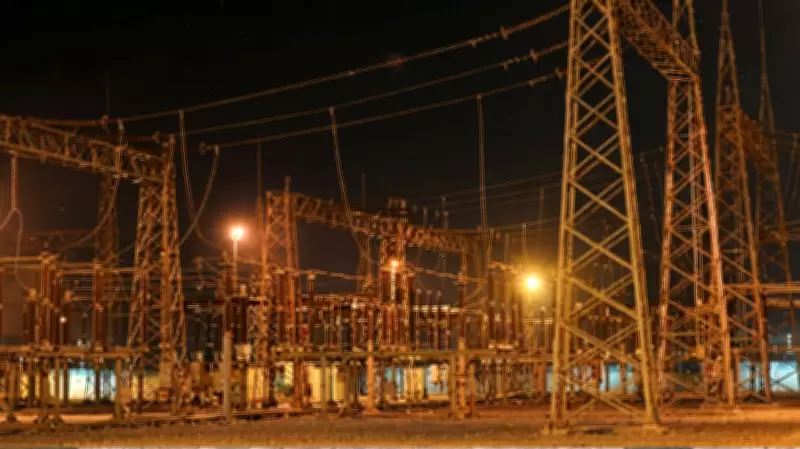
In a recent development, Minister Adelabu has announced plans to unbundle the Transmission Company of Nigeria (TCN) into two entities: the Nigerian Independent System Operator (NISO) and the Transmission Service Provider (TSP). According to official statements, this move aims to promote operational clarity, transparency, and value creation through improved corporate governance. However, this approach appears misguided to many Nigerians who think beyond conventional boundaries.
The Flaw in Government Control
The fundamental problem with TCN is bureaucracy and corruption, features often associated with government-controlled enterprises. Splitting TCN into two agencies still under state control cannot make it more efficient. Instead, it will likely create duplication, confusion, and further inefficiency. In essence, the focus should be on fixing the transmission bottleneck, not multiplying it.
Nigeria's history is clear: government-run enterprises are typically riddled with inefficiency, redundancy, and corruption. This reality led to the creation of the Technical Committee on Privatisation and Commercialisation (TCPC), later transformed into the Bureau of Public Enterprises (BPE). Yet, we are now re-entrenching government control where privatisation should be deepened.
Learning from Past Failures
A quick reminder serves as a cautionary tale: the four NNPC-owned refineries remain comatose despite years of turnaround maintenance. Given this precedent, the government should not renew partnership contracts with the 11 Distribution Companies (DisCos) that have failed to meet expectations. They should be dissolved, and alongside TCN assets, transferred to existing Generation Companies (GenCos) and other competent investors.
Currently, there are an estimated 23 operational GenCos with a combined capacity of 13,461MW. Notable examples include Mainstream Energy (operator of Kainji, Jebba, and Zungeru hydros), Afam, Alaoji NIPP, Azura-Edo, Egbin, Geregu, Odukpani, Shiroro, and Trans-Amadi. These entities should be assigned specific zones to manage, allowing a single operator to oversee generation, transmission, and distribution within each region.
A Framework for Restructuring
Nigeria already has six geopolitical zones, providing a ready framework for restructuring the electricity market. This model is the norm in Europe, North America, and many parts of Asia where free-market systems thrive. In contrast, state-controlled utilities are common in monarchical or communist economies like parts of the Middle East and China.
Nigeria has officially transitioned from a command-and-control economy to a market-driven one. So why the hesitation in liberalising transmission? The argument that electricity is a security-sensitive asset and must remain state-controlled no longer holds water. Telecommunications—equally sensitive—was fully liberalised 25 years ago with no negative security consequences. On the contrary, it has flourished, creating indigenous champions like Globacom, owned by Chief Mike Adenuga, which operates beyond Nigeria's borders and helps earn foreign exchange.
Global Lessons and Local Potential
Globally, ownership models vary. France's EDF and Norway's Statnett remain state-controlled; the U.K. and U.S. systems are largely private. China's State Grid is state-owned, while Japan and South Korea maintain mixed systems. The rule is clear: no one-size-fits-all. Pragmatism must guide policy.
Nigeria followed global liberalisation trends when it reformed banking in the 1990s, enabling indigenous entrepreneurs like Jim Ovia (Zenith) and the founders of GTBank—Fola Adeola and the late Tayo Aderinokun—to reshape the industry, now dominant across Africa and expanding globally. Tony Elumelu's United Bank For Africa (UBA) is already flourishing across Africa's business landscape, present in Europe, the USA, and the Middle East, including Dubai in the United Arab Emirates, and poised to open a branch in Saudi Arabia. Electricity reform should follow a similar trajectory.
Renewable Energy and Economic Growth
Furthermore, Nigeria is lagging in renewable energy despite enormous potential in solar, wind, and hydro. Countries like Ethiopia (100%), DRC (100%), and Eswatini (96%) have leveraged Public-Private Partnerships (PPPs) to scale renewable adoption. Nigeria must do the same if it intends to unlock projected benefits, including IRENA's forecast that renewables could provide 60% of Nigeria's energy needs by 2050.
Rather than clinging to outdated control models, we should be developing mini-grids and decentralised systems to bypass an overstretched, outdated national grid that collapses under loads above 4-5GW, leaving 7-12GW stranded. Overcoming energy poverty is essential to achieving Nigeria's ambition of becoming a $1 trillion economy, like Indonesia, our peer in the 1960s.
The Economic Impact of Stable Electricity
The current economy effectively operates only between 6 a.m. and 6 p.m., running at half capacity due to unreliable electricity. Opening the economy 24/7 would unlock productivity, double our GDP—currently at the number four position in Africa, a little over $118 billion behind South Africa's $410.34 billion, Egypt's $337.34 billion, and Algeria's $268.89 billion—and accelerate industrialisation.
With adequate and stable electricity, Nigeria's GDP can even be quadrupled when existing factories and new ones are set up and running at full capacity, thereby increasing productivity. This would allow our country to reclaim its prime position not only as Africa's most populous nation but also the largest economy on the continent.
Historical Context and Current Efforts
Incidentally, this is not the first time in the past decade that the federal government has strategically intervened in the power sector. Like what President Tinubu just did last Friday, former President Muhammadu Buhari had also saddled his chief of staff, Mallam Abba Kyari, with the responsibility of working with Siemens of Germany to deliver a stable electricity supply in Nigeria. The task was unaccomplished before he suddenly passed away, and the project is still ongoing.
The difference between the initiative by the last administration driven by Abba Kyari and the current one is that while the former was a one-man show driven by the then Chief of Staff to the president, the current dispensation under President Tinubu involves a multidisciplinary approach. This includes setting up a committee comprising ministries, departments, and agencies led by Chief of Staff Gbajabiamila to tackle the seemingly intractable challenge of electricity power poverty hobbling the progress and development of our country.
Given the composition of the current electricity power sector rescue team, it may not be too hasty to spread optimism that help is on the way and encourage Nigerians to renew their hope that the long-sought transition from darkness to light is on track.
Onyibe is an entrepreneur and public policy analyst. He wrote from Lagos.




