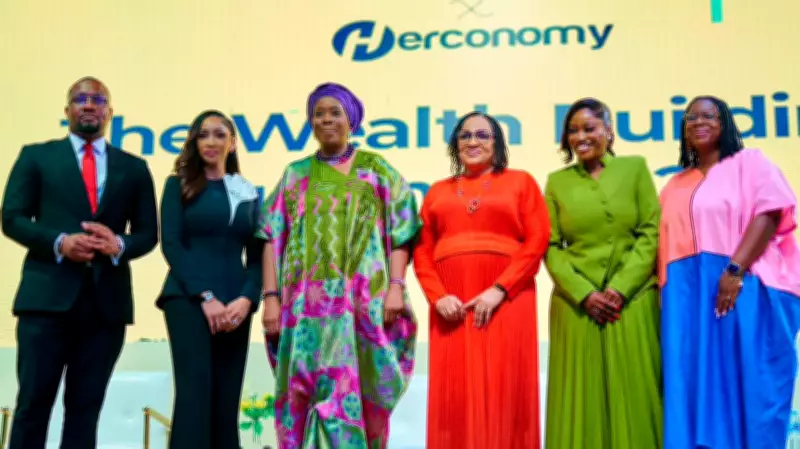
Herconomy Summit: Stakeholders Advocate for Women's Financial Inclusion and Economic Growth
Stakeholders have issued a strong call for deliberate policies, enhanced access to finance, and robust institutional support to foster inclusive economic growth, with a particular focus on women and small businesses. This urgent appeal comes amid mounting economic pressures that disproportionately affect these groups.
Key Discussions at the Herconomy Wealth Building Summit
This call formed the central theme of discussions at this year's Herconomy Wealth Building Summit, held in Lagos. Policymakers, development partners, and financial experts gathered to examine the persistent barriers to wealth creation and long-term financial stability in Nigeria.
Delivering the keynote address on behalf of Lagos State Governor Babajide Sanwo-Olu, the Commissioner for Commerce, Cooperatives, Trade and Investment, Folashade Ambrose-Medebem, articulated a significant shift in focus. She emphasized that the conversation is moving beyond mere economic participation for women toward ownership and the creation of long-term assets.
In the Governor's address, she underscored that achieving inclusive growth necessitates expanding access to finance, skills development, and enterprise support. She stressed that women remain pivotal to both economic growth and social stability. The address detailed various government interventions, including enterprise development programs that offer grants, low-interest loans, and comprehensive business support services specifically tailored for small businesses.
Expanding Support and Building Capacity
The address further outlined ongoing efforts to broaden skills acquisition and digital capacity building. It highlighted initiatives to strengthen financial inclusion through strategic partnerships with financial institutions and fintech platforms. Additionally, the government is implementing targeted programs designed to support women in underserved communities, ensuring no one is left behind in the economic development agenda.
In her opening remarks, Ife Durosinmi-Etti, founder of Herconomy and convener of the summit, clarified the platform's mission. She stated that Herconomy is dedicated to building financial knowledge and confidence among women, empowering them to make informed financial decisions and embark on sustainable wealth creation journeys.
She revealed the organization's ambitious goal of supporting 10 million African women to achieve financial independence. Durosinmi-Etti emphasized the critical need to transition women from mere income generation to investment and asset ownership. This shift, she argued, is only possible through improved access to financial tools and opportunities.
"It is about creating a future where women are not just part of the economy, but leaders, investors, and wealth creators," she declared passionately.
The Ripple Effect of Support
Durosinmi-Etti stressed that choosing to support Herconomy extends beyond individual benefit. She explained that every user engagement directly impacts another woman. When individuals invest in or support the platform, they enable women to access grants, build wealth for the first time, and secure better financial options for their livelihoods and family protection.
She urged all participants to take immediate, concrete action by actively engaging with the platform's offerings, particularly highlighting the wealth builder savings challenge as a starting point.
Insights from Government and Economic Experts
Earlier in the summit, Charles Odii, the Director-General of the Small and Medium Enterprises Development Agency of Nigeria (SMEDAN), shed light on the scale and importance of small businesses. He noted that Nigeria is home to approximately 39.6 million nano, micro, small, and medium enterprises.
Significantly, he pointed out that about 72 percent of these enterprises are owned or led by women. This statistic underscores the urgent necessity for policies that reflect their unique realities and actively support their growth. Odii added that SMEDAN is currently reviewing the national MSME policy, with a focus on addressing structural constraints and incorporating valuable feedback directly from entrepreneurs.
On the broader economic outlook, Chief Economist Chinwe Egwim provided a nuanced perspective. She observed that while inflation appears to be easing, this trend has not yet translated into tangible relief for households. Many Nigerians continue to experience significant financial strain as income growth lags persistently behind rising costs.
Egwim highlighted that expenses in critical areas such as food, transportation, and education remain elevated, putting continuous pressure on family budgets.
International Partnerships and Broader Perspectives
Amanda Roach, the Deputy Public Affairs Officer of the U.S. Consulate General in Lagos, addressed the summit on international collaboration. She stated that the United States is actively strengthening economic partnerships with Nigeria to bolster trade, investment, and women's economic participation.
Roach noted that Africa represents a major global economic opportunity, with a projected population of 2.5 billion people and purchasing power estimated at a staggering $16 trillion by 2050. She highlighted specific initiatives such as the Academy for Women Entrepreneurs and the African Growth and Opportunity Act, which are designed to support business growth, expand market access, and create sustainable jobs across the continent.
The Imperative of Women's Economic Empowerment
Speaking on the indispensable role of women in economic development, Dr. Florence Ajimobi, the Ambassador of the Federal Republic of Nigeria to Austria, delivered a powerful message. She asserted that limiting opportunities for women fundamentally undermines national growth and prosperity.
Echoing this sentiment, Layal Tinubu, Co-Founder of the Noella Foundation, identified access to capital, financial tools, and crucial information as a major challenge in developing economies. She argued that structured support systems are not just beneficial but essential for achieving sustainable and inclusive economic growth.
Dr. Folashade Femi-Lawal, Country Manager and Cluster Head at MasterCard, provided a concluding insight on wealth building. She emphasized that beyond the fundamental act of earning income, building sustainable wealth requires structure, discipline, and intentional financial decisions. Her remarks underscored the holistic approach needed for long-term economic resilience and prosperity.