Remembering Lawal Yusuf Obelawo: A Titan of Industry and Integrity
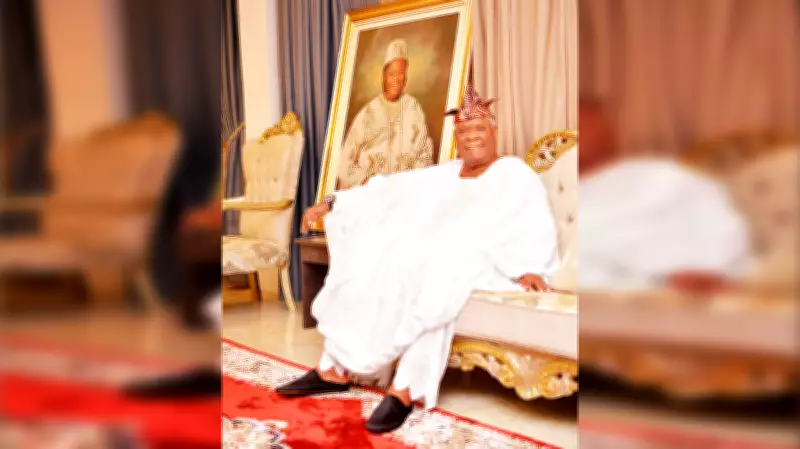
On March 21, 2026, the world quietly lost one of its most extraordinary human beings. Lawal Yusuf Obelawo, patriarch, pioneer, prayer warrior, and peerless entrepreneur, took his last breath at the age of 95. He departed not with a grimace of defeat, but with a wide, luminous smile resting on his lips, as though he had already seen what awaited him on the other side and was thoroughly pleased.
To lose him is to lose a landmark. Not merely a father, businessman, or community figure, but a landmark that orients people, gives context to a landscape, and reminds you where you are and who you come from. His passing has left a silence so vast it echoes.
The Man Before The Monument
Born on May 20, 1930, in a Nigeria still yoked to colonial rule, Lawal Yusuf Obelawo entered the world with nothing but the raw materials of greatness: an iron will, a restless curiosity, an uncompromising integrity, and a spiritual consciousness that would prove to be the compass for everything he built.
He did not grow up in privilege or benefit from formal university education. What he had was something universities rarely confer: the rare and sovereign gift of original thinking. He was a self-made man in the truest sense, fashioning himself, sculpting his own intellect, disciplining his own character, and building his world brick by deliberate brick, year by patient year.
The Pioneer: A Mind That Saw Before Others Could See
History will record what his contemporaries could barely fathom: Lawal Yusuf Obelawo was the first African to own a plastic pipe factory. At a time when industrial manufacturing in Africa was considered the exclusive province of European conglomerates, he stepped forward and said with action: I belong here too.
He was also the first to import wood processing machinery into Nigeria, opening a frontier others had not imagined. He competed with established behemoths like John Holt not with inherited capital or political favoritism, but with strategic intelligence and an entrepreneur’s instinct decades ahead of its time.
Perhaps no single act better captures his genius than what happened in the 1970s. He discovered that British Petroleum was merely a distributor for resins sourced from Hungary. Bypassing the intermediary, he established direct contact with the Hungarian source, transforming cost savings and granting his enterprise revolutionary independence.
The Empire Beyond Nigeria: Côte d’Ivoire And The Toyota Legacy
His vision was never constrained by borders. In Côte d’Ivoire, he became one of the largest employers of labor, operationalizing a fleet of 530 metered taxis that modernized urban transportation and created hundreds of jobs.
It was through him that Toyota vehicles entered Ivory Coast in remarkable volume. The Toyota Corporation of Japan honored him with a specially designed Toyota Crown, customized exclusively for him—an acknowledgment from one of the world’s most demanding corporations of his uncommon stature.
The Nation Builder: The Making Of Osun State
Lawal Yusuf Obelawo disdained partisan politics but was sought by presidents and heads of state for his counsel. His contribution to the creation of Osun State stands as a testimony to his commitment to homeland development. In the debates shaping southwestern Nigeria’s political geography, his voice carried weight as a patriot with vision and influence.
The Legal Mind Without A Law Degree
Without a law degree, he prepared his own legal briefs and directed his lawyers on how his cases should be argued. They listened because he spoke with the authority of a man who had mastered the law on his own terms, without institutional scaffolding.
The Father: A School Without Walls
He raised his children with purpose, not softness. He sent his son to work at every level of the factory floor, teaching humility, endurance, and respect for labor. Through sleepless nights drafting letters, he instilled discipline and excellence, constructing a legacy of standards that mattered.
He told his son: “The respect you get from certain people is because I am alive.” These words were a forewarning, preparing him for a world where he would have to earn his own standing and honor the name given to him.
The Prayer Warrior: A Man Anchored In God
At the foundation of everything he built was an unshakeable, disciplined, daily communion with God. Every morning at 4 a.m., for two full hours, he prayed with consistency. Even on his sickbed at 95, his lips still moved in prayer, faithful to the last.
The Diamond Named Lopin
Thirty years before his passing, he turned his attention to something he called his “baby LOPIN”—a diamond whose true value he chose to conceal. He nurtured it in obscurity, with the patience of a long-term investor, until the moment of revelation arrives.
A Life Fully Lived: 95 Years Of Irreversible Impact
He died at 95 with vision still burning, still speaking of tomorrow, and holding the future with both hands. In his final moment, he smiled—the smile of a man whose prayers, offered across 95 years of predawn mornings, had been answered in full.
What Remains
A father is a country, and Lawal Yusuf Obelawo was a country—a factory, a classroom, and a place of worship all in one extraordinary human frame. He lived with intention, gave with generosity, built with integrity, and left the world demonstrably better than he found it.
The tears are real, the grief legitimate, but so is the inheritance. The discipline, standards, and prayers echo in every life he shaped. The factories still stand, roads in Osun State were partly cleared by his voice, hundreds of families in Côte d’Ivoire were fed by his vision, and somewhere, baby LOPIN waits for its light to be revealed.
Go well, Baba. The smile said everything. He did not die empty of vision—he died believing in tomorrow.