How do people in Nigeria worship? This question has occupied my thoughts for a long time, not only as a researcher collecting data across several states but as someone who has witnessed the extraordinary variety of worship in Nigeria. From thunderous all-night Pentecostal services that shake entire neighborhoods to the quiet dignity of a Muslim man unrolling his prayer mat at dusk, Nigerian worship is one of the most vivid and deeply felt expressions of faith anywhere on earth. The short answer is: passionately, communally, and in ways that draw on traditions stretching back centuries before colonialism. The longer answer is what this article explores.
The Diversity of Nigerian Worship
Nigeria is home to more than 200 million people and over 250 ethnic groups, according to the National Population Commission. This staggering diversity means worship is not one thing but hundreds of things. Yet certain threads run through Nigerian religious life: communal expression, physicality, music, and the expectation that the divine is immediate and involved in daily affairs. I have attended a Yoruba masquerade ceremony in Osun State that lasted from sunset into the night, sat in a packed Pentecostal arena in Lagos with 50,000 worshippers, and watched elderly Hausa men prostrate in prayer as naturally as breathing. None of these experiences felt alike, but all felt unmistakably Nigerian.
What Do Nigerians Worship?
To understand how Nigerians worship, you need to understand what they worship. The Ministry of Foreign Affairs notes that approximately 50 percent of Nigerians identify as Muslim and 50 percent as Christian, with the north predominantly Muslim and the south predominantly Christian. However, many Nigerians maintain connections to indigenous spiritual traditions that predate both religions by thousands of years. Three systems of belief dominate: Islam, brought to northern Nigeria via trans-Saharan trade routes as early as the 10th century; Christianity, introduced through 19th-century missionary activity; and traditional African religions, including Yoruba Orisha worship, Igbo Odinani, and other localized systems built around a Supreme Creator, ancestral spirits, and sacred intermediaries. A fourth layer, spiritual pragmatism, sees many Nigerians moving fluidly between formal religious identification and traditional practice, such as a churchgoing woman consulting a traditional herbalist or a Muslim trader carrying protective charms. This blending reflects a world where multiple spiritual frameworks coexist and people seek divine assistance wherever they find it. The Nigerian Human Rights Commission affirms constitutional freedom of thought, conscience, and religion, protecting this diversity.
Top 3 Religions in Nigeria
Nigeria's three dominant religious systems each have distinct histories and modes of worship. Islam in Nigeria ranges from Sufi brotherhoods like the Qadiriyya and Tijaniyya, whose devotional singing and communal gatherings differ from austere Salafi mosques, to the reformist Izala movement. Core practices include five daily prayers (Salat), Friday Jumu'ah congregational prayer, Ramadan observance, and Eid celebrations. In the north, these organize social life completely. Christianity is the most varied, from old mainline denominations (Anglican, Catholic, Methodist) to African Initiated Churches like Celestial Church of Christ, which incorporate Yoruba musical traditions, white garments, and prophetic practices, to Pentecostal megachurches such as the Redeemed Christian Church of God and Winners' Chapel, whose prosperity gospel services attract millions weekly. Traditional African religions, though underrepresented in censuses, remain culturally significant, sharing features like belief in a Supreme Creator, intermediary deities, ancestor veneration, and specialized priests.
Comparison of Worship Practices
The table below outlines key worship characteristics across Islam, Christianity, and traditional African religion as practiced in Nigeria. Islam's primary gathering is the mosque, with five daily prayers and Friday Jumu'ah as key. Core expressions include Quranic recitation, prostration, and the call to prayer (Adhan). Key annual events are Eid al-Fitr, Eid al-Adha, and Ramadan. Music involves Quranic recitation and devotional nasheeds in Sufi orders. Christianity centers on Sunday church services, with preaching, congregational singing, communion, and prayer. Key events are Christmas, Easter, and harvest thanksgiving. Music is central—praise and worship leads most services. Traditional African religion gathers at shrines, sacred groves, or family compounds, with seasonal festivals and lifecycle rituals. Core expressions include drumming, masquerade, libation, divination, and sacrifice. Key events include the New Yam Festival, Osun-Osogbo, and Argungu. Music is indispensable, with specific rhythms invoking specific deities. Ancestors are actively venerated and believed to participate in family life. Geographic concentration varies: Islam is strong in the north and among southwestern Yoruba Muslims; Christianity in the south and middle belt; traditional religion in all regions, strongest in Yoruba and Igbo areas. Music appears as a central feature in all three systems, reflecting the belief that sound is spiritually charged.
How Do Nigerians Praise God?
If you have ever attended a Nigerian Pentecostal praise and worship session, you will never forget it. The worship leader begins gently, sometimes with a slow chorus in Yoruba, Igbo, or Pidgin English, the band building beneath. Within twenty minutes, the entire congregation is on its feet, some running in place, others waving handkerchiefs, others weeping with unguarded gratitude. The music is professional, rhythmically complex, and full-throated. Entire Sunday services can involve ninety minutes of praise before preaching begins. Nigerian Christians praise through congregational singing, instrumental music, spontaneous prayer, speaking in tongues, physical movement, and proclamatory declarations like “God is good! All the time!” Many churches incorporate drama, testimony, and live broadcasts. Nigerian Muslims praise through the five daily Salat prayers, each involving prescribed sequences of standing, bowing, prostrating, and sitting while reciting Quranic verses. The Adhan rings across northern towns five times daily. During Ramadan, night prayers (Tarawih) lengthen, and Quran recitation becomes a collective act. Sufi orders practice the Wird—specific litanies of praise—and devotional gatherings can involve chanting, rhythmic breathing, and ecstatic states. Traditional practitioners praise through libation, invocation of Orisha like Ogun, and offerings at festivals like the New Yam Festival, weaving worship into daily life.
How Do People in Nigeria Worship?
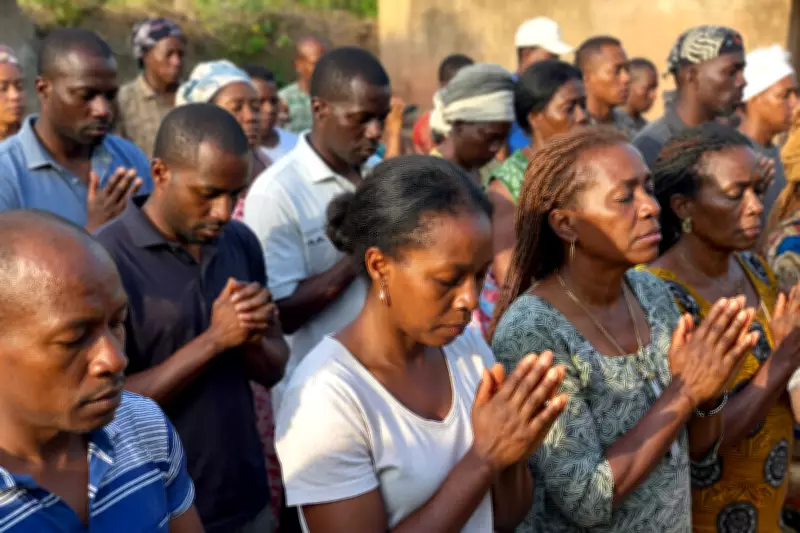
People in Nigeria worship through an astonishing range of practices, but common threads emerge. Worship is overwhelmingly communal, physical, expectant, and frequent. Major forms include congregational church services on Sundays, often lasting two to four hours; daily Islamic prayer five times daily; all-night prayer vigils common in Pentecostal communities; traditional festival worship tied to seasonal cycles; household and personal devotions; and pilgrimage—Hajj for Muslims and pilgrimages to Jerusalem for Christians. As Voice of Nigeria reports, the interaction between Christians, Muslims, and traditional practitioners has been relatively peaceful, with the government promoting religious freedom and providing security at worship centers.
Five Types of Worship
In the Nigerian context, five types emerge naturally. Liturgical worship follows a fixed order, as in Catholic Mass, Anglican Holy Communion, and Islamic Salat. Charismatic or expressive worship emphasizes spontaneity, emotion, and spiritual gifts, central to Pentecostal churches. Contemplative or devotional worship is quieter and personal, such as Sufi dhikr or Ifa divination. Communal-civic worship encompasses public religious festivals like Eid and Christmas services. Ancestral and household worship involves morning prayers, kolanut breaking in Igbo culture, and greetings to Orisha, woven into domestic life.
How to Engage Meaningfully with Nigerian Worship Practices
To engage respectfully, attend an open service or festival; arrive early, dress appropriately, and observe before participating. Ask about the significance of what you see—Nigerians are willing to explain their traditions. Understand the musical dimension, as worship music is central theology expressed in sound. Distinguish between public and private worship; some rituals are not for outside observers. Follow the lead of your host: in a church, stand when others stand; in a mosque, non-Muslims typically observe from the back. Learn a few phrases of greeting appropriate to the context, such as “Ẹ káàárọ̀” in Yoruba or “Ina kwana” in Hausa. Be patient with time—services rarely run on a tight schedule. As a Guardian Nigeria opinion piece notes, churches and mosques often stand side by side, their sounds overlapping without remark, representing a coexistence worth understanding.
Conclusion
Worship in Nigeria is not something Nigerians do occasionally; it is something Nigerians are. The second verse of the National Anthem is a prayer. Government functions open with invocations. Business meetings begin with prayers as naturally as handshakes. Modern Nigerian Pentecostalism retains the communal expressiveness, physicality, and expectation of divine intervention from traditional Yoruba worship. Nigerian Islam has been shaped by West African communal values that make Sufi praise sessions natural. Nothing in Nigerian spiritual life arrived without being remade into something distinctly Nigerian. Three actionable takeaways: attend at least one service across each major tradition; pay attention to music as theological expression; and approach religious diversity with curiosity rather than hierarchy.
FAQs
How do people in Nigeria worship daily? Most Nigerians incorporate daily prayer or devotion into morning routines, whether Islamic Fajr prayer, Christian morning devotion, or traditional ancestral acknowledgement. Practicing Muslims structure the day around five prayers.
What percentage actively attend religious services? Nigeria ranks among the world's most religiously observant nations, with surveys suggesting over 90 percent attend services weekly.
Are Nigerian churches different from Western churches? Yes, they feature longer services, more expressive participation, emphasis on healing, and central roles for music and dance. Prosperity gospel is more pronounced.
How do northern Muslims worship differently from southern Christians? Muslims organize around five daily prayers and Islamic calendar events; Christians center on Sunday services and annual events like Christmas. Both treat collective worship as non-negotiable.
What is the role of music? Music is central across all traditions, serving as a vehicle for theology, prayer, and identity. In Pentecostal Christianity, praise sessions last an hour or more; in traditional religions, specific rhythms invoke deities; in Sufi Islam, chanting is a mode of prayer.
What is an all-night prayer vigil? It is a communal worship gathering from late evening to dawn, typically 10 p.m. to 6 a.m., common in Pentecostal communities, featuring praise, preaching, intercessory prayer, and healing.
How are traditional African religions practiced today? They range from fully independent practice, especially in Yoruba communities, to syncretistic integration with Christianity or Islam. Festivals like Osun-Osogbo attract hundreds of thousands.
What is Ifa divination? Ifa is a Yoruba divination system recognized by UNESCO, functioning as an oracle and philosophical framework. Babalawo (priests) consult the oracle using 256 Odu chapters.
How do Nigerian Muslims observe Ramadan? They fast from dawn to sunset, perform extended Tarawih prayers, recite Quran, give charity, and hold communal Iftar gatherings. The month ends with Eid al-Fitr.
Do Nigerians mix traditional religion with Christianity or Islam? Many maintain elements of traditional practice alongside formal identity, consulting traditional healers or maintaining shrines while attending church or mosque.
What are major religious festivals? Eid al-Fitr, Eid al-Adha, Christmas, Easter, Osun-Osogbo, Argungu, New Yam Festival, Eyo, and Durbar festivals in northern cities.
Is Nigeria religiously tolerant? Nigeria is constitutionally secular and protects worship freedom. In most communities, Christians and Muslims coexist peacefully, though religious violence has occurred in some regions, often intertwined with ethnic and political tensions.