Epstein Associate's Secret Libya Plot: $80B Frozen Funds & $100B Reconstruction Plan
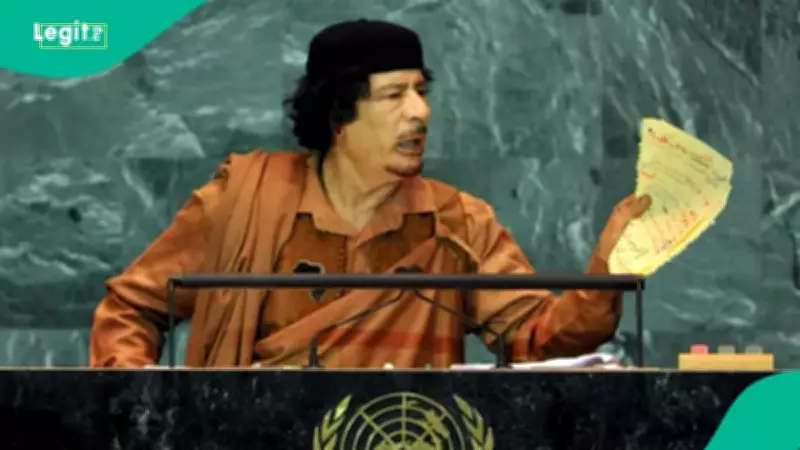
A newly declassified document has exposed how an associate of the late US financier Jeffrey Epstein explored plans to access Libya's frozen state assets during the country's political upheaval following the 2011 uprising against former leader Muammar Gaddafi.
Secret Email Reveals Financial Ambitions
The document, released by the United States Department of Justice on Friday, includes an email sent directly to Epstein in July 2011. This correspondence forms part of a broader tranche of files linked to Epstein's global network and their activities during periods of international political instability.
In the email, the sender detailed what were described as potential financial and legal opportunities arising from Libya's instability after a NATO-backed revolt against Gaddafi, who was eventually killed by rebel forces in October 2011.
Massive Financial Targets Identified
According to the email's contents, Libya was believed to have approximately $80 billion in state funds frozen across several countries, with an estimated $32.4 billion held in the United States alone. The sender claimed that the actual value of Libya's frozen and misappropriated wealth could be three to four times higher when sovereign assets and allegedly stolen funds were considered.
"If we can identify or recover just 5 to 10 per cent of these monies and receive between 10 and 25 per cent as compensation, we are talking about billions of dollars," the email stated, revealing the scale of potential financial gain envisioned by Epstein's associate.
Reconstruction Opportunities Highlighted
Beyond the frozen assets, the correspondence highlighted Libya's anticipated reconstruction needs, estimating that the country would require at least $100 billion for rebuilding and economic recovery following the conflict.
"The real opportunity," the sender wrote, was positioning as trusted partners for Libya's massive reconstruction plans, noting that the country planned to spend over $100 billion to rebuild infrastructure and revive its economy.
International Connections and Libya's Assets
The email suggested that former officials from Britain's MI6 and Israel's Mossad had indicated a willingness to assist in tracing and recovering what were described as "stolen assets." The message also pointed to Libya's vast energy reserves and relatively high literacy levels as factors that could make the country attractive for large-scale financial and legal engagements.
The correspondence revealed that discussions had already taken place with some international law firms, which were reportedly willing to work on a contingency-fee basis to pursue these financial opportunities.
Broader Context of Epstein Network Activities
These revelations add another dimension to the growing body of documents shedding light on Epstein's global connections and the activities of those within his network during periods of international political instability. The email demonstrates how Epstein's associates sought to capitalize on geopolitical turmoil for significant financial gain.
The document release comes amid ongoing revelations about Epstein's network, including earlier reports that Democrats on the House Oversight Committee released emails showing Epstein repeatedly mentioned Donald Trump in private correspondence. While Trump has not been accused of wrongdoing regarding the Libya plans, these documents continue to reveal the extensive reach of Epstein's financial and political connections.