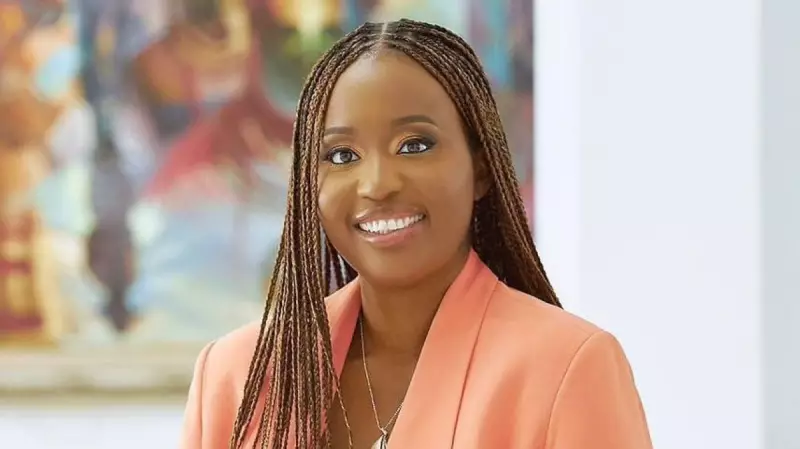
In a compelling session at the 2026 World Economic Forum Annual Meeting in Davos, Switzerland, female investors and fund managers have issued a strong call for enhanced local capital mobilisation as a critical pathway to securing long-term economic sustainability across Africa. The panel, titled "She Builds, She Leads, She Scales: Women Shaping Africa's Economic Future," delved into strategies to dismantle structural barriers in finance and leadership, aiming to unlock productivity, accelerate innovation, and foster shared prosperity on the continent.
Central Voice in the Discussion
Adesuwa Okunbo-Rhodes, Founder and Managing Partner of Aruwa Capital Management, who sponsored and convened the panel, emerged as a pivotal figure in the dialogue. She emphasised that Africa's investment ecosystem must prioritise self-sustainability through robust local capital participation. According to Okunbo-Rhodes, over-reliance on foreign capital alone exposes funds to flight risks during periods of macroeconomic instability and heightens perceived risks, ultimately undermining long-term viability.
Insights from Aruwa Capital's Experience
Drawing from her firm's fundraising journey, Okunbo-Rhodes revealed that Aruwa Capital's second fund is three times larger than its first, a success largely attributed to the strong track record of Aruwa Fund I. This achievement attracted significant participation from Nigerian institutional investors, including Development Finance Institutions, pension funds, and local insurance companies. She highlighted that such local involvement not only strengthens credibility but also provides a stamp of approval, particularly in the eyes of foreign institutional investors.
Okunbo-Rhodes stated: "If local pools of capital are not investing in their own local funds, it raises a fundamental question for foreign investors. The only way to change the narrative is to ensure we have strong local capital participation. Without local investors backing their own funds, foreign investors will always hesitate."
Benefits of Local Capital Mobilisation
She further explained that local participation shortens fundraising cycles and reinforces confidence in the market. Notably, she pointed out that Nigeria alone holds over $20 billion in pension assets, which must be strategically unlocked and deployed to support indigenous fund managers and businesses. Okunbo-Rhodes commended the new Director-General of Pencom for recent reforms aimed at increasing local pension fund investments in alternative assets, viewing this as a positive step towards mobilising domestic capital.
Broader Themes and Panel Insights
The panel also explored how redesigning financial systems, leveraging technology, and expanding leadership pathways can empower women to move from economic contribution to economic control. Speakers underscored that Africa's transformation must be built, led, and scaled by women to ensure sustainable and inclusive global impact, particularly in sectors like private equity, venture capital, and entrepreneurship.
Contributions from Other Experts
Moderated by Payel Farasat, Chief Growth Advisor at FINCA International and FINCA Ventures, the session featured insights from Pauline Koelbl, Founder and Managing Partner of ShEquity, and Lise Birikubdavyi, Managing Partner at BKR Capital. They shared perspectives on gender-smart investing, improving capital access for women-led enterprises, and the importance of institutional reforms to support such initiatives.
Participants unanimously agreed that removing structural barriers to finance is not merely a gender issue but an economic imperative for Africa's growth and stability. This consensus reinforces the urgent need for policies and actions that foster greater local investment and gender inclusivity in the financial landscape.