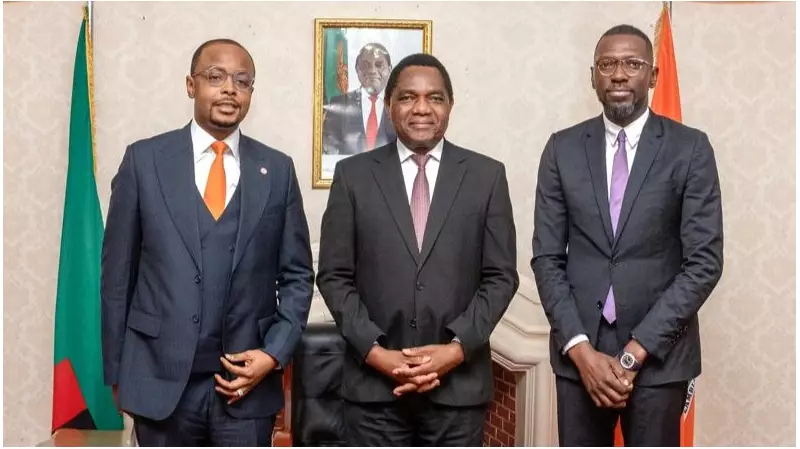
In a significant move towards fostering intra-African economic collaboration, prominent Nigerian business figures held high-level discussions with Zambian President Hakainde Hichilema over the weekend. The meeting, which took place in Lusaka, focused on unlocking new investment opportunities and building strategic partnerships to drive growth across the continent.
High-Profile Delegation Explores Investment Frontiers
The exploratory talks were led by Dr. Stanley Uzochukwu, the Chairman and CEO of Nigeria's diversified Stanel Group, which has interests in energy, retail, hospitality, and real estate. Dr. Uzochukwu, who also oversees the luxury hotel project The Delborough Lagos, confirmed this was his first official visit to Zambia.
He was joined by Olugbenga Agboola, the Chief Executive of the African fintech giant Flutterwave. The delegation's composition, blending traditional sectors with cutting-edge digital finance, highlighted the multifaceted approach to modern African development. Adding diplomatic weight to the meeting was the presence of Ernest Bai Koroma, the former President of Sierra Leone, who continues to advocate for private-sector growth in the region.
Focus on Public-Private Synergy for Growth
The discussions with President Hichilema centered on how private capital and public leadership can align to support sustainable development. While no formal agreements were signed, the dialogue underscored a shared commitment to economic cooperation. President Hichilema, a former businessman himself, has made attracting investment a cornerstone of his administration since 2021.
His government has actively promoted Zambia as a reform-oriented economy, focusing on debt restructuring, fiscal discipline, and encouraging private sector-led expansion. This meeting directly aligns with that strategy, seeking to draw in expertise and capital from one of Africa's largest economies, Nigeria.
The Broader Trend of African Business Expansion
This engagement is not an isolated event but reflects a broader trend of African-owned enterprises expanding regionally. Nigerian business leaders are increasingly looking beyond domestic borders, while countries like Zambia are keen to diversify their economies away from commodity dependence through foreign and regional investment.
The inclusion of Flutterwave's CEO is particularly telling. It signals the increasingly central role of digital services and fintech in Africa's economic integration, facilitating cross-border trade and financial inclusion. Governments are now actively seeking partnerships that merge technology, infrastructure, and capital.
Analysts note that such high-level meetings often set the stage for more detailed negotiations involving regulatory bodies and government agencies. The concrete outcomes will depend on follow-up discussions, market conditions, and supportive policy frameworks.
For now, the Lusaka meeting serves as a strong signal of intent. It reinforces the growing network of informal yet influential dialogues between African political and business leaders, all aimed at unlocking the continent's vast economic potential through collaboration.