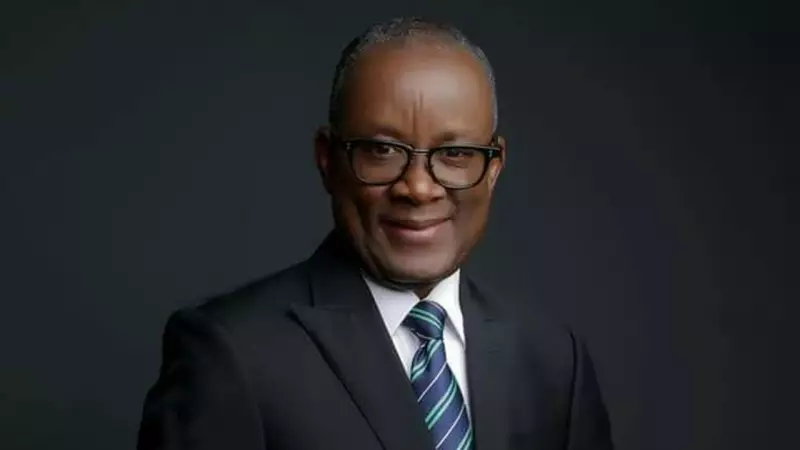
The Federal Government has issued a stark warning that Nigeria's manufacturing sector is rapidly losing its competitive advantage, primarily due to the crippling burden of energy expenses. The Minister of State for Industry, John Owan Enoh, revealed that local industries now spend between 40 to 60 per cent of their total production costs solely on power, a situation he described as a critical structural weakness.
Minister Raises Alarm at Yenagoa Forum
John Owan Enoh sounded the alarm during his address at the Practical Nigerian Content Forum in Yenagoa on Tuesday, December 2, 2025. The event was organized by the Nigerian Content Development and Monitoring Board (NCDMB). The minister emphasized that energy is the fundamental backbone of industrial growth, and its current exorbitant cost is hampering productivity, discouraging new investments, and undermining the nation's ambition to become a leading manufacturing hub in the region.
"Gas is the fuel of our future, and power is the oxygen that keeps our industries alive," Enoh declared. He stressed that the massive share of costs going to energy is not merely a challenge but a fundamental flaw that directly attacks the competitiveness of Nigerian-made goods.
Government's Response: The Energy Roundtable Initiative
In response to this crisis, the Federal Ministry of Industry, Trade and Investment (FMITI) has initiated a strategic intervention. Minister Enoh disclosed that the ministry has convened a Ministerial Energy Roundtable on Industrial Energy Security.
This high-level platform brings together crucial stakeholders to forge practical solutions. Key participants include:
- The Nigerian National Petroleum Company Limited (NNPC)
- Bank of Industry
- Nigeria Sovereign Investment Authority (NSIA)
- InfraCorp
- Africa Development Bank and Afreximbank
- Major private-sector industrial operators
The roundtable aims to deliver concrete outcomes, including dedicated industrial power corridors, reliable and affordable gas supply for factories, pilots for naira-based energy tariffs, embedded power generation for industrial clusters, and a unified national framework to guarantee energy stability for manufacturers.
Linking Industrialisation to National Economic Transition
Minister Enoh positioned this energy challenge within Nigeria's broader economic transition. He noted the country is shifting from heavy dependence on imports to value-added production and from mere resource extraction to building robust domestic industrial capacity.
He described local content and industrialisation as "inseparable twins" that must be embedded across all economic sectors, not just oil and gas. "No nation scales local content without a strong industrial base, and no nation industrialises without a deliberate local content strategy," he asserted.
This philosophy, according to him, is the foundation of the new National Industrial Policy (NIP) 2025–2035. This 10-year blueprint is designed to strengthen local manufacturing, deepen domestic value addition, integrate energy planning with industrial needs, boost non-oil exports, and attract coordinated investments into priority sectors. The policy will align with agencies like the NCDMB to break down sectoral silos.
Enoh also highlighted the government's "Nigeria First Policy," an economic patriotism doctrine aimed at retaining value within the country. "What Nigeria can produce, Nigeria must not import," he stressed, underscoring the commitment to backward integration and self-sufficiency.
The minister concluded with a call for a renewed and vigorous partnership between the government, industry players, financiers, and innovators to drive the nation's industrial transformation. He argued that neither the government nor the private sector can succeed alone. "Government cannot industrialise Nigeria without the private sector, and the private sector cannot scale without an enabling environment," he said.
He urged all stakeholders to move swiftly from "plans to platforms" and from "discussion to delivery," framing successful industrialisation as Nigeria's definitive path to achieving true economic sovereignty and securing long-term prosperity for its citizens.