Nigeria Secures Major Foreign Investment Boost
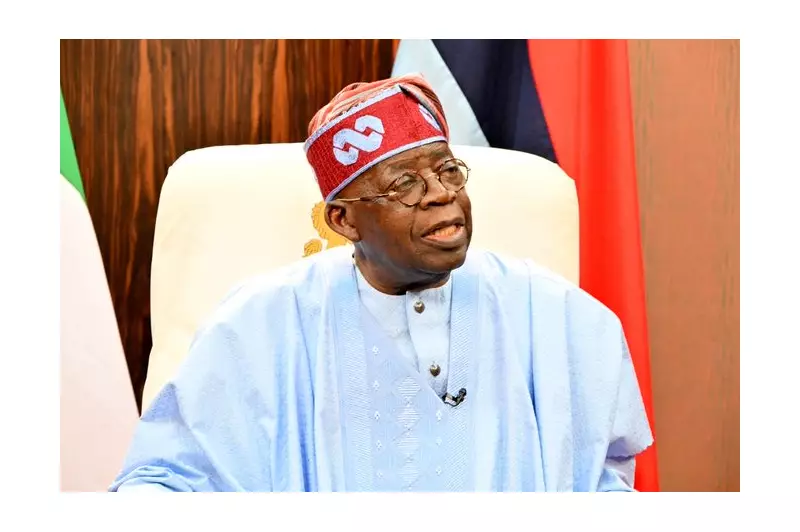
President Bola Ahmed Tinubu has announced that Nigeria has successfully attracted $5 billion in new foreign investments across key sectors including manufacturing, fintech, and energy since his administration took office two years ago. The President attributed this significant achievement to policy clarity and consistent investor engagement efforts.
Business Environment Reforms Yield Results
Speaking at the opening ceremony of the Lagos Chamber of Commerce and Industry's Lagos International Trade Fair 2025, President Tinubu highlighted the crucial role of the Presidential Enabling Business Environment Council (PEBEC) reforms in creating a more investor-friendly climate. Represented by the Minister of State for Industry, Trade and Investment, John Owan Enoh, the President detailed how these reforms have dramatically reduced business registration timelines, digitised port operations, and simplified regulatory procedures across board.
The President emphasized his administration's commitment to rebuilding Nigeria's economy through deepening investor confidence and championing local industry, innovation, and trade. He described the annual trade fair as a powerful symbol of Nigerian enterprise, creativity, and resilience while stressing the need for Nigeria to act with courage and clarity in the evolving global economic landscape.
Private Sector Recognized as Economic Backbone
President Tinubu acknowledged the private sector as the true backbone of Nigeria's economy, noting that it creates over 90 percent of jobs and powers the country's export capacity. He vowed to implement stable policies instead of abrupt reversals, honor contracts consistently, and provide transparent incentives for manufacturers, exporters, and MSMEs.
The President outlined additional measures including digitalizing ports completely, establishing one-stop shops for business permits, introducing smarter taxation systems, and expediting dispute resolution mechanisms. He also stressed Nigeria's determination to not just participate in the African Continental Free Trade Area (AfCFTA) but to lead it in the coming years.
LCCI President Gabriel Idahosa revealed that the trade fair, now in its 39th edition, has attracted nearly 2,000 exhibitors showcasing the best of Nigerian and African entrepreneurship. The event, which runs from November 7 to November 16 at Tafawa Balewa Square in Lagos, aims to attract 500,000 visitors over its ten-day duration.
Idahosa highlighted the fair's immediate economic impact, noting a direct injection of ₦250 million into the local economy and the employment of 280 local artisans. With over 200 international exhibitors from China and Japan, alongside hundreds from Ghana and other African nations, the LCCI president urged Nigerian businesses to leverage this opportunity for networking and establishing international trade partnerships.
Lagos State Governor Babajide Sanwo-Olu, represented by Commerce Commissioner Folashade Bada Ambrose-Medebem, reinforced the state's commitment to supporting commerce and investment. He revealed that the state has simplified investment procedures through a one-stop business facilitation center and strengthened documentation processes while improving access to transparent data for investors.
The governor also announced that over 50,000 MSMEs have received direct financial support in the last two years, with many growing to become exporters and major players in their respective value chains. He encouraged exhibitors to use the fair as a launchpad for enterprise and trade expansion while assuring continued state support for business development.