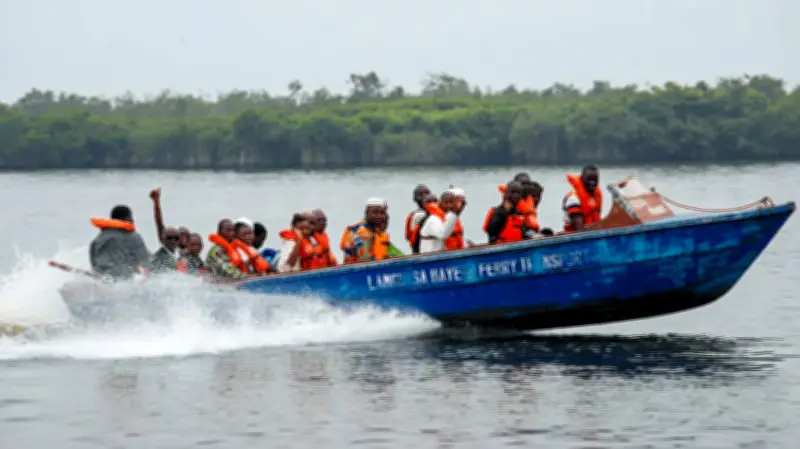
Boat operators have called for greater government intervention and financial support to enhance waterways transport operations, despite the Federal Government's approval of N14.6 billion for the procurement of modern boats and ferries to strengthen safety, trade, and passenger transportation.
A former managing director of the National Inland Waterways Authority (NIWA), Bola Oyebamiji, disclosed that the Federal Government, through the Ministry of Marine and Blue Economy, approved about N14.6 billion for the purchase of standard boats and ferries to transport agricultural products and passengers, especially in riverine states such as Niger, Benue, Kogi, Kwara, and Kebbi, where waterways remain critical transport links for local communities and commercial activities.
However, boat operators lamented a lack of financial support, high operational costs, and prevailing economic challenges, making it difficult for operators to acquire new modern boats and expand their businesses. They called on the government to provide soft loans for boat operators from the approved funds to enable them to acquire modern vessels.
President of the Waterfront Boat Owners and Transporters Association of Nigeria (WABOTAN), Tope Fajemirokun, lamented that rising fuel prices have significantly affected the operations of boat owners and transporters. Fajemirokun called for greater government intervention and financial support for operators seeking to invest in safer and more modern vessels in compliance with the Minister of Marine and Blue Economy's directive to phase out unsafe banana and wooden boats in the country's waterways.
“Eliminating bananas and wooden boats will be easier if the government provides the necessary support and investment. State governments should also invest more in water transportation to ensure that Nigerians can fully benefit from the opportunities offered by the waterways,” he said.
He further urged government authorities to take a more active role in developing the water transportation sector, noting that the high cost of water travel discourages many commuters. According to him, the cost of water transportation remains high, as commuters travelling from Badagry to CMS spend about N5,000 each way, amounting to N10,000 daily on transportation alone. “This is one of the major factors discouraging passengers from using the waterways. That is why we are appealing to government at all levels to invest more in the sector,” he added.
Fajemirokun commended NIWA and the Lagos State Waterways Authority (LASWA) for their continued collaboration in ensuring safer and more secure waterways across the country. He urged all boat operators to always prioritise safety and ensure that passengers wear life jackets before embarking on any journey. According to him, safety must always come first, emphasising that boat operators and passengers should never neglect the use of life jackets, regardless of the distance of the journey.
Also speaking, maritime and tourism expert Frank Meke acknowledged government efforts but stressed that more needs to be done to unlock the full potential of the country's water transportation system. He also expressed concern about states such as Kwara, Niger, Benue, and Taraba, where waterways could serve as a more affordable and efficient means of transporting agricultural produce. According to him, many farmers in these states need reliable and cost-effective transport options to move their goods to market, making water transportation a viable alternative.
Meke called on the government to declare a state of emergency in the water transportation sector, emphasising the need for alternative modes of transportation beyond road networks. He urged the government to provide soft loans for boat operators to enable them to acquire modern vessels. According to him, investment should not be limited to boats alone but should include continuous training of boat captains, crew members, and even passengers. Meke said industry operators must prepare adequately for emergencies, especially as the rainy season approaches.