In a critical intervention, a leading Nigerian law firm has called on the Federal Government to urgently tap into the country's vast maritime resources to address its crippling debt burden. Olisa Agbakoba Legal (OAL) has stated that implementing existing reforms could unlock a staggering N70 trillion in yearly revenue from the marine and blue economy sector.
Nigeria's Mounting Fiscal Crisis and the Maritime Solution
This urgent appeal comes as Nigeria grapples with severe fiscal pressures. In a letter dated November 30, 2025, addressed to the Minister of Marine and Blue Economy, Adegboyega Oyetola, the firm highlighted that the nation's total public debt had surged to N152.4 trillion as of June 30, 2025. The situation is dire, with debt servicing consuming N12.36 trillion or 35.26% of the entire 2024 budget, a figure projected to rise to N15.4 trillion in 2025.
This debt service cost far exceeds the combined budget for health, education, and defence, and is above the 22.5% threshold recommended by the World Bank. The firm warned that the government's reliance on borrowing is unsustainable, with the debt servicing-to-revenue ratio climbing to 77.5% in 2024, while the 2025 budget deficit will be 69% financed by more loans.
Senior Partner at OAL, Dr. Olisa Agbakoba, argued that the maritime sector, currently the nation's most undervalued economic asset, holds the key to salvation. Citing data from the Nigerian Institution of Marine Engineers and Naval Architects (NIMENA), he noted the industry's potential to generate $44 billion (N63.4 trillion) yearly, rivaling or surpassing non-oil revenues if modernised.
Major Revenue Windows Currently Being Lost
Agbakoba's detailed policy submission identified several colossal revenue leaks that reforms could plug, as outlined in the National Policy on Marine and Blue Economy (2025–2034).
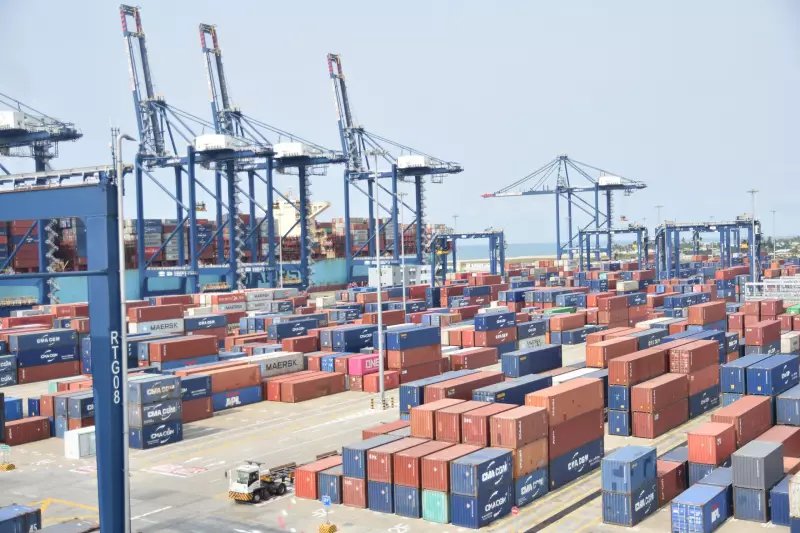
Port Infrastructure and Cargo Diversion: Nigeria loses an estimated N20 billion daily as cargo is diverted to neighbouring ports in Cotonou, Tema, and Lomé due to poor port infrastructure. Reforming the port system could unlock N14 trillion yearly from tariffs and handling fees.
Abandoned Inland Waterways: The neglect of 42 inland waterways, including the Niger and Benue rivers, represents a missed opportunity. Dredging and creating a multimodal transport system could generate N10 to N12 trillion yearly from tolls, ferry services, and tourism.
Cabotage Act Violations: More than 25,000 foreign vessels illegally engage in coastal trade, depriving Nigeria of roughly N8 trillion yearly. Strengthening the Cabotage Act (2003) would reclaim this revenue and boost local shipping jobs.
Oil Rig Tax Evasion: In a shocking revelation, the letter stated that Nigeria collects no taxes from oil rigs operating in its waters, leading to an annual loss of N6 trillion. Amending the NIMASA Act to impose this tax is a straightforward solution.
Foreign Service Drain: Over $1 billion (N16 trillion) in value is lost yearly to foreign firms providing marine insurance, shipping, banking, and legal services in the oil and gas sector. Enforcing the Local Content Act and establishing a Maritime Development Bank could retain these funds.
The Path Forward: Security, Technology, and Decisive Action
While acknowledging the gains of the Deep Blue Project in reducing piracy by 30%, Agbakoba insisted that a dedicated coast guard is essential for full maritime security. This would attract international shipping, cut insurance premiums by up to 40%, and unlock coastal tourism revenue estimated at N8 to N10 trillion yearly.
Furthermore, he urged Nigeria to prepare for new global standards on Maritime Autonomous Surface Ships, which the International Maritime Organisation (IMO) will mandate by 2028. Early adoption of such technologies could create an additional N5 to N6 trillion yearly and position Nigeria as a regional digital maritime hub.
The firm concluded that with decisive policy implementation, the maritime sector could transform Nigeria's debt burden into a manageable obligation, create millions of jobs, and finally rival petroleum revenues. The blueprint for this transformation, they stress, already exists in the national policy—it now requires urgent and unwavering execution.