Maritime Revenue Soars to N1.83 Trillion as Oyetola Issues Performance Warning to Agencies
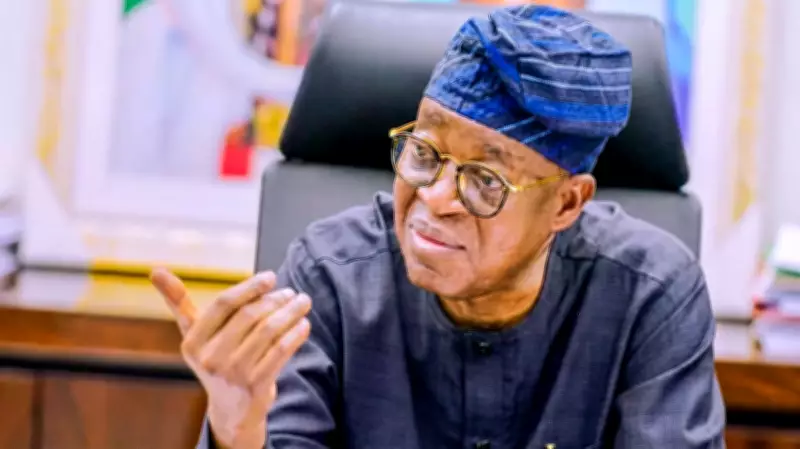
The Minister of Marine and Blue Economy, Dr Adegboyega Oyetola, has issued a stern directive to heads of agencies under his ministry, demanding strict accountability and the delivery of measurable outcomes. This call to action comes as the ministry announced a remarkable revenue generation of N1.83 trillion in 2025, marking a substantial increase of 160 per cent from previous figures.
Reforms and Accountability Drive Revenue Surge
Speaking at the 2026 First Quarter Citizens/Stakeholders’ Engagement, Sectoral Performance Review and Ministerial Management Retreat in Lagos, Oyetola attributed this financial milestone to comprehensive reforms and a renewed emphasis on transparency and efficiency. He emphasised that while the ministry's performance reflects a deliberate shift towards better governance, agencies must remain firmly focused on producing tangible results that benefit the economy.
The minister detailed that the revenue gains were propelled by several key initiatives:
- Strengthened regulatory oversight to ensure compliance
- Improved revenue assurance mechanisms to capture all due earnings
- Digitalisation of critical processes to reduce manual interventions
- A firm commitment to blocking financial leakages and loopholes
Oyetola also linked the improved performance to broader sectoral reforms, including port modernisation efforts, approval for disbursement of the Cabotage Vessel Financing Fund (CVFF), and ongoing initiatives to boost indigenous participation in maritime activities.
Performance Bonds and Stakeholder Alignment
During the signing of performance bonds with heads of maritime agencies, Oyetola stressed the importance of performance-driven governance. He underscored the necessity for data-driven decision-making, robust monitoring and evaluation frameworks, and alignment with the ministry's strategic objectives. This convergence of stakeholders, policymakers, and institutional leaders was designed to ensure that policy implementation meets public expectations effectively.
International Cooperation and Security Partnerships
The Consul General of the Royal Danish Embassy in Nigeria, Jette Bjerrum, highlighted Denmark's readiness to deepen maritime cooperation with Nigeria. She pointed to shared seafaring heritage and growing opportunities in the blue economy as key areas for collaboration. Bjerrum noted that Denmark is keenly observing developments in Nigeria's maritime space and exploring avenues for partnership, especially as the global blue economy gains prominence for sustainable growth, job creation, food security, and climate resilience.
On maritime security, the envoy reaffirmed Denmark's partnership with Nigeria through the Gulf of Guinea Maritime Security Programme, which supports maritime domain awareness and response capabilities across the region. Bjerrum added that Denmark has reinforced its commitment by appointing a defence attaché in Nigeria to support ongoing initiatives.
Port Reforms and Cargo Tracking Progress
Executive Secretary of the Nigerian Shippers’ Council (NSC), Dr Pius Akutah, clarified institutional responsibilities within the port reform framework. He explained that while the Nigerian Ports Authority is implementing the Port Community System, the Shippers’ Council is mandated to execute the cargo tracking regime under the law.
Akutah disclosed that the Federal Government has commenced steps to revive the long-delayed International Cargo Tracking Note (ICTN), following presidential approval for its procurement process. He expressed optimism that the initiative—anchored on the International Cargo Tracking Act—is now progressing, with its rollout expected before the end of 2026.
The NSC boss noted that past challenges had undermined the sustainability of cargo tracking systems, which were introduced and subsequently suspended multiple times. He emphasised that the current administration is taking deliberate steps to address all outstanding issues to prevent another suspension.
Energy Stability and Port Efficiency
Managing Director of the Nigerian Ports Authority (NPA), Dr Abubakar Dantsoho, highlighted recent developments in the country's energy landscape. He commended the Federal Government for maintaining stability despite global disruptions triggered by the U.S.–Iran conflict, noting that while several countries are grappling with energy shortages and long queues for fuel, Nigeria has maintained relative stability.
Dantsoho revealed that in the last month, Nigeria has exported up to 500,000 metric tonnes of petroleum products to other African countries, with shipments executed through efficient ship and cargo operations within Nigerian ports. He further highlighted the role of the One-Stop-Shop (OSS) initiative, domiciled at the Apapa port complex, which brings together all agencies involved in refinery and port operations under a single platform to enhance coordination and execution.