Nigeria Intensifies Drive for $3 Trillion Blue Economy Amid Calls for Investment and Reforms
Nigeria has significantly ramped up its efforts to establish itself as a dominant force in the global maritime arena. This renewed push was highlighted during the Blue Economy Investment Summit held in Abuja, organized by the Maritime Innovations Hub in partnership with the Federal Ministry of Marine and Blue Economy. The gathering brought together key industry leaders and policymakers to strategize on unlocking the vast opportunities within the global blue economy, which is valued at over $3 trillion each year.
Minister Oyetola Highlights Nigeria's Strategic Advantages
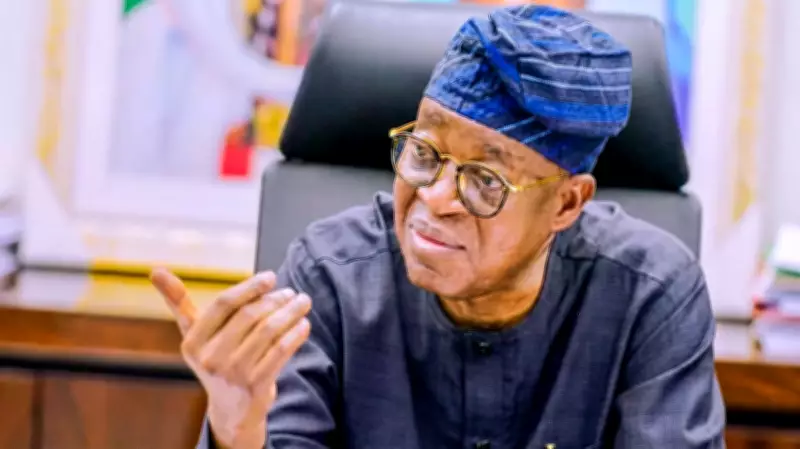
In his opening address, Minister of Marine and Blue Economy, Adegboyega Oyetola, emphasized the critical role of the blue economy in driving trade, employment, innovation, and sustainable development worldwide. He pointed out that Nigeria's natural assets provide a strong foundation for leadership in this sector. "With over 823 kilometres of coastline, extensive inland waterways, and a prime location along the Gulf of Guinea, Nigeria is uniquely positioned to harness the immense potential of the marine and blue economy," Oyetola stated. He also noted that Nigeria now has a comprehensive national policy to guide investments and highlighted improvements in maritime security through the Deep Blue Project, which has helped restore investor confidence.
Stakeholder Optimism and Structural Challenges
Fredrik Klinke, Chief Executive Officer of APM Terminals, echoed the minister's positive outlook, describing Nigeria as strategically placed to lead Africa's expansion in the blue economy. However, discussions at the summit were dominated by concerns over structural bottlenecks. Barrister Pius Akutah, Executive Secretary of the Nigerian Shippers' Council, warned that weak maritime connectivity poses a major threat to Africa's trade ambitions under the African Continental Free Trade Area. Similarly, Ronke Kosoko, convener of the Maritime Innovations Hub, identified bureaucratic delays and poor coordination as significant obstacles. "Investors are ready, capital is available, but the system must be responsive. Delays of one to two years for processes that should take months are not sustainable," she cautioned.
Path Forward for Nigeria's Maritime Sector
The summit underscored a shared resolve to transform Nigeria's maritime sector by addressing key challenges while leveraging its strategic advantages. With Nigeria's recent election into the International Maritime Organisation Council after 14 years, the country is poised to enhance its global prominence. Stakeholders called for urgent reforms in logistics and connectivity to fully unlock the blue economy's potential, estimated to exceed $3 trillion annually, and drive sustainable economic growth.