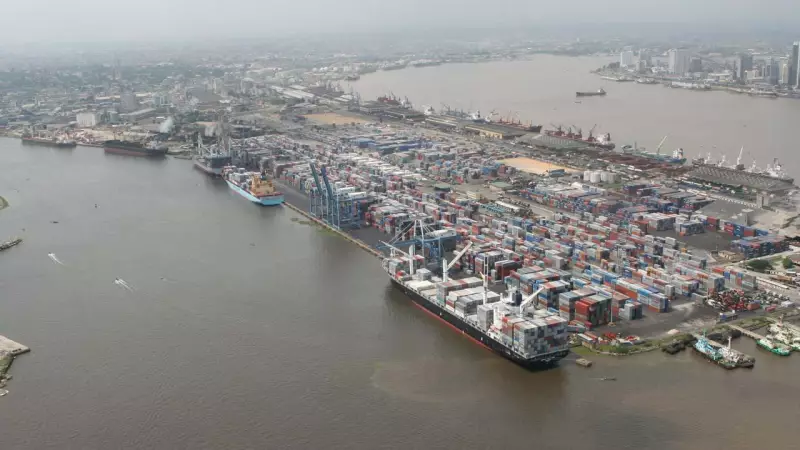
The Lagos State Shippers Association (SALS) has issued a strong condemnation of the increasingly difficult and costly operating environment at Nigeria's seaports. The association highlighted a system plagued by multiple illegal levies, bureaucratic delays, and practices that penalize compliant operators while rewarding those who cut corners.
A System That Punishes Compliance
Speaking at the Shippers Day celebration in Lagos on December 4, 2025, the President of SALS, Nicodemus Odolo, painted a grim picture. He stated that the harsh conditions are driving Nigerian importers and exporters out of business daily. Odolo shared a personal experience, revealing that his cargo can be held up for three months because he insists on following due process.
"Whoever wants to do things right in Nigeria suffers. Those who want to do it wrong get the benefits," he lamented. He pointed out that non-compliant shippers who bribe officials see their goods cleared swiftly. Furthermore, he criticized the rampant issue of police officers illegally stopping export containers on highways to demand customs documents, a function entirely outside their jurisdiction.
Overlapping Taxes and the Push for Digital Reform
The Executive Secretary of the Nigerian Shippers' Council (NSC), Dr. Pius Akutah, echoed these concerns. He identified the multiple, overlapping, and often contradictory taxes and levies across the logistics chain as a major problem. These charges distort pricing, create business uncertainty, and weaken Nigeria's position as a competitive trade destination.
Dr. Akutah specifically acknowledged stakeholder worries regarding the Nigeria Customs Service's 4% tax on the Free on Board (FOB) value of imports. He assured that the council is engaging with authorities to ensure such policies are properly evaluated and aligned with national economic goals. A key solution championed by the NSC is the full implementation of the National Single Window, a digital platform to integrate all port processes, reduce delays, and eliminate duplicate documentation.
Legal Backing and a Trillion-Dollar Target
Maritime lawyer Osuala Nwagbara decried the deep-rooted irregularities and unjust practices in the sector. He expressed optimism that the growing agitation by shippers will soon force a change, heralding an end to unchecked exploitation through stronger advocacy and legal action.
Providing details on the digital trade future, Babadede Mohammed, Zonal Coordinator for Zone 'A', presented on the National Single Window. He disclosed that the Federal Government's unified platform aims to help achieve an economic growth target of $1 trillion by Q1 2026. The system will integrate key agencies like:
- Standards Organisation of Nigeria (SON)
- National Agency for Food and Drug Administration and Control (NAFDAC)
- Nigerian Agricultural Quarantine Service (NAQS)
- National Environmental Standards and Regulations Enforcement Agency (NASREA)
Mohammed also clarified that the National Single Window and the B'Odogwu system are complementary components of a unified digital trade ecosystem designed to align Nigeria with global best practices, enhance transparency, and ultimately benefit shippers and traders.