
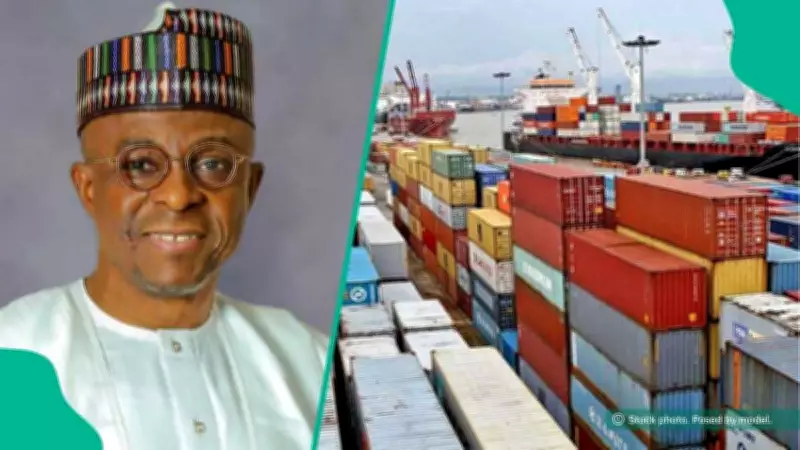
Dr. Abubakar Dantsoho, the Managing Director of the Nigerian Ports Authority (NPA), has strongly reaffirmed the Federal Government's unwavering commitment to modernizing Nigeria's port infrastructure and attracting substantial private investment into the maritime sector. He delivered this message while addressing a distinguished audience at the Investopia Global Lagos Summit, a high-profile event held in Lagos that brought together stakeholders from the United Arab Emirates (UAE), the Lagos State Government, global investors, and key industry leaders.
Nigeria's Ports Declared 'Investment Ready' with Robust PPP Framework
During his presentation, Dr. Dantsoho emphasized that Nigeria is now fully prepared to embrace strategic development partnerships aimed at transforming its port infrastructure. He detailed the deliberate steps taken by the federal government to position Nigeria as a leading port destination in Africa through comprehensive modernization and rehabilitation initiatives. The NPA MD declared that Nigerian ports are currently 'investment ready', offering extensive and lucrative opportunities for productive public-private partnerships (PPPs). He pointed to the successful model of the Lekki Deep Sea Port as a prime example of what can be achieved through such collaborations.
Government Initiatives Driving Port Modernization and Efficiency
Dr. Dantsoho outlined several critical government-backed initiatives that underscore this commitment to port sector transformation. These include:
- The National Single Window (NSW) programme, which is expected to go live in the first quarter of 2026 to streamline trade processes.
- Approvals for extensive port rehabilitation projects across existing facilities.
- The introduction of an advanced electronic truck access system to manage logistics.
- Policies specifically designed to reduce congestion and significantly enhance operational efficiency at ports.
- Approvals granted for new 'virgin' port developments in strategic locations such as Badagry, Olokola, and Bonny, reinforcing the government's readiness to attract both local and foreign investors.
Strategic Role in AfCFTA and Regional Trade Integration
Speaking on the broader continental context, Dr. Dantsoho stressed that modern, resilient ports and integrated logistics systems are absolutely critical to unlocking Africa's immense trade potential under the African Continental Free Trade Area (AfCFTA). He reaffirmed Nigeria's commitment to development and strategic partnerships as the NPA showcased its vision for future-ready port infrastructure at the summit. The NPA MD highlighted Nigeria's strategic size and advantageous geographic location, describing the country as West Africa's natural trade gateway with direct access to landlocked markets and a key supporter of AfCFTA objectives.
Panel Discussions Focus on Infrastructure and Digital Trade
The strategic panel session, themed 'Infrastructure & Logistics for Africa's Next Phase of Trade,' featured Mohamed Almenhali, Regional CEO of Abu Dhabi Ports Group. Discussions centered on crucial topics such as port modernization, corridor connectivity, and digital trade infrastructure. Tools like port community systems and the Electronic Truck Monitoring System (e-truck) were highlighted as essential for improving efficiency, transparency, and regulatory compliance within the maritime logistics chain.
Building on Nigeria-UAE Economic Partnership Momentum
The Investopia Global Lagos Summit also built on the significant momentum generated from President Bola Ahmed Tinubu's recent visit to the UAE, where Nigeria and the UAE signed a landmark Comprehensive Economic Partnership Agreement (CEPA). This agreement sets the stage for deeper economic cooperation and investment flows between the two nations, with the port and maritime sector poised to be a major beneficiary.
In his concluding remarks, Dr. Dantsoho reaffirmed the NPA's steadfast commitment to ongoing port reforms, the promotion of sustainable maritime practices, and the strategic leveraging of private capital. The ultimate goal is to firmly position Nigeria as a premier hub for regional and global trade, capitalizing on its strategic advantages and the opportunities presented by AfCFTA.




