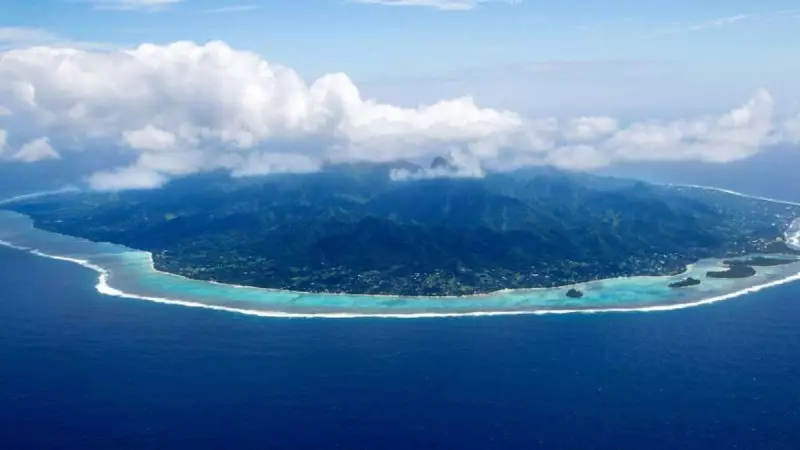
A remote beachside office in the tropical Cook Islands has become a critical hub for oil tankers suspected of smuggling contraband crude for Russia and Iran, a new analysis of sanctions data has revealed.
Modest Office, Global Reach for Sanctions Evasion
Nestled next to a pizza shop in the far-flung South Pacific nation, the modest headquarters of Maritime Cook Islands operates one of the world's fastest-growing shipping registries. Foreign ship owners, without ever visiting the palm-fringed microstate, can pay to have their vessels sail under its star-studded flag.
This system has allegedly been exploited by a 'shadow fleet' of tankers working to circumvent Western sanctions. According to the data, United States sanctions identify 20 tankers registered in the Cook Islands suspected of smuggling Russian and Iranian fuel between 2024 and 2025. A separate British sanctions database blacklists a further 14 Cook Islands-flagged tankers for the same period.
Diplomatic Alarm and Registry Growth
The revelations have caused significant diplomatic tension. New Zealand, the Cook Islands' closest partner and former colonial ruler, stated it was 'alarming and infuriating' to see sanctions efforts undermined. A spokesman for Foreign Minister Winston Peters said New Zealand holds 'serious concerns' about how the registry has been managed for many years, calling it a 'completely unacceptable and untenable foreign policy divergence.'
Despite these concerns, the registry's business is booming. Shipping journal Lloyd's List last year named Maritime Cook Islands the 'fastest growing registry' in the world. Government revenue from shipping fees climbed over 400 percent in the past five years, with fees projected to total around $175,000 in the last financial year.
The Mechanics of the 'Shadow Fleet'
Experts explain that sanctions aim to cut off oil revenue funding Russia's war in Ukraine and Iran's nuclear programme. 'There are countries around the world that sign up to sanctions against Russia that wouldn't allow these ships to fly their flag,' said Anton Moiseienko, a sanctions expert at Australian National University. 'But there are countries that are a bit more lax about that. This is where the Cook Islands comes in.'
These registries are known as 'flags of convenience,' offering less stringent oversight. A 2024 European Parliament briefing listed the Cook Islands as one of the 'top countries whose flags are used by shadow tankers transporting Russian crude oil.' The practice allows vessels to pose as legitimate cargo carriers while covering their tracks.
One notable incident involved the Cook Islands-flagged tanker Eagle S, which Finnish investigators suggested had deliberately damaged five underwater cables in the Baltic Sea by dragging its anchor, allegedly as part of Russia's shadow fleet operations.
Denials and Ongoing Challenges
Maritime Cook Islands, which operates the registry as a private company under government authority, strongly denies any wrongdoing. It claims to swiftly delete any vessels accused of dodging sanctions from its registry, sometimes even before they are officially named. The registry asserts it has effective monitoring platforms and was 'not aware' of any sanctions-busting concerns or abuse.
However, analysts point to a systemic issue. 'When it comes to flag states -- Cook Islands, Liberia and others -- there isn't really any international mechanism to enforce their obligations,' Moiseienko noted. The UK's Royal United Services Institute stated that while Iran and North Korea have long exploited small registries, shadow fleet activity 'expanded dramatically' after Russia's 2022 invasion of Ukraine triggered sweeping sanctions.
For small Pacific nations, these registries represent easy revenue. An estimate from Palau suggested a 30,000-tonne tanker could pay about $10,000 in fees. But this economic incentive creates a persistent loophole, enabling a global network that undermines international efforts to contain rogue states.