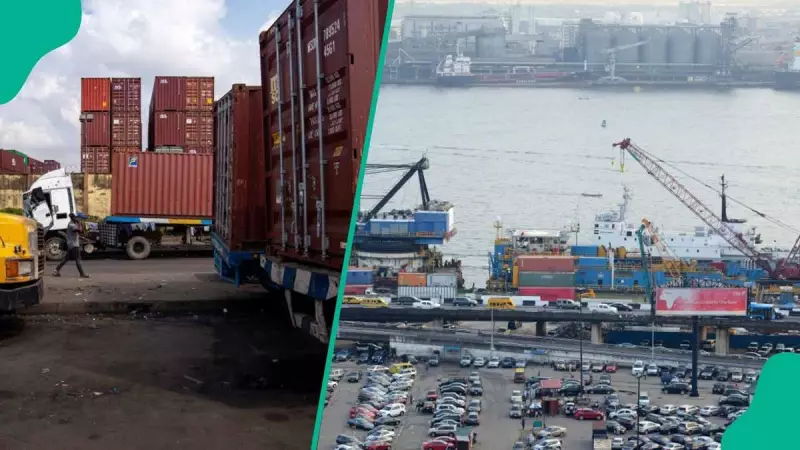
The Shippers Association of Lagos State (SALS) has issued a stark warning that a combination of excessive charges, unauthorized roadblocks, and protracted delays is severely hampering trade at the crucial Lagos ports, forcing numerous shipping businesses to the brink of collapse.
Harsh Operating Environment Drives Shippers Away
Speaking at the 2025 Shippers’ Day celebration in Lagos on Wednesday, SALS President, Nicodemus Odolo, detailed the crippling challenges. He stated that multiple levies, illegal checkpoints, and slow cargo movement continue to be major obstacles for import and export activities. Odolo lamented that this difficult environment is actively discouraging Nigerians from engaging in international trade and leading to a decline in the number of active shippers.
Odolo shared a personal account, revealing that compliant shippers often face harsher penalties than those who bypass official procedures. "My cargo can stay in the port for three months because I want to do it right. Whoever wants to do things right in Nigeria suffers," he said. He also criticized instances where police officers stop export-bound containers to inspect customs duty, an action he described as exceeding their legal authority.
Regulatory Bodies Acknowledge and Respond to Concerns
The event, themed “Challenges Between Revenue Generation and Trade Facilitation,” included key stakeholders like the Nigeria Customs Service (NCS) and the Nigerian Shippers’ Council (NSC). The Executive Secretary/CEO of the NSC, Dr Pius Akutah, directly addressed complaints about overlapping taxes within the logistics chain.
Akutah acknowledged that the growing number of duplicated charges increases operational costs and reduces Nigeria’s competitiveness as a regional trade hub. He specifically noted stakeholder grievances regarding the 4% NCS tax on the Free on Board (FOB) value of imported goods. He assured that the NSC has initiated discussions with relevant authorities to harmonize such policies with national economic goals, emphasizing that fiscal measures should promote, not hinder, trade.
National Single Window Touted as Solution for Economic Growth
In a presentation on the government's digital trade solution, the Comptroller-General of Customs, Adewale Adeniyi, highlighted the National Single Window (NSW) platform as a critical tool for economic transformation. Represented by the NCS Zonal Coordinator for Zone A, Mohammed Babandede, Adeniyi stated that the unified platform is designed to support Nigeria’s drive toward becoming a $1 trillion economy by the first quarter of 2026.
He explained that the NSW will integrate key trade and regulatory agencies to enhance efficiency, reduce delays, and increase government revenue. The system is fully integrated with the B’Odogwu platform to streamline processes, eliminate duplication, and align Nigeria’s trade procedures with global standards.
The port challenges are compounded by recent enforcement actions. The Nigerian Maritime Administration and Safety Agency (NIMASA) recently shut down the ShellPlux and TMDK facilities in the Ijegun-Egba area of Lagos for non-compliance with the International Ship and Port Facility Security (ISPS) Code. Such closures impact operations at Lagos, which hosts two of the nation's largest and busiest ports.