
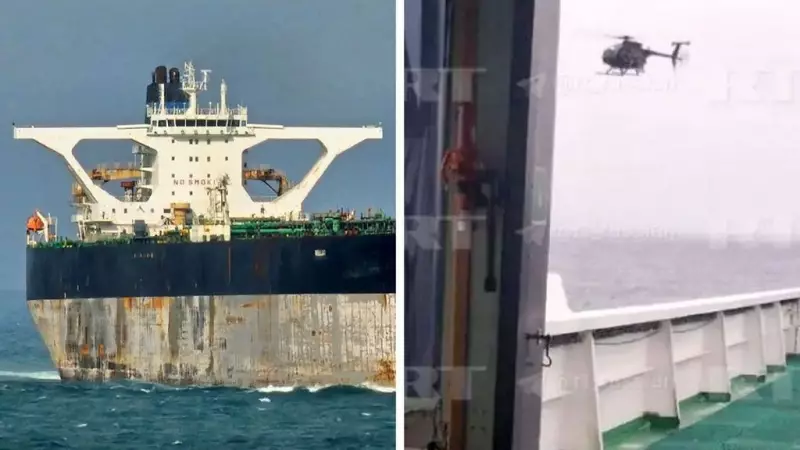
In a significant international maritime operation, the United States has seized an oil tanker flying the Russian flag in the North Atlantic Ocean. The action, confirmed on Wednesday, 7 January 2026, also involved the capture of a second vessel in the Caribbean Sea.
Details of the Atlantic Seizure
The seized tanker, named Marinera and formerly known as Bella 1, was taken by US authorities pursuant to a warrant from a US federal court. Officials stated the vessel was involved in trade that violates American sanctions. The operation was coordinated by the US Department of Justice and the Department of Homeland Security, with the US Coast Guard tracking and boarding the ship.
Despite its current Russian registration, US investigations reveal the tanker is connected to sanctioned oil trade involving Venezuela and Iran. Washington describes the Marinera as part of a "dark" or "ghost" fleet—ships accused of hiding their true ownership, manipulating tracking systems, and frequently changing flags to avoid international sanctions.
A History of Evasion and Sanctioned Ownership
The vessel's history is marked by attempts to obscure its identity. Before flying the Russian flag, it was falsely registered under the Guyanese flag. In a rare mid-voyage manoeuvre in December 2025, it was renamed and reflagged to Russia while at sea. Maritime analysts note such actions are typically linked to tankers trying to complicate enforcement against them.
The core of the US case rests on the tanker's ownership. It is owned by Louis Marine Shipholding Enterprises SA, a Turkey-based company that was sanctioned by the US Treasury in 2024. US officials accuse this firm of having links to Iran's Islamic Revolutionary Guards Corps, specifically its Quds Force, which Washington says supports armed groups across the Middle East. The Treasury stated the company moved goods on behalf of this organisation.
Broader Operation and International Reaction
The Marinera was seized in international waters in the North Atlantic, about 200 kilometres south of Iceland's coast, after being tracked by the US Coast Guard cutter Munro. The operation coincided with heightened US military activity, with reconnaissance aircraft noted in the area between the British Isles and Iceland.
In a parallel move, the US military announced the seizure of a second tanker, the M/T Sophia, in the Caribbean Sea. US Southern Command labelled it a "stateless, sanctioned dark fleet motor tanker" engaged in illicit activity. The Coast Guard is escorting that ship to the United States.
US Defence Secretary Pete Hegseth stated these actions demonstrate that the blockade against sanctioned Venezuelan oil is global. He said the seizures were carried out under a presidential proclamation targeting vessels that threaten security in the Western Hemisphere. Meanwhile, Russian state media released images of a helicopter near the ship, with Moscow stating it is monitoring the situation.
While international maritime law typically grants jurisdiction to a ship's flag state, US officials argue that sanctions enforcement allows them to act against vessels involved in prohibited trade, especially when ownership or prior false registration brings them under US legal authority.




