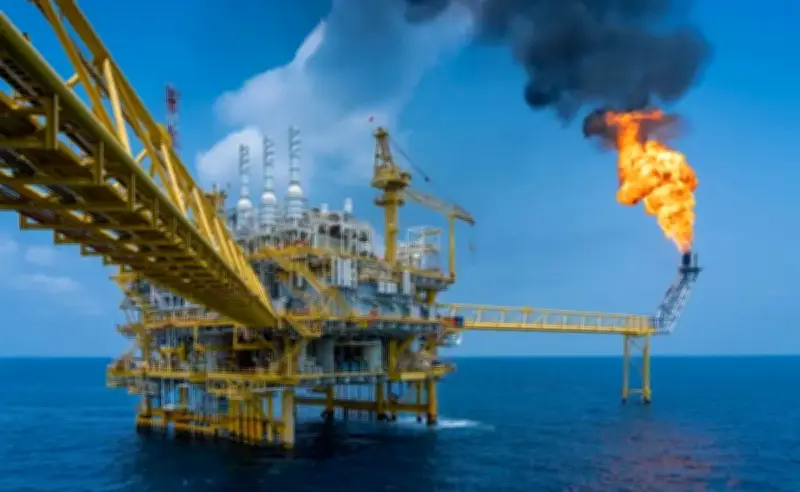
Africa's upstream oil and gas investment has declined to $37 billion, with Nigeria and four other countries dominating the sector, according to a new report from the International Energy Agency (IEA). The figure represents a significant drop from previous years, reflecting global shifts in energy investment and regional challenges.
Investment Decline Amid Global Trends
The IEA's World Energy Investment 2026 report highlights that Africa's upstream spending fell by 12% compared to 2024 levels. The $37 billion total is the lowest in a decade, driven by lower capital expenditure in mature fields and a pivot toward cleaner energy sources globally. However, Nigeria, Angola, Algeria, Egypt, and Libya collectively accounted for over 70% of the continent's upstream investment.
“The concentration of investment in a handful of countries underscores both the potential and the fragility of Africa's oil and gas sector,” said Dr. Fatih Birol, IEA Executive Director. “Without new discoveries and policy reforms, the region risks falling further behind in meeting its energy demand.”
Nigeria's Leading Role
Nigeria remained the largest recipient of upstream capital in Africa, attracting approximately $12 billion in 2025. Investments focused on deepwater projects and gas development, particularly the Nigeria LNG Train 7 and the NLNG expansion. Despite security and regulatory hurdles, international oil companies like Shell, TotalEnergies, and Chevron maintained their presence.
The report notes that Nigeria's oil production averaged 1.4 million barrels per day, still below its OPEC quota, as underinvestment and theft persist. “Nigeria must address its fiscal terms and governance to attract more capital,” the IEA stated.
Other Dominant Players
Angola saw $7 billion in upstream investment, driven by TotalEnergies' Block 32 and new exploration in the Namibe basin. Algeria invested $6 billion, focusing on natural gas to supply European markets. Egypt allocated $5 billion to maintain output from its Zohr field and new exploration in the Western Desert. Libya, despite political instability, attracted $4 billion from international firms restarting projects.
Regional Disparities and Challenges
Sub-Saharan Africa excluding the top five received minimal investment, with countries like Ghana, Congo, and Mozambique seeing project delays. The IEA warned that lack of infrastructure, political risk, and the energy transition are deterring investors. “The $37 billion is insufficient to sustain current production levels, let alone meet growing domestic energy needs,” the report added.
Impact on African Economies
The decline in investment threatens government revenues and energy access across the continent. Oil-rich nations face budget pressures as oil prices remain volatile. The IEA recommends that African countries diversify their energy mix and improve regulatory frameworks to attract both fossil fuel and renewable investment.
“We are at a crossroads,” said Birol. “Africa must leverage its natural resources strategically while preparing for a low-carbon future. Otherwise, the investment gap will widen.”
In total, global upstream oil and gas investment reached $550 billion in 2025, with Africa's share at just 6.7%, down from 8% in 2020. The IEA projects a further decline unless new policies are enacted.