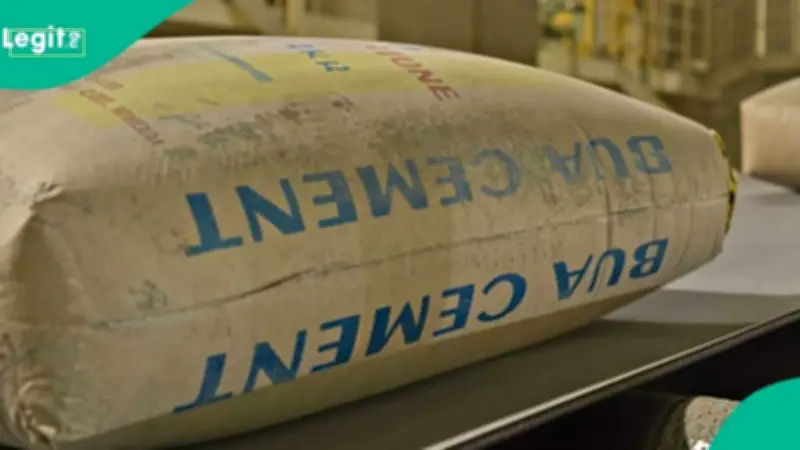
In October 2023, BUA Cement announced a major price reduction, promising to sell a 50kg bag at an ex-factory price of N3,500, a move that excited Nigerians and sent ripples through the building materials market. However, by 2026, the price of cement in many parts of Nigeria has soared to between N14,000 and N15,000 per bag, roughly four times the promised rate, prompting a fresh investigation by the Federal Competition and Consumer Protection Commission (FCCPC).
The October 2023 Price Cut Announcement
On October 1, 2023, BUA Cement said it would sell a 50kg bag at an ex-factory price of N3,500, with the new price taking effect from October 2, 2023. At the time, cement was selling for around N10,000 per 50kg bag, depending on the brand and location. The decision represented a dramatic cut that could have transformed construction costs if it had filtered through to consumers nationwide.
BUA said the reduction was brought forward following a review of its operations and its commitment to making cement more affordable. The company also said all pending, undelivered orders already paid for at the old prices would be reviewed downward to N3,500 per bag, as reported by Daily Trust.
Plans for Even Lower Prices
BUA indicated that the N3,500 price was not necessarily the end of the road. The company explained that the completion of new plants would increase its production capacity to 17 million metric tonnes per year, creating room for further price reviews. At the time, industry observers expected the ex-factory reduction to translate into retail prices of roughly N3,850 to N4,000 per bag, depending on distribution costs and dealer margins.
The announcement was widely welcomed because cheaper cement could reduce construction costs and make housing more affordable for Nigerians.
What Went Wrong with the N3,500 Promise
The price reduction, however, did not produce the nationwide retail impact many Nigerians expected. In early 2024, BUA Group Chairman Abdul Samad Rabiu explained that the company had faced challenges in getting dealers and depots to fully pass the reduction to consumers. BUA later maintained that the N3,500 price cut did happen, but stressed that it was an ex-factory price, rather than the final retail price paid by consumers.
Kabir Rabiu, Group Executive Director of BUA Group, also said the company maintained the reduced price for about five months across its plants. This distinction became central to the controversy. While BUA said it fulfilled its commitment, many consumers struggled to find cement selling anywhere close to N3,500 per bag.
From N3,500 to N15,000 by 2026
Fast-forward to 2026, and the cement market looks dramatically different. Market research cited in the source material showed cement selling for about N14,000 to N15,000 per 50kg bag in parts of Nigeria, several times the price BUA announced in 2023. The sharp increase has renewed concerns about production costs, distribution, competition and pricing across the cement industry.
For consumers, the difference is stark. A product once promoted at N3,500 now costs roughly four times as much in many markets.
FCCPC Investigation into Price Disparities
The cement pricing controversy has returned to the spotlight following a fresh investigation by the Federal Competition and Consumer Protection Commission (FCCPC). On Tuesday, August 18, 2026, the commission said its investigation uncovered significant disparities in cement prices between Nigeria and some other African countries, a prior Legit.ng report revealed. According to the FCCPC, its comparison of cement prices in Togo, Kenya and Tanzania showed that Nigerians were paying about N5,700 more than consumers in those countries.
The commission has invited major cement manufacturers to explain the price disparity and address concerns surrounding pricing in the industry.
What Happens Next
The latest FCCPC intervention has reopened an old question: why has cement become so expensive in Nigeria despite the country having major local producers? For Nigerians planning to build homes, developers and other construction businesses, the answer could have major implications. The N3,500 BUA price announcement may now look like a distant memory, but the debate it triggered over affordable cement has returned with renewed force. As regulators scrutinise the industry, Nigerians will be watching closely to see whether the latest intervention can bring meaningful relief to cement buyers.