
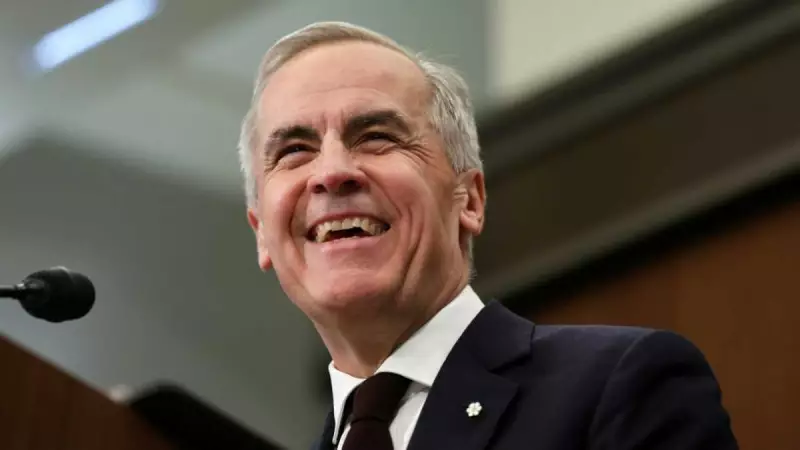
Canadian Prime Minister Mark Carney has taken a decisive step toward expanding the country's oil infrastructure, signing a memorandum of understanding with Alberta province to advance a new pipeline to the Pacific coast.
The agreement, inked on Thursday, marks a significant policy shift from the previous administration and has immediately sparked concerns about Canada's commitment to addressing climate change.
Strategic Energy Shift Toward Asia
The core objective of this agreement is establishing a pipeline route from Alberta to Canada's Pacific coastline, specifically designed to increase oil exports to Asian markets. This strategic move aligns with Carney's broader goal of expanding overseas trade relationships to counterbalance the economic impact of US President Donald Trump's ongoing trade war.
"At the core of the agreement, of course, is a priority to have a pipeline to Asia," Carney stated during the signing ceremony, where he appeared alongside Alberta's conservative Premier Danielle Smith.
The deal represents a clear departure from the policies that characterized former prime minister Justin Trudeau's decade-long leadership. Under Trudeau, relations between Alberta and the federal government deteriorated significantly, with Smith repeatedly accusing the previous administration of stifling Alberta's economic potential through what she described as radical pro-climate measures.
Climate Commitments Under Scrutiny
By endorsing new pipeline construction, Carney faces potential accusations of betraying Canada's climate commitments, including criticism from within his own Liberal Party. Carney previously served as a UN climate envoy before entering Canadian politics earlier this year, making his support for fossil fuel infrastructure particularly noteworthy.
The prime minister addressed these concerns directly, insisting the project will incorporate sustainability measures. "The way we're going to do that is in combination with the Pathways Project, which will be the largest carbon capture project in the world," Carney explained.
While the UN's Intergovernmental Panel on Climate Change acknowledges carbon capture as one potential method for reducing emissions, environmental critics frequently dismiss the technology as an excuse to continue fossil fuel dependence.
Long Road to Implementation
Actual pipeline construction remains a distant prospect, with the plan calling for a formal project proposal to be ready by July 2026. The memorandum of understanding mandates extensive consultation with Indigenous groups and requires Indigenous co-ownership of any resulting infrastructure.
This requirement presents a significant challenge, as First Nations and Indigenous communities have frequently opposed large-scale oil projects in the past. Additionally, any pipeline would need to traverse British Columbia, a west coast province currently governed by a left-wing administration that was not party to Thursday's agreement.
The shadow of US trade policy loomed large over the announcement. With Alberta's oil exports primarily directed toward the United States, and Canadian energy products having largely avoided Trump's tariffs so far, the breakdown in trade talks between the two countries has created substantial uncertainty.
Carney acknowledged this challenging context, noting the deal came "in the face of global trade shifts and profound uncertainty." He concluded optimistically, declaring: "This is a good day for Canada. This agreement will make Canada and Alberta, of course, more independent, more resilient and stronger."




