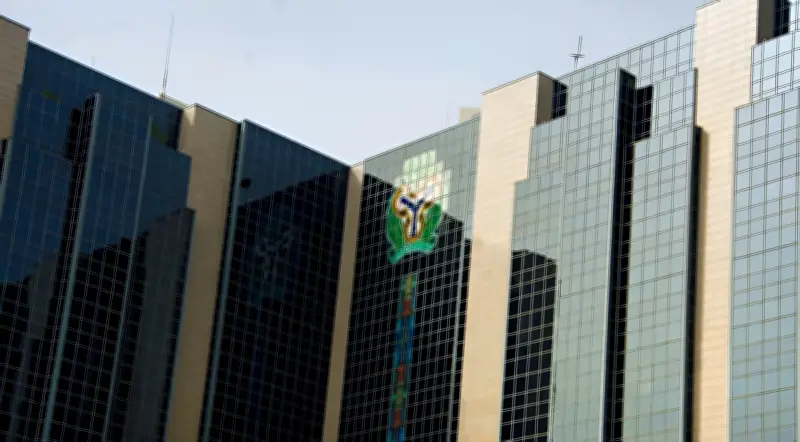
The Central Bank of Nigeria (CBN) has lifted restrictions that previously barred banks from accessing its Standing Lending Facility (SLF) if they participated in the Nigerian Foreign Exchange Market (NFEM) or primary auctions of government securities. The decision, announced in a circular signed by Okey Umeano, Acting Director of the Financial Markets Department, on Wednesday, also reinstates Tenored Repo Operations with tenors ranging from 4 to 90 days.
CBN removes NFEM and securities auction restrictions
The CBN said the review followed an assessment of developments and existing market practices in the foreign exchange, money, and fixed-income markets, as well as the frameworks governing access to the SLF, Tenored Repo Operations, and participation in Open Market Operations (OMO). As part of the changes, the restriction on institutions accessing the Discount Window from participating in OMO auctions on the same day remains in force.
“Restrictions on access to the Discount Window arising from participation in the Nigerian Foreign Exchange Market (NFEM) are hereby removed,” the CBN stated. The regulator also confirmed that restrictions linked to participation in primary auctions of government securities have been removed.
Tenored Repo Operations reinstated
The CBN also announced the lifting of the suspension of Tenored Repo Operations, a move aimed at providing greater flexibility for liquidity management. “The suspension of Tenored Repo Operations is hereby lifted. Accordingly, the CBN may conduct repo operations across approved tenors ranging from 4 to 90 days to support effective liquidity management, improve money market functioning and enhance monetary policy implementation,” the CBN stated.
The reinstatement is expected to give banks and other financial institutions more tools to manage short-term liquidity, potentially easing interbank funding pressures and supporting monetary policy transmission.
Revised OMO participation framework
The CBN further revised its OMO participation framework to allow a broader range of investors to participate in both primary and secondary OMO markets through Deposit Money Banks (DMBs). Eligible investors now include individuals, corporates, and non-bank financial institutions, while DMBs will continue to submit bids and settle transactions on behalf of their customers.
“OMO participation (primary and secondary markets) shall be open to all eligible investors through Deposit Money Banks (DMBs). Eligible investors include individuals, corporates and non-bank financial institutions. DMBs shall continue to submit bids and settle transactions on behalf of their customers,” the CBN said.
The apex bank added that the volume, tenor, and frequency of OMO issuances will continue to be determined by prevailing liquidity conditions and monetary policy objectives. OMO auctions will also continue to use the existing single-bid auction format.
Immediate effect and compliance
The new provisions take immediate effect, with the CBN directing all banks, authorised dealers, and other market participants to ensure strict compliance. “All banks, authorised dealers and market participants are required to ensure strict compliance,” the apex bank said.
These changes are part of the CBN's ongoing efforts to enhance the functioning of the financial markets and improve liquidity management, which could have implications for interbank rates and overall monetary policy effectiveness in Nigeria.