
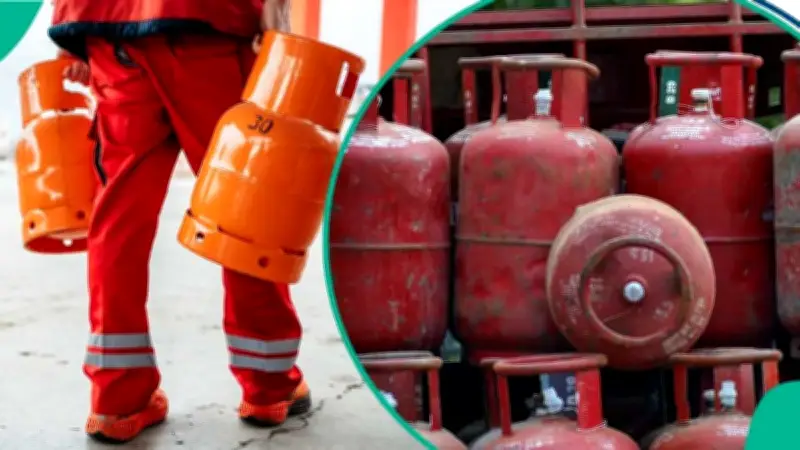
Nigeria's cooking gas market is witnessing a welcome price drop, offering relief to millions of households struggling with rising living costs after months of record-high prices. The decline comes as the Federal Government approved a wave of import permits for Liquefied Petroleum Gas (LPG) marketers, helping to address persistent supply shortages and increase product availability across the country.
Retail Prices Fall by Nearly 40%
A kilogram of LPG, commonly known as cooking gas, is now selling for about N1,400 in major cities, including Lagos, Enugu and several other locations nationwide. Just two months ago, consumers paid between N2,000 and N2,300 per kilogram, meaning prices have declined by as much as 39 per cent since June. The sharp reduction is expected to ease household expenses, particularly for families that depend on LPG for daily cooking.
Industry players say the latest price movement reflects improved supply conditions rather than a decline in demand. The price drop has been attributed to increased imports that have eased pressure on the domestic market.
Massive Import Approvals Boost Supply
Market sources said the Federal Government's decision to grant import permits to LPG marketers significantly increased product availability, helping to stabilise prices after months of scarcity. According to an industry insider, the volume of import approvals issued in recent weeks has transformed market conditions.
"The rate at which import permits were approved recently was massive. That is why prices are crashing," the source told BusinessDay. Another industry source explained that the domestic market had previously faced multiple challenges, including disruptions to global LPG supplies caused by the United States-Iran conflict.
The source added that financing constraints and delays in obtaining import approvals further limited supplies, worsening shortages and pushing prices to record levels. With imports now flowing into the country, those supply pressures have eased considerably, leading to lower depot and retail prices.
Imports Bridge Nigeria's Supply Gap
Latest data from the Nigerian Midstream and Downstream Petroleum Regulatory Authority (NMDPRA) show that imported LPG has played a major role in restoring stability to the market. According to the regulator's June 2026 Fact Sheet on the State of the Midstream and Downstream Sector, average daily LPG receipts rose by 24 per cent, increasing from 4.1 kilotonnes per day (KT/D) in May to 5.1 KT/D in June.
However, the improvement was driven almost entirely by imports. Domestic LPG supply fell by 10 per cent, declining from 4.0 KT/D in May to 3.6 KT/D in June. During the same period, LPG imports surged dramatically from just 0.1 KT/D to 1.5 KT/D, representing an increase of about 1,400 per cent.
The figures underscore the growing importance of imports in meeting Nigeria's cooking gas demand, especially as local production struggles to keep pace with consumption.
What the Price Drop Means for Consumers
The sustained decline in cooking gas prices is expected to reduce pressure on household budgets and encourage more Nigerians to continue using cleaner cooking fuel instead of firewood and kerosene. Industry observers say the market could remain relatively stable in the near term if import approvals continue and global LPG prices remain favourable.
Although the NMDPRA had not responded to requests for comments at the time of reporting, the latest market data suggest that increased imports have become the key factor driving the recent fall in cooking gas prices across the country.
NLNG Halts LPG Exports Amid New Policy
Legit.ng earlier reported that Nigerians could see further relief in cooking gas costs after the Nigeria LNG Limited (NLNG) announced that it has dedicated 100 per cent of its liquefied petroleum gas (LPG), popularly known as cooking gas, to the domestic market, ending exports in a major push to improve access to cleaner and more affordable energy.
The announcement comes as cooking gas prices continue to decline across the country, offering much-needed respite to households battling the rising cost of living. Speaking during his maiden media briefing, tagged Presentation of NLNG Facts and Figures 2026, the Managing Director and Chief Executive Officer of NLNG, Adeleye Falade, said the company supplied a record 500,000 metric tonnes of LPG to the Nigerian market in 2025, the highest annual volume since local distribution began in 2005.




