
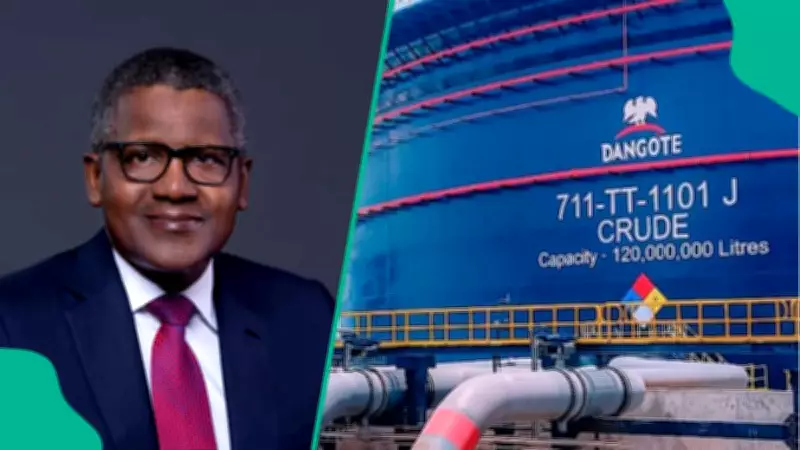
Dangote Refinery Criticizes International Oil Companies for Crude Supply Shortfalls
Dangote Refinery has raised significant concerns regarding the failure of international oil companies (IOCs) operating in Nigeria to supply crude oil directly to its facility. This situation is compelling the refinery to depend on more costly imports from the United States and other African nations to meet its operational demands.
Dangote's Statement on Crude Sourcing Challenges
Aliko Dangote, President of Dangote Industries Limited, highlighted these issues during a visit from Amina Mohammed, Deputy Secretary-General of the United Nations, at the company's industrial complex in Ibeju-Lekki, Lagos. He emphasized that despite local efforts, the refinery continues to face supply gaps, necessitating imports to bridge the shortfall.
Dangote acknowledged the Nigerian National Petroleum Company Limited (NNPCL) for enhancing crude deliveries in March, with the refinery receiving ten cargoes. Of these, six were settled in Naira and four in Dollars, reflecting a mix of local and international transactions.
Export Activities and Regional Supply Goals
The refinery has exported approximately seventeen cargoes of petrol to various African countries, aiming to bolster fuel supply across the continent. With a capacity of 650,000 barrels per day, Dangote Refinery is positioned to stabilize supply in West, Central, and East Africa. Dangote assured that the facility has the capability to meet regional energy needs effectively.
He stressed the importance of accessing domestically priced crude under local currency arrangements to reduce fuel costs and enhance energy and food security in Nigeria. Stakeholders have proposed special arrangements to allow the refinery to obtain crude at controlled prices, potentially lowering the cost of refined products locally.
Expert Insights on Market Dynamics and Pricing Models
Economist Bismark Rewane suggested a refinery-based subsidy model, where the government would supply crude to local refiners at controlled rates while ensuring lower fuel prices for consumers. This approach could help mitigate the impact of high import costs.
Industry analyst Marcel Okeke explained that IOCs in Nigeria, as subsidiaries of global firms, are influenced by international market forces. Existing production-sharing agreements and forward sales of crude by the government limit the volume available for domestic refining. Okeke noted that companies typically sell crude where they can achieve the best value, making it challenging to enforce local supply mandates.
Additional Challenges and Export Threats
Dangote also mentioned increased fertilizer exports to African countries to support agricultural productivity and alleviate supply constraints. However, he warned that if Nigerian authorities continue to grant import licenses to other fuel importers, the refinery might fully supply the international market, potentially denying Nigerians access to fuel. This could lead to fuel shortages, long queues at filling stations, and renewed upward pressure on pump prices, reversing recent stability in the downstream sector.
Experts argue that such a move would have severe repercussions for Nigeria's energy security and economic stability, highlighting the need for coordinated policies to support local refining capacity.




