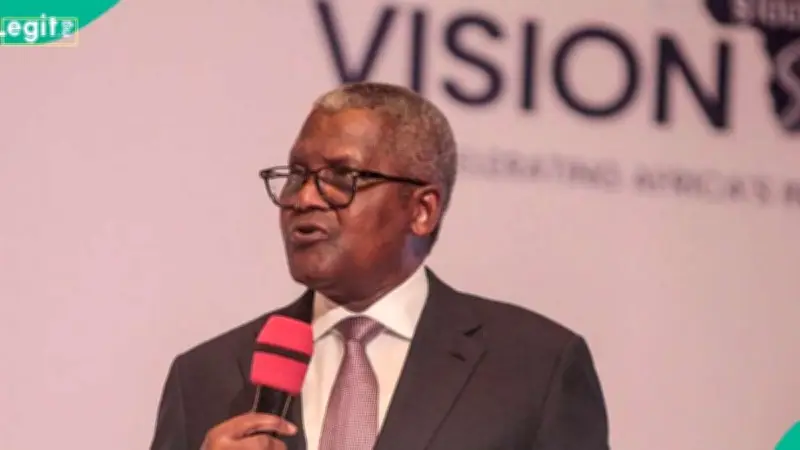
Aliko Dangote, President and Chief Executive of Dangote Industries Limited, has announced the acquisition of a 25 per cent stake in Kenya's petroleum products pipeline network, with the support of the Kenyan government. The move marks a significant step in his plan to establish a pan-African petroleum distribution network, extending his energy business beyond Nigeria.
The announcement was made during an interview with Financial Times journalist David Pilling, where Dangote revealed the acquisition was completed just a day prior. "Just let me tell you, yesterday, with the support from the President of Kenya, we bought 25 per cent of the pipeline network for the distribution of petroleum products," he said.
Expanding Distribution Across East, Central, and Southern Africa
Dangote Industries is pursuing major investments in petroleum pipelines, storage facilities, and distribution corridors across East, Central, and Southern Africa. The expansion is expected to strengthen regional fuel supply chains, reduce distribution bottlenecks, and create new markets for petroleum products from the Dangote Refinery in Lagos.
"We are very aggressive with that," Dangote said, referring to the company's investments in pipelines, petroleum depots, and other logistics infrastructure. He explained that the initiative would improve the movement of refined petroleum products between African countries, particularly markets struggling with inadequate storage and transportation infrastructure.
Cameroon, Namibia, and Ethiopia Targeted
Beyond Kenya, Dangote Industries is developing a petroleum distribution corridor connecting Djibouti and Addis Ababa, Ethiopia, supported by storage terminals and tank farms. The company is also nearing completion of another infrastructure project in Cameroon, while Namibia has emerged as a strategic gateway into Southern Africa.
Dangote highlighted Namibia's proximity to his Lagos refinery as a key factor. "From our refinery to Namibia is just about four days of steaming," he explained. Under the proposed arrangement, refined petroleum products would be shipped to Namibia before being distributed to Botswana, South Africa, and potentially Zimbabwe and Zambia.
New 700,000-Barrel Refinery Planned for Kenya
The pipeline investment complements Dangote's proposed refinery in Lamu, Kenya, with a projected processing capacity of approximately 700,000 barrels per day. Dangote identified East Africa's growing economies, expanding mining activities, and increasing petroleum demand as major factors driving the investment.
The proposed refinery would source crude oil from several international markets rather than rely exclusively on Kenya or Uganda. Lamu was selected following technical assessments that considered deep-water access, marine infrastructure, and other requirements for large-scale refining operations. Dangote said the investment decision was reached within four months, although he alleged that competing commercial interests attempted to delay the project through legal action.
Dangote Unveils $50bn Investment Ambition
Dangote also disclosed that Dangote Industries has earmarked approximately $50 billion for investments between 2026 and 2030. He said the programme would support industrial expansion while demonstrating that African businesses can undertake major infrastructure projects. "The legacy we are trying to set up is how do we industrialise our continent?" he said.
Dangote urged African governments to protect domestic manufacturing, arguing that excessive dependence on imports undermines employment and industrial development. "Allowing imports to displace local production means we are exporting our jobs out of the continent and importing poverty into the continent," he warned. He also identified unreliable electricity, weak financial systems, and inadequate industrial policies as obstacles to economic transformation.
With hundreds of millions of Africans still lacking electricity, Dangote maintained that investment in energy and manufacturing remains essential to unlocking the continent's economic potential. "The journey has started," he declared. "But now we're awake, and we will make it happen."
In a related development, Legit.ng earlier reported that Dangote plans to sell at least 10 per cent of his multibillion-dollar fertiliser business in Ethiopia to local investors. The proposed sale will take place through the Ethiopian Securities Exchange once the $4 billion fertiliser plant begins operations and production stabilises.