
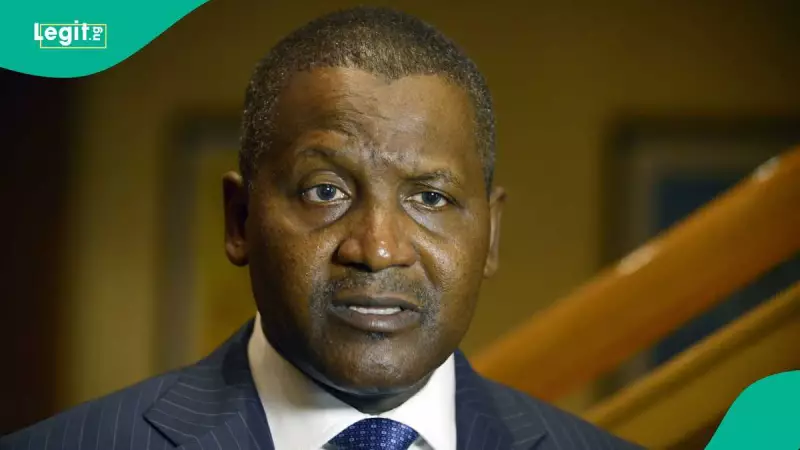
Nigerian billionaire industrialist Aliko Dangote has publicly addressed and dismissed widespread rumours suggesting United States President Donald Trump is opposed to the operations of the massive Dangote Refinery in Lagos.
Setting the Record Straight on US Relations
Speaking at a recent news briefing, Dangote firmly labelled the viral social media speculation as baseless and not aligned with commercial realities. He emphasized that the narrative of a feud with the US administration is unfounded, pointing to the strong business relationship between his refinery and American crude oil suppliers as concrete proof.
"The US is one of our biggest suppliers," Dangote stated, directly countering the rumours. He argued that it makes little sense for President Trump to oppose a project that is a significant customer for American producers.
The Origin of the Speculation and Firm Rebuttal
The controversy appears to have stemmed from online commentators attempting to link President Trump's earlier statements concerning security and terrorism in Nigeria to the Dangote Refinery. Dangote dismissed this attempt to merge geopolitical commentary with energy investment as speculative and misleading.
He stressed that no official position or action from the US government has indicated any hostility towards the refinery. To solidify his point, Dangote revealed compelling figures: "Trump is more than happy with our refinery, because on average for a year, we buy close to 100 million barrels from the US."
Adding further weight to his argument, Dangote confirmed that the refinery exported its first shipment of petrol to the United States in September 2025. Global oil trading giants Vitol and Sunoco were the recipients of this historic first US import of petrol from Africa's largest refinery.
Local Impact and Market Transformation
Beyond addressing the international rumours, Dangote highlighted the refinery's growing role in reshaping Nigeria's domestic fuel market. He explained that the facility is already altering consumer dynamics by providing a choice between high-quality, locally refined petrol at competitive prices and more expensive blended imports.
This shift, according to Dangote, forces fuel importers to adjust their strategies, often absorbing losses to remain competitive. For the Nigerian consumer, however, the emergence of large-scale local refining promises improved fuel quality, more stable supply, and reduced dependence on foreign imports, ultimately strengthening the nation's energy security.
By confronting the rumours head-on, Dangote's message was clear: the Dangote Refinery is not only an accepted player in global energy markets but is actively and successfully conducting business with key international partners, including the United States.




