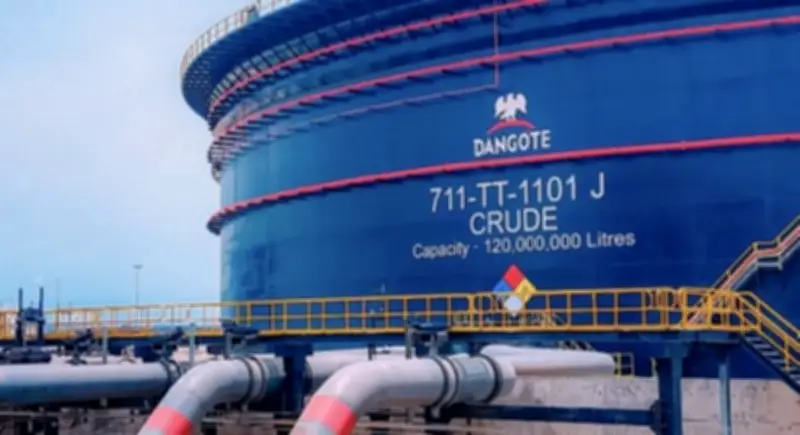
Nigeria's petroleum exports to Europe surged by 767% in the first half of 2026, a dramatic shift driven by the Dangote Refinery's ramp-up in production. According to data from Kpler, a commodities analytics firm, the refinery has transformed Nigeria from a minor fuel supplier to a major source of diesel and jet fuel for the European market.
Refinery Output Reshapes Trade Flows
The Dangote Refinery, located in Lagos, has reached a processing capacity of 650,000 barrels per day, making it one of the largest single-train refineries in the world. Its output has not only met domestic demand but also generated significant export volumes. In the first six months of 2026, Nigerian petroleum exports to Europe reached approximately 4.2 million tonnes, a stark contrast to the 0.5 million tonnes recorded in the same period last year.
Kpler analysts attribute this growth to the refinery's consistent production of diesel, jet fuel, and naphtha, which are in high demand in Europe due to ongoing supply disruptions from traditional exporters. The refinery's strategic location on the Atlantic coast also reduces shipping times and costs compared to other suppliers.
Impact on European Energy Security
European countries, particularly those in the Mediterranean and Northern Europe, have increased their reliance on Nigerian fuel imports. Diesel imports from Nigeria now account for about 12% of Europe's total diesel imports, up from less than 2% in 2024. Jet fuel imports have also grown, with Nigeria supplying roughly 8% of Europe's jet fuel needs.
According to a report by the Nigerian National Petroleum Corporation (NNPC), the surge in exports has boosted Nigeria's foreign exchange earnings, with petroleum product exports generating over $8 billion in revenue in the first half of 2026. This represents a significant contribution to the country's economy, which has long been dependent on crude oil exports.
Economic and Strategic Implications
The Dangote Refinery's success has also reduced Nigeria's dependence on imported refined products. Domestic fuel prices have stabilized, and the country has begun exporting petrol to neighboring West African nations. The refinery's operations are expected to continue expanding, with plans to increase production of petrochemicals and lubricants.
Industry experts note that this development could alter global refining dynamics, as more African refineries come online. However, challenges remain, including maintenance costs, crude supply security, and competition from established refining hubs in the Middle East and Asia.
Looking ahead, the Nigerian government aims to leverage this momentum to attract further investment in the downstream sector. The Dangote Refinery's performance is seen as a proof of concept for large-scale industrial projects in Africa, potentially encouraging similar ventures in other resource-rich countries.