
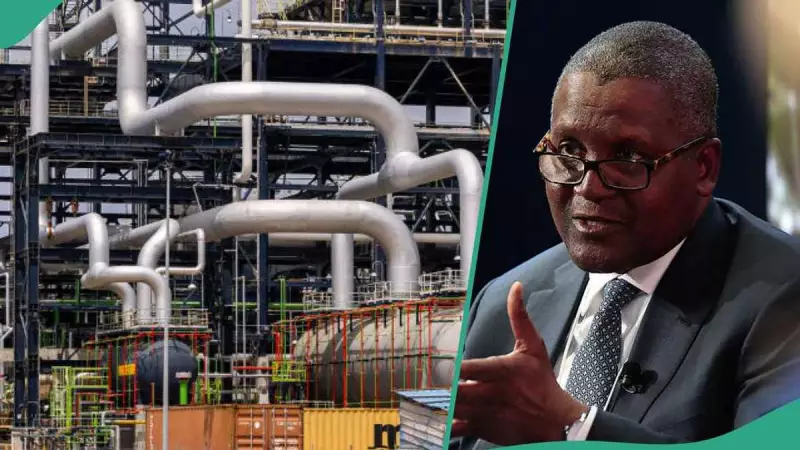
In a landmark development for Nigeria's energy sector, Dangote Group has unveiled ambitious plans to transform its petroleum refinery into the world's largest single-train facility through a strategic partnership with American technology giant Honeywell International.
Historic Partnership for Unprecedented Expansion
The collaboration, announced on November 26, 2025, will see the Dangote Petroleum Refinery in Lekki, Lagos, more than double its current processing capacity to 1.4 million barrels per day by 2028. This massive upgrade represents one of the most significant industrial investments in Africa's history.
Aliko Dangote, President of Dangote Industries Limited, revealed that the expansion decision was influenced by Nigeria's favorable policy environment under President Bola Tinubu and growing regional demand for cleaner fuels. The $20 billion facility, already recognized as the world's largest single-train refinery, will undergo this transformation within the next three years.
Technological Advancement and Production Boost
The partnership will leverage Honeywell's advanced technology portfolio, including specialized catalysts, equipment, and process solutions. This technological infusion will enable the refinery to process a wider variety of crude grades more efficiently while enhancing both product quality and operational reliability.
Among the key production enhancements will be a significant scaling up of polypropylene output to 2.4 million metric tons annually using Honeywell's proprietary Oleflex technology. Polypropylene serves as a critical material in packaging, automotive, and manufacturing industries worldwide.
Additionally, Dangote is advancing the next phase of its fertilizer expansion strategy, planning to increase urea production from the current three million to nine million metric tons per year.
Economic Impact and Environmental Upgrades
The expanded refinery will transition from producing Euro V to the more environmentally friendly Euro VI fuel standards while boosting power generation capacity to 1,000 megawatts, ensuring complete operational self-sufficiency.
Dangote emphasized the project's substantial economic benefits, estimating that refinery revenues could exceed $55 billion annually. The expansion is expected to strengthen Nigeria's energy security, reduce foreign exchange outflows, create numerous employment opportunities, and support thousands of small and medium-sized enterprises.
"More than 85% of our workforce will be Nigerian," Dangote committed, highlighting ongoing investments in skills development and technology transfer that will build local capacity.
Public Ownership and Global Positioning
In a move that will allow ordinary Nigerians to participate in this national asset, Dangote confirmed plans to list a portion of the refinery's shares on the Nigerian Exchange (NGX) within the next year. The expansion project will be financed through a combination of cash flow, public listing proceeds, and strategic investors.
Upon completion in 2028, the upgraded Dangote Refinery will surpass India's Jamnagar Refinery as the world's largest, firmly establishing Nigeria as a global refining hub and positioning the country as a major driver of Africa's industrial renaissance.
"This expansion reflects our confidence in Nigeria's future, Africa's potential, and our commitment to building energy independence for our continent," Dangote stated, underscoring the strategic importance of the project for regional economic development.




