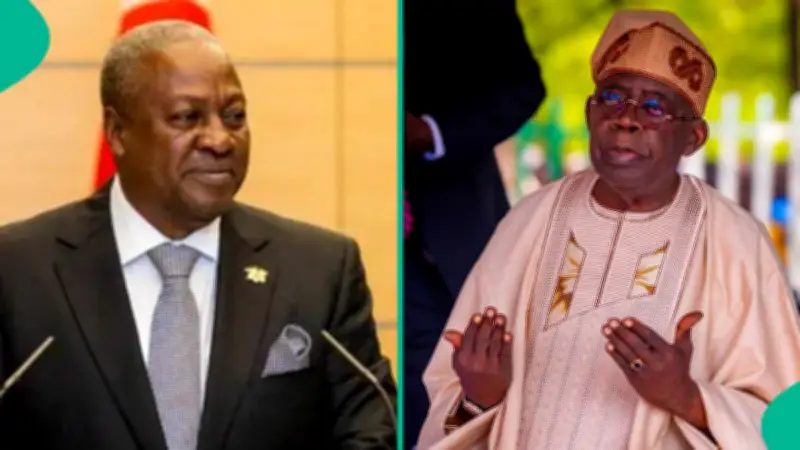
Ghana is positioning itself to become a major electricity supplier across West Africa, with Nigeria emerging as its next potential export market. Ghana's Minister for Energy and Green Transition, Dr John Abdulai Jinapor, said the country is willing to begin supplying electricity to Nigeria as part of a broader strategy to strengthen regional energy cooperation and establish Ghana as an energy hub.
Ghana's Cross-Border Electricity Plans
Ghana already has cross-border electricity arrangements with Togo, Benin, Côte d'Ivoire and Burkina Faso through the Ghana Grid Company (GRIDCo). The country's transmission network is physically interconnected with these neighbouring countries, allowing electricity to flow across borders.
Speaking at a public event on August 21, 2026, Jinapor said Ghana's ambition was to develop sufficient generation and transmission capacity to meet domestic requirements while supplying power to other West African countries.
"So clearly, this falls in line with our vision, and we believe that if we can achieve this, Ghana can become an energy hub for the whole of the West African region in the shortest possible time," he said.
Nigeria Offers a Huge Opportunity
Nigeria would represent a significant addition to Ghana's electricity export market because of its large population and substantial demand for reliable power. However, Jinapor acknowledged that supplying Nigeria on a meaningful scale would require major investments in transmission infrastructure.
The proposed expansion would need to accommodate the volume of electricity involved in cross-border trade while ensuring that Ghana can continue meeting its own domestic demand. For Nigeria, additional regional power sources could potentially complement its efforts to increase electricity supply as businesses, industries and households continue to demand more reliable energy.
Diversifying Ghana's Energy Mix
Ghana's regional electricity ambitions are tied to a broader plan to diversify its energy mix. According to Jinapor, the country intends to combine natural gas, renewable energy and nuclear power to strengthen electricity generation and improve reliability.
The strategy is also expected to support President John Dramani Mahama's 24-Hour Economy initiative, which seeks to encourage businesses and industries to operate for longer hours. Jinapor said dependable electricity would be essential to sustaining increased industrial and commercial activity under the programme.
Nuclear power is expected to play an important role alongside gas and renewable sources by providing consistent generation capacity.
Nigeria Explores Cassava Waste for Renewable Energy
While Ghana looks to expand its electricity exports, Nigeria is also exploring unconventional ways to increase its energy resources. One emerging option is the conversion of cassava wastewater into biogas.
Cassava effluent is often discharged around processing centres without adequate treatment, creating environmental risks for streams and other water bodies. However, the biodegradable material contained in the wastewater can potentially be converted into renewable energy.
Prof. Taiwo Hammed, an Associate Professor in the Department of Environmental Health and Technical Director of the Renewable Resources Centre at the University of Ibadan, said cassava wastewater could serve as feedstock for biogas production when properly managed, according to a report by Leadership.
Speaking at a U.S.-Nigeria Transdisciplinary Workshop titled "From Cassava Effluent to Energy" at the University of Ibadan, Hammed explained that the efficiency of the process would depend on factors including the type and quantity of feedstock, retention time, temperature and nutrient balance required by microorganisms to break down the organic material.
Lagos Moves to End Blackouts with 3,500MW Plan
Legit.ng earlier reported that the federal government and Lagos State Government have unveiled plans to raise electricity supply in the state to about 3,500 megawatts (MW), as part of renewed efforts to tackle persistent blackouts and power the state's growing economy.
The plan was announced at the Lagos State High-Level Strategic Power Town Hall Meeting held at Lagos House, Marina, where government officials, regulators and industry operators agreed that reliable electricity is essential to sustaining Lagos' economic and industrial growth.