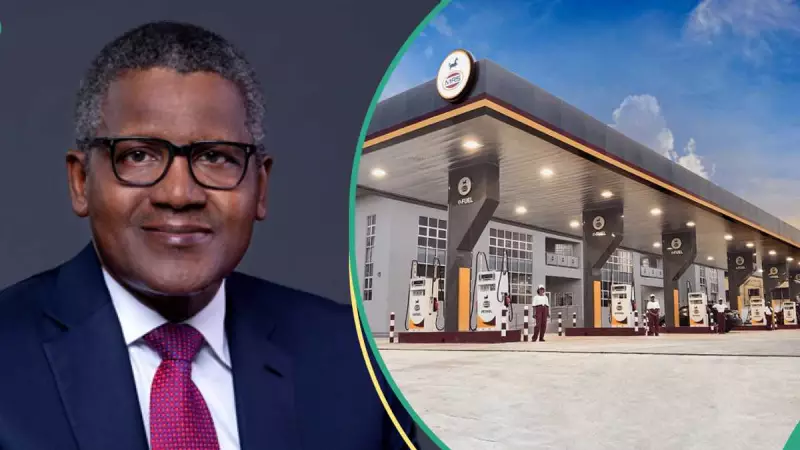
Nigerian motorists in parts of Lagos experienced a wave of relief on Tuesday, December 17, 2025, as MRS filling stations reduced the pump price of Premium Motor Spirit (PMS) to N739 per litre. This significant drop came in direct response to the Dangote Refinery's dramatic slashing of its own gantry price just days earlier, igniting excitement but also a fierce controversy within the oil marketing sector.
Uneven Price Relief Sparks Motorist Rush
The price adjustment led to immediate and visible reactions on the ground. Stations like the MRS outlet in Alapere, Lagos, witnessed heavy traffic with long queues of vehicles stretching far beyond their premises. Motorists, weary from months of high fuel costs, swiftly abandoned outlets still selling petrol above N800 per litre to seek out the new, lower rate.
However, the price cut was not uniformly implemented across all locations. Observations on Tuesday evening showed MRS stations along the Mowe and Ibafo axis of the Lagos-Ibadan Expressway in Ogun State were still selling at around N875 per litre. Furthermore, many non-MRS stations across the country continued to dispense petrol at prices ranging from N850 to N890 per litre, highlighting a stark disparity in the downstream market.
Dangote's Decisive Push Against High Prices
This development traces back to Friday, December 13, 2025, when the Dangote Refinery reduced its petrol gantry price from N828 to N699 per litre. Aliko Dangote, President of the Dangote Group, publicly vowed to ensure this reduction reached the final consumer. He expressed frustration at marketers who often maintain high pump prices despite depot reductions and announced that MRS stations would lead the way in Lagos.
Dangote declared that the era of petrol selling close to N1,000 per litre was over, insisting that for December and January, Nigerians should not pay more than N740 per litre nationwide. He framed any attempt to keep prices high as sabotage, which his group was prepared to confront.
Marketers' Backlash and Warnings of Losses
The aggressive pricing strategy has triggered a strong pushback from established industry players. The Petroleum Products Retail Outlet Owners Association of Nigeria (PETROAN) has criticized the public enforcement of pump prices by corporate bodies. Its President, Billy Gillis-Harry, argued that such actions contradict the Petroleum Industry Act (PIA) of 2021, which mandates that market forces determine prices.
PETROAN warned that a "dirty price war" is inflicting damage across the value chain. Independent marketers have raised alarms over potential massive financial losses, with industry sources suggesting:
- Marketers could lose up to N80 billion due to the sudden price crash.
- Petrol importers risk monthly losses of about N102.48 billion.
- Even Dangote Refinery is projected to lose roughly N91 billion in one month.
The association cautioned that prolonged conflict could lead to market monopolization, reduced competition, and long-term pricing instability, ultimately harming both consumers and the economy.
A Sector at a Critical Juncture
While consumers celebrate the immediate relief, the situation presents a complex crossroads for Nigeria's downstream oil sector. The price war has already caused private petroleum depot owners in Lagos to slash their PMS prices by about 14%, with rates falling to as low as N710 per litre from an average of N828.
Experts caution that sustainable pricing will depend on dialogue, fair competition, and adherence to the PIA. The battle between forcing immediate consumer relief and ensuring long-term market stability is now the defining challenge for Africa's largest oil-producing nation.