
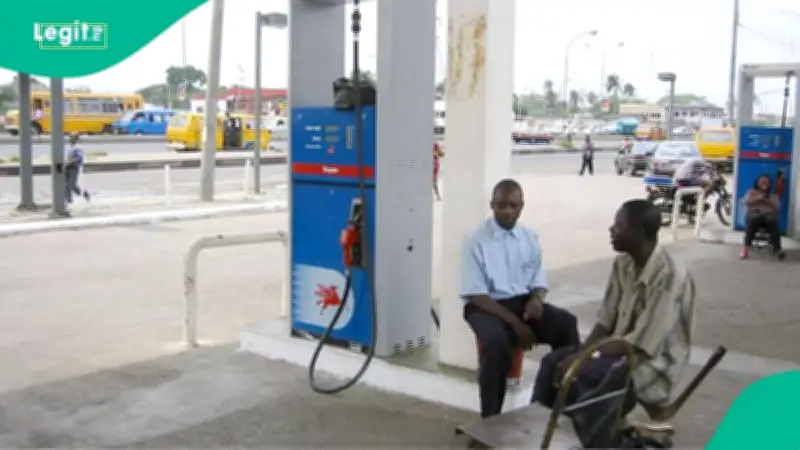
Nigeria's petrol consumption declined by approximately 52 million litres in the first half of 2026, according to new data from the Nigerian Midstream and Downstream Petroleum Regulatory Authority (NMDPRA). This drop, though modest at 0.56%, signals that sustained high pump prices are beginning to influence consumer demand, even as local refining capacity, particularly from the Dangote Petroleum Refinery, continues to expand.
Consumption Figures: A Closer Look
Between January and June 2026, Nigerians consumed an estimated 9.316 billion litres of Premium Motor Spirit (PMS), compared to 9.368 billion litres in the same period of 2025. The NMDPRA clarified that these figures are based on the volume of petrol transported by trucks into the domestic market.
Monthly demand fluctuated throughout the half-year. Average daily consumption peaked at 60.2 million litres in January, then fell to 56.9 million litres in February, and dropped sharply to 47.3 million litres in March. It recovered slightly to 51.1 million litres in April, slipped again to 46.3 million litres in May, and edged up to 47.4 million litres in June.
In total, monthly consumption was estimated at 1.866 billion litres in January, 1.593 billion litres in February, 1.466 billion litres in March, 1.533 billion litres in April, 1.435 billion litres in May, and 1.422 billion litres in June, culminating in the first-half total of 9.316 billion litres.
Fuel Prices Shape Consumer Behaviour
The reduction in consumption comes as motorists continue to grapple with higher fuel prices following the removal of the petrol subsidy and deregulation of the downstream sector. According to NMDPRA data, average retail prices in June 2026 ranged from N1,284.50 per litre in Lagos to N1,393 per litre in Maiduguri. In contrast, average prices in November 2025 stood between N910 per litre in Lagos and N982.50 per litre in Maiduguri, highlighting a significant increase in fuel costs over the period.
This price surge is gradually altering consumer behaviour, with many Nigerians opting to reduce fuel usage or switch to alternative transportation methods. While the overall decline is modest, the trend suggests that price sensitivity is becoming more pronounced.
Local Refineries Dominate Supply
Despite softer demand, domestic refining has strengthened its position in Nigeria's fuel supply chain. NMDPRA figures show that local refineries delivered about 6.609 billion litres of PMS during the six-month period, accounting for 77.9% of the 8.482 billion litres supplied to the domestic market. Imported petrol made up the remaining 1.873 billion litres, representing 22.1% of total supply.
Local refinery deliveries averaged 40.1 million litres per day in January, 29.4 million litres in February, 34.2 million litres in March, 40.7 million litres in April, 41.5 million litres in May, and 32.5 million litres in June. Imported volumes averaged 24.8 million litres daily in January, before dropping sharply to 3.0 million litres in February. Imports later rose to 5.9 million litres in March, 3.7 million litres in April, 5.9 million litres in May, and surged to 18.1 million litres per day in June.
Overall fuel supply averaged 64.9 million litres daily in January, declined to 32.4 million litres in February, then recovered progressively to 40.1 million litres in March, 44.4 million litres in April, 47.4 million litres in May, and 50.6 million litres in June.
Dangote Refinery's Growing Role
The June report underscored the growing contribution of the Dangote Petroleum Refinery. In June 2026, the refinery operated at an average capacity utilisation of 101.36%, producing 39.1 million litres of PMS daily. It supplied 32.5 million litres per day to the domestic market, exported 3.4 million litres daily, and ended the month with 410.7 million litres of petrol in storage.
Total daily PMS receipts increased by 7% from 47.4 million litres in May to 50.6 million litres in June. This rise was driven largely by imported fuel, which jumped by 207%, increasing from 5.9 million litres per day to 18.1 million litres per day, while domestic receipts declined by 22% from 41.5 million litres to 32.5 million litres per day. According to the regulator, domestic receipts include petrol supplied through the Dangote Petroleum Refinery gantry as well as coastal evacuation volumes, while consumption reflects products distributed into the local market by trucks.
Strategic Reserves Below Target
Despite stronger local production, Nigeria's strategic fuel reserve remained below target. The NMDPRA reported that the country had 20 days of PMS stock sufficiency in June, falling short of its benchmark of 30 days. This shortfall raises concerns about the nation's ability to weather supply disruptions.
Although the decline in petrol consumption was relatively modest, the latest figures suggest that higher fuel prices are gradually influencing consumer behaviour, even as increased domestic refining continues to reshape Nigeria's petroleum supply landscape.




