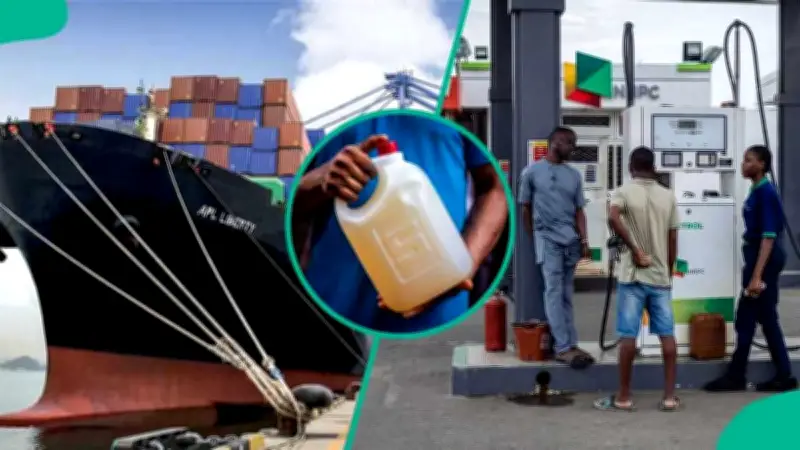
Nigeria is set to receive approximately 154.2 million litres of imported Premium Motor Spirit (PMS) this week as five fuel-laden vessels prepare to dock at ports in Lagos and Calabar, according to the latest shipping schedule from the Nigerian Ports Authority (NPA). The imports arrive even as domestic refining capacity expands, including the Dangote Refinery's renewed sale of petrol in naira.
Vessel Schedule and Cargo Details
The NPA schedule shows that four vessels will discharge at the KLT Phase 3A terminal in Tin Can Island, Lagos, while one vessel will berth at the North West Petroleum & Gas terminal in Calabar. The vessel LESTE is expected Monday with 30,000 metric tonnes of PMS, followed by BORA with 10,000 metric tonnes the same day. On Tuesday, ST ILHAAM will deliver 30,000 metric tonnes, and on Wednesday, STELLAR will bring another 30,000 metric tonnes. In Calabar, SL AREMU is scheduled to discharge 15,000 metric tonnes on Tuesday.
Using an industry conversion rate of approximately 1,341 litres per metric tonne, the total cargo equates to about 154.2 million litres. Each of the three 30,000-metric-tonne shipments yields around 40.23 million litres; the 10,000-metric-tonne BORA cargo provides roughly 13.41 million litres; and the 15,000-metric-tonne SL AREMU shipment is estimated at 20.12 million litres.
Imports Amid Local Refining Growth
The continued imports highlight that petroleum marketers still rely on foreign supplies despite the significant expansion of local refining capacity, including the Dangote Refinery. Under Nigeria's deregulated downstream market, marketers are free to source fuel from local refineries or international suppliers based on price, availability, and reliability. The NPA schedule also lists STELLAR as one of the vessels expected at the Dangote terminal in Lekki Deep Sea Port, with an arrival date of July 24, indicating a mix of import and domestic destinations.
Industry stakeholders have argued that imports remain necessary to promote competition, ensure adequate supply, and guarantee product availability across the country. Recent data suggests that while local refining output has increased, imported petrol continues to play a key role in Nigeria's overall fuel supply as the nation transitions toward greater domestic production.
Recent Market Developments
The development comes shortly after the Dangote Petroleum Refinery resumed selling petrol in naira, accusing some fuel importers of withholding supplies in anticipation of possible price increases. Meanwhile, petrol depot prices have fallen across major hubs in Lagos, Port Harcourt, and Warri, with depot owners reducing ex-depot loading rates by between N5 and N25 per litre. These reductions follow recent retail price cuts by NNPC and Dangote Refinery partner stations, adding downward pressure on fuel costs.