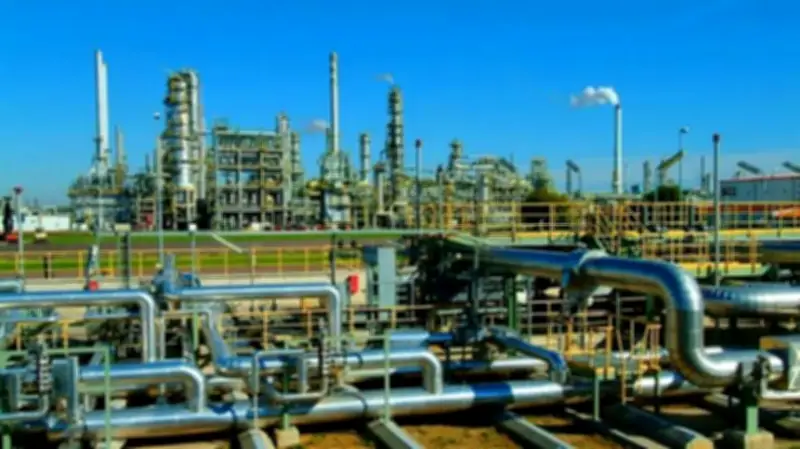
The Nigerian Midstream and Downstream Petroleum Regulatory Authority (NMDPRA) has announced that Nigeria intends to allocate all of its crude oil production to the domestic market by 2030, aligning with the expansion of local refining capacity. This strategic shift aims to enhance energy security and boost national revenue, marking a significant departure from the country's historical practice of exporting most of its crude to refiners in Europe and Asia.
Production and Refining Capacity Targets
According to a report by S&P Global, Nigeria produced 1.74 million barrels of crude oil per day in June and aims to increase production to 3 million barrels per day by 2030. The NMDPRA told the publication that Nigeria’s current domestic refining capacity stands at approximately 1.12 million barrels per day. The authority has also engaged the Nigerian Upstream Petroleum Regulatory Commission (NUPRC) to enforce legal provisions that require local producers to supply crude oil to domestic refineries.
Rabiu Umar, CEO of NMDPRA, highlighted the role of the Dangote refinery in boosting Nigeria’s domestic refining capacity, particularly with its plan to double its processing capacity to 1.4 million barrels per day. Umar noted that the authority is working to address crude oil supply shortages faced by local refineries and ensure compliance with the Domestic Crude Supply Obligation (DCSO) under the Petroleum Industry Act (PIA).
Government Commitment to Local Refining
“The Federal Government wishes to end the pattern where much of the country’s crude [volumes] are exported and refined products imported,” Umar said. “We are engaging the Nigerian Upstream Petroleum Regulatory Commission to ensure that every molecule of our 3 million b/d that we hope to achieve in the coming years is refined locally.” This statement underscores the government's commitment to reducing dependence on imported refined products and maximizing the value of domestically produced crude.
Data from the NUPRC, published on August 10, reveals that Nigerian crude producers supplied 53.7 million barrels of crude oil to domestic refineries in the second quarter (Q2) of 2026. Of that volume, 52.6 million barrels went to the Dangote refinery. The upstream regulator noted that the Dangote refinery had been offered a higher volume of 68.1 million barrels, which would have fully met its crude oil requirements.
Challenges in Crude Supply
According to the S&P Global report, the Dangote refinery, which supplies as much as 90 percent of Nigeria’s refined petroleum products, has previously stated that securing sufficient and reliable crude oil supplies remains a challenge. As a result, the refinery has sought crude oil from international sources to support its operations and expansion. The state-owned Nigerian National Petroleum Company (NNPC) was originally expected to supply most of the refinery’s crude, but its ability to do so was restricted following the refinery’s launch in 2024 due to the company’s forward-selling commitments.
The Petroleum Industry Act (PIA), which came into effect in 2021, empowers the NUPRC to impose Domestic Crude Supply Obligations on upstream operators and licensees. The law also allows the regulator to require a specified percentage of crude oil and condensate production to be allocated for domestic sale. A spokesperson for the NUPRC confirmed to Platts, S&P Global Energy’s pricing and news division, that discussions were ongoing with relevant government agencies over enforcement of the provision.
Enforcement and Future Outlook
“We have been holding meetings involving the NMDPRA, Ministry of Finance, and crude suppliers on the enforcement of this provision of the law,” the NUPRC spokesperson said. In May, the NUPRC reported that upstream producers offered 68.7 million barrels of crude oil to domestic refiners in the first quarter (Q1) of 2026 but ultimately supplied less than half of that volume. The commission attributed the gap between the crude volumes offered and those actually delivered to differences in pricing between producers and domestic refiners.
The move towards full domestic refining is expected to significantly reduce Nigeria’s reliance on imported petroleum products, potentially transforming the country’s energy landscape. However, challenges such as pricing disputes and supply reliability must be addressed to achieve the 2030 goal. The ongoing enforcement of the DCSO and collaborative efforts between regulatory bodies will be crucial in ensuring that every barrel of crude produced is refined locally, thereby maximizing economic benefits for the nation.