
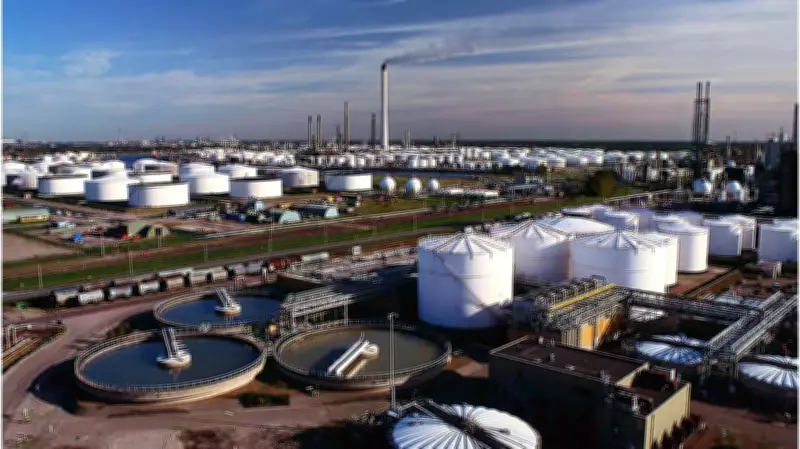
Nigeria's oil resources may last only 59 years, and gas production could continue for up to 85 years at current output levels. This estimation should serve as a wake-up call for the nation, reminding it that oil is a wasting asset whose value depends on investment and prudent use of returns. For decades, Nigeria has relied on the illusion of being an energy giant, treating crude oil and natural gas reserves as an inexhaustible inheritance. However, recent data reveals a sobering reality: oil reserves have stalled.
Current Reserves and Projections
The Nigerian Upstream Petroleum Regulatory Commission (NUPRC) reported that as of January 1, 2026, total proven crude oil and condensate reserves stood at 37.01 billion barrels, comprising 31.09 billion barrels of crude oil and 5.92 billion barrels of condensate. This represents a slight decline of 0.74 percent in 2025, attributed to ongoing production activities and routine technical evaluations. In contrast, gas reserves grew by 2.21 percent to 215.19 trillion cubic feet (TCF), driven by discoveries and improved reservoir studies. NUPRC Chief Executive Mrs. Oritsemeyiwa Eyesan stated that the reserves life index indicates oil may last 59 years and gas 85 years at current output levels.
Historical Context and Missed Targets
In 2017, Nigeria's crude oil reserves were 37.453 billion barrels. The Federal Government set targets to increase them to 40 billion barrels by 2020, then postponed to 2025, but both were missed. The stagnation is not a statistical hiccup but a loud alarm for a nation that has failed to diversify or innovate. Every barrel exported reduces the national savings account, and without significant new discoveries, the possibility of depletion becomes a certainty.
Challenges and Failures
Exploration has hit a brick wall, with International Oil Companies (IOCs) divesting from onshore assets due to insecurity, oil theft, and the global shift toward renewables. Nigeria requires annual investments of $20 billion to $25 billion to maintain and grow production, but capital flight persists. Gas flaring continues unabated in the Niger Delta, costing billions in lost revenue and causing devastating health impacts. The country treats gas as a waste product rather than a transition fuel.
Government Actions and the Path Forward
President Bola Tinubu inherited a struggling energy sector. His administration removed fuel subsidies, pushed for Petroleum Industry Act (PIA) implementation, and signed executive orders to reduce contracting cycles and provide tax incentives for non-associated gas projects. The emphasis on the "Decade of Gas" and Compressed Natural Gas (CNG) for transportation shows technical understanding. However, tackling the security-industrial complex enabling oil theft and convincing global investors of Nigeria's stability are critical. The 85-year lifespan is not a safety net but a deadline for transformation. Nigeria must decouple its budget from oil prices, invest in the Sovereign Wealth Fund, and use the Excess Crude Account for infrastructure and employment. The era of easy oil is over; the defining question is whether the country will build a diversified industrial power or wait for the wells to run dry.




