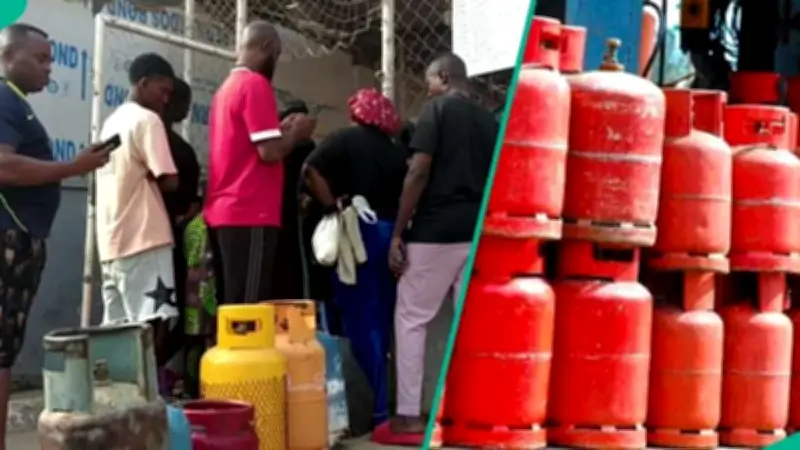
Major Liquefied Petroleum Gas (LPG) offtakers profited by over N1,600 per kilogramme of cooking gas purchased from Nigeria LNG Limited during the recent scarcity, the company has disclosed. According to NLNG, some major customers bought LPG for between N800 and N900 per kilogramme but sold it to consumers for as much as N2,400 per kilogramme.
Hoarding at Terminals Blamed for Artificial Scarcity
The company attributed the huge price gap partly to the hoarding of LPG at some terminals, which created artificial scarcity and pushed retail prices beyond recommended levels. NLNG's Managing Director and Chief Executive Officer, Adeleye Falade, disclosed this at the company's Facts & Figures Presentation in Lagos.
Falade stated that investigations showed some customers were storing LPG at their terminals instead of releasing it promptly into the market, contributing to the supply squeeze experienced by consumers. He said: "What we found out is that a number of people who take products will put them in their terminal, and they are part of those that have created the artificial scarcity that has led to the price increase."
Price Disparity and Regulatory Recommendations
While cooking gas was selling for about N2,400/kg in the market during the scarcity, some of the affected offtakers were obtaining the product from NLNG for between N800 and N900/kg. This created a significant disparity between the purchase price and the amount ultimately paid by consumers.
The Nigerian Midstream and Downstream Petroleum Regulatory Authority had previously indicated that LPG retail prices, after accounting for transportation costs, should generally remain within the range of N1,000 to N1,200 per kilogramme. Falade noted that the wide difference between the recommended retail range and the prices paid by consumers reflected distortions within the downstream LPG market.
Regulatory Action and Distribution Network
"So there's also some distortion that happened on the sales side, which I know the regulators are working on right now to get control of it," Falade added. NLNG distributes LPG domestically through its dedicated vessel, Alfred Temile, and more than 15 terminal operators currently take the product from the company to supply bulk quantities to gas plant operators and independent petroleum marketers.
An assessment carried out for NLNG by one of the Big Four consulting firms reportedly found that the practice of retaining LPG at terminal level slowed the movement of the product to retailers, leading to supply constraints and higher retail prices, even when adequate volumes were available earlier in the distribution chain.